
Before Memmo my notes were scattered across PDFs. Now a workspace pulls everything into one place — I see exactly what's still left to study.
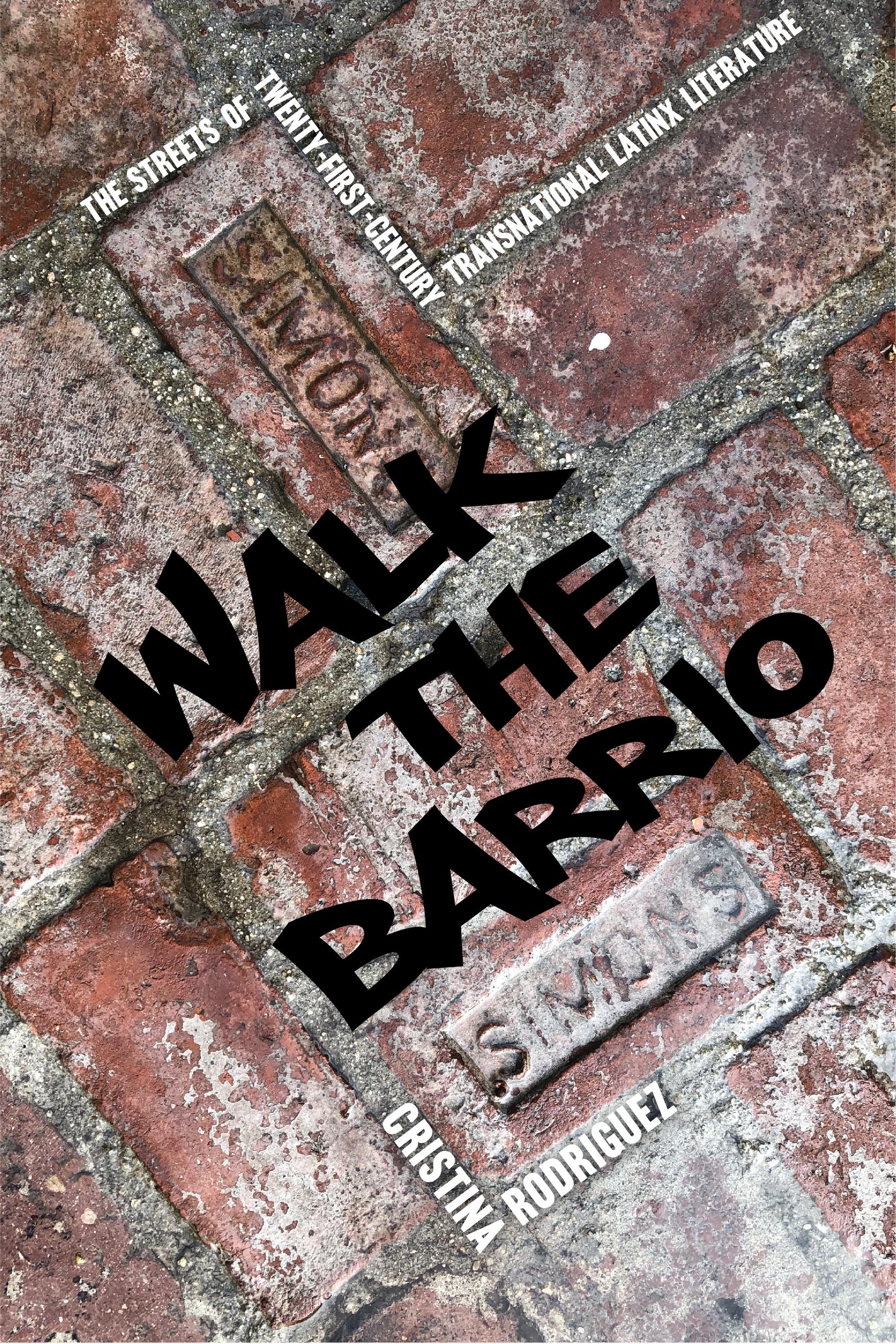
Immigrant communities evince particular and deep relationship to place. Building on this self-evident premise, Walk the Barrio adds the less obvious claim that to write about place you must experience place. Thus, in this book about immigrants, writing, and place, Cristina Rodriguez walks neighborhood streets, talks to immigrants, interviews authors, and puts herself physically in the spaces that she seeks to understand.
The word barrio first entered the English lexicon in 1833 and has since become a commonplace not only of American speech but of our literary imagination. Indeed, what draws Rodriguez to the barrios of Los Angeles, New York, Miami, and others is the work of literature that was fueled and inspired by those neighborhoods. Walk the Barrio explores the ways in which authors William Archila, Richard Blanco, Angie Cruz, Junot Díaz, Salvador Plascencia, Héctor Tobar, and Helena María Viramontes use their U.S. hometowns as both setting and stylistic inspiration.
Asking how these writers innovate upon or break the rules of genre to render in words an embodied experience of the barrio, Rodriguez considers, for example, how the spatial map of New Brunswick impacts the mobility of Díaz’s female characters, or how graffiti influences the aesthetics of Viramontes’s novels. By mapping each text’s fictional setting upon the actual spaces it references in what she calls "barriographies," Rodriguez reveals connections between place, narrative form, and migrancy.
This first-person, interdisciplinary approach presents an innovative model for literary studies as it sheds important light on the ways in which transnationalism transforms the culture of each Latinx barrio, effecting shifts in gender roles, the construction of the family, definitions of social normativity, and racial, ethnic, national, and linguistic identifications.
Before Memmo my notes were scattered across PDFs. Now a workspace pulls everything into one place — I see exactly what's still left to study.
Memmo's summaries are gold before exams. I don't have to re-read 800 pages two weeks before — just the important parts.
The AI chat has saved me the night before an exam more than once. I just keep asking until I get it — no waiting on a study group to reply.
The quizzes hit exactly what I need to know. Memmo tracks what I get stuck on — so I only practice what's worth it.
Flashcards with spaced repetition are magic. Memmo knows when I'm about to forget something and brings it back.
The AI podcasts are my favorite. I listen on my way to school and get a recap without sitting at a computer.

Handbok i kvalitativa metoder
281 kr

Hållbar utveckling: en introduktion för ingenjörer och andra problemlösare
334 kr

Brymans Samhällsvetenskapliga metoder
390 kr

Projektledning
491 kr

Den orättvisa hälsan: om socioekonomiska skillnader i hälsa och livslängd
326 kr

Vetenskapsteori för nybörjare
196 kr

Organizational Leadership
429 kr

På väg mot läraryrket
172 kr

Det sociala livet i skolan: Socialpsykologiska perspektiv
253 kr

Betygsättningens didaktik
151 kr

Personality
402 kr

Studying Leadership
404 kr

Managing Innovation
477 kr

Introduktion till samhällsvetenskaplig metod
347 kr

The Psychology of Sex and Gender
698 kr

Evidens och kunskap för socialt arbete
207 kr

Introduction to Leadership
605 kr