
Before Memmo my notes were scattered across PDFs. Now a workspace pulls everything into one place — I see exactly what's still left to study.
Shortlist--2023 Oscar Kenshur Book Prize
Winner--2022 Walker Cowen Memorial Prize
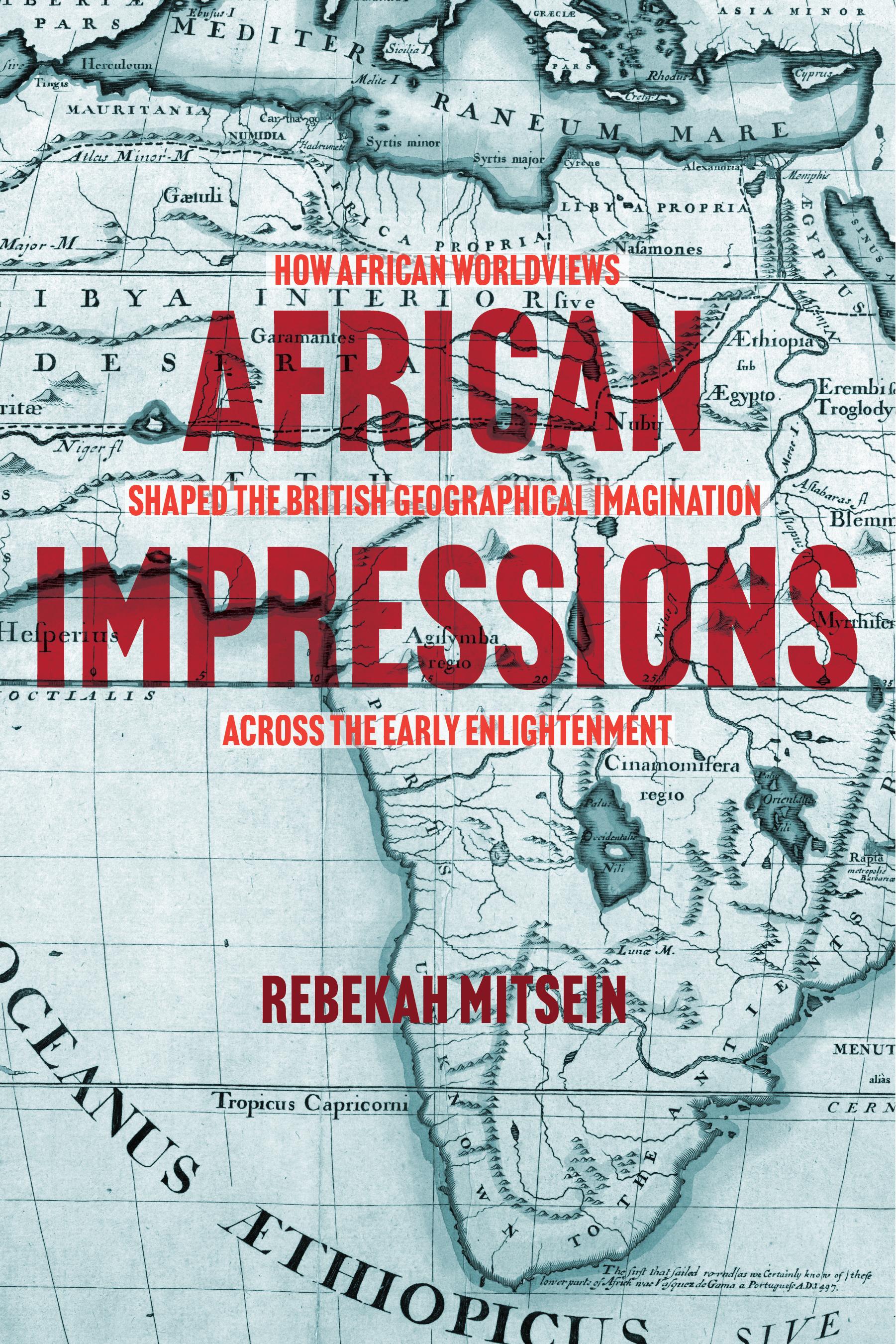
Nineteenth-century European representations of Africa are notorious for depicting the continent with a blank interior. But there was a time when British writers filled Africa with landed empires and contiguous trade routes linked together by a network of rivers. This geographical narrative proliferated in fictional and nonfictional texts alike, and it was born not from fanciful speculation but from British interpretations of what Africans said and showed about themselves and their worlds.
Investigations of the representation of Africa in British texts have typically concluded that the continent operated in the British imagination as a completely invented space with no meaningful connection to actual African worlds, or as an inert realm onto which writers projected their expansionist fantasies. With African Impressions, Rebekah Mitsein revises that narrative, demonstrating that African elites successfully projected expressions of their sovereignty, wealth, right to power, geopolitical clout, and religious exceptionalism into Europe long before Europeans entered sub-Saharan Africa. Mitsein considers the ways that African self-representation continued to drive European impressions of the continent across the early Enlightenment, fueling desires to find the sources of West Africa’s gold and the city states along the Niger, to establish a relationship with the Christian kingdom of Prester John, and to discover the source of the Nile.
Through an analysis of a range of genres, including travel narratives, geography books, maps, verse, and fiction, Mitsein shows how African strategies of self-representation and European strategies for representing Africa grew increasingly inextricable, as the ideas that Africans presented about themselves and their worlds migrated from contact zones to texts and back again. The geographical narratives that arose from this cycle, which unfolded over hundreds of years, were made to fit expansionist agendas, but they remained rooted in the African worlds and worldviews that shaped them.
Before Memmo my notes were scattered across PDFs. Now a workspace pulls everything into one place — I see exactly what's still left to study.
Memmo's summaries are gold before exams. I don't have to re-read 800 pages two weeks before — just the important parts.
The AI chat has saved me the night before an exam more than once. I just keep asking until I get it — no waiting on a study group to reply.
The quizzes hit exactly what I need to know. Memmo tracks what I get stuck on — so I only practice what's worth it.
Flashcards with spaced repetition are magic. Memmo knows when I'm about to forget something and brings it back.
The AI podcasts are my favorite. I listen on my way to school and get a recap without sitting at a computer.

Handbok i kvalitativa metoder
281 kr

Hållbar utveckling: en introduktion för ingenjörer och andra problemlösare
334 kr

Brymans Samhällsvetenskapliga metoder
390 kr

Projektledning
491 kr

Den orättvisa hälsan: om socioekonomiska skillnader i hälsa och livslängd
326 kr

Vetenskapsteori för nybörjare
196 kr

Organizational Leadership
429 kr

På väg mot läraryrket
172 kr

Det sociala livet i skolan: Socialpsykologiska perspektiv
253 kr

Betygsättningens didaktik
151 kr

Personality
402 kr

Studying Leadership
404 kr

Managing Innovation
477 kr

Introduktion till samhällsvetenskaplig metod
347 kr

The Psychology of Sex and Gender
698 kr

Evidens och kunskap för socialt arbete
207 kr

Introduction to Leadership
605 kr