
Before Memmo my notes were scattered across PDFs. Now a workspace pulls everything into one place — I see exactly what's still left to study.
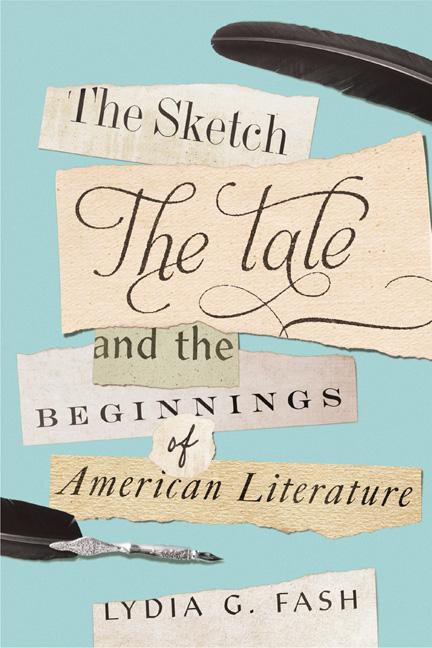
Accounts of the rise of American literature often start in the 1850s with a cluster of "great American novels"—Hawthorne’s The Scarlet Letter, Melville’s Moby-Dick and Stowe’s Uncle Tom’s Cabin. But these great works did not spring fully formed from the heads of their creators. All three relied on conventions of short fiction built up during the "culture of beginnings," the three decades following the War of 1812 when public figures glorified the American past and called for a patriotic national literature. Decentering the novel as the favored form of early nineteenth-century national literature, Lydia Fash repositions the sketch and the tale at the center of accounts of American literary history, revealing how cultural forces shaped short fiction that was subsequently mined for these celebrated midcentury novels and for the first novel published by an African American.
In the shorter works of writers such as Washington Irving, Catharine Sedgwick, Edgar Allan Poe, and Lydia Maria Child, among others, the aesthetic of brevity enabled the beginning idea of a story to take the outsized importance fitted to the culture of beginnings. Fash argues that these short forms, with their ethnic exclusions and narrative innovations, coached readers on how to think about the United States’ past and the nature of narrative time itself. Combining history, print history, and literary criticism, this book treats short fiction as a vital site for debate over what it meant to be American, thereby offering a new account of the birth of a self-consciously national literary tradition.
Before Memmo my notes were scattered across PDFs. Now a workspace pulls everything into one place — I see exactly what's still left to study.
Memmo's summaries are gold before exams. I don't have to re-read 800 pages two weeks before — just the important parts.
The AI chat has saved me the night before an exam more than once. I just keep asking until I get it — no waiting on a study group to reply.
The quizzes hit exactly what I need to know. Memmo tracks what I get stuck on — so I only practice what's worth it.
Flashcards with spaced repetition are magic. Memmo knows when I'm about to forget something and brings it back.
The AI podcasts are my favorite. I listen on my way to school and get a recap without sitting at a computer.

Handbok i kvalitativa metoder
281 kr

Hållbar utveckling: en introduktion för ingenjörer och andra problemlösare
334 kr

Brymans Samhällsvetenskapliga metoder
390 kr

Projektledning
491 kr

Den orättvisa hälsan: om socioekonomiska skillnader i hälsa och livslängd
326 kr

Vetenskapsteori för nybörjare
196 kr

Organizational Leadership
429 kr

På väg mot läraryrket
172 kr

Det sociala livet i skolan: Socialpsykologiska perspektiv
253 kr

Betygsättningens didaktik
151 kr

Personality
402 kr

Studying Leadership
404 kr

Managing Innovation
477 kr

Introduktion till samhällsvetenskaplig metod
347 kr

The Psychology of Sex and Gender
698 kr

Evidens och kunskap för socialt arbete
207 kr

Introduction to Leadership
605 kr