
Before Memmo my notes were scattered across PDFs. Now a workspace pulls everything into one place — I see exactly what's still left to study.
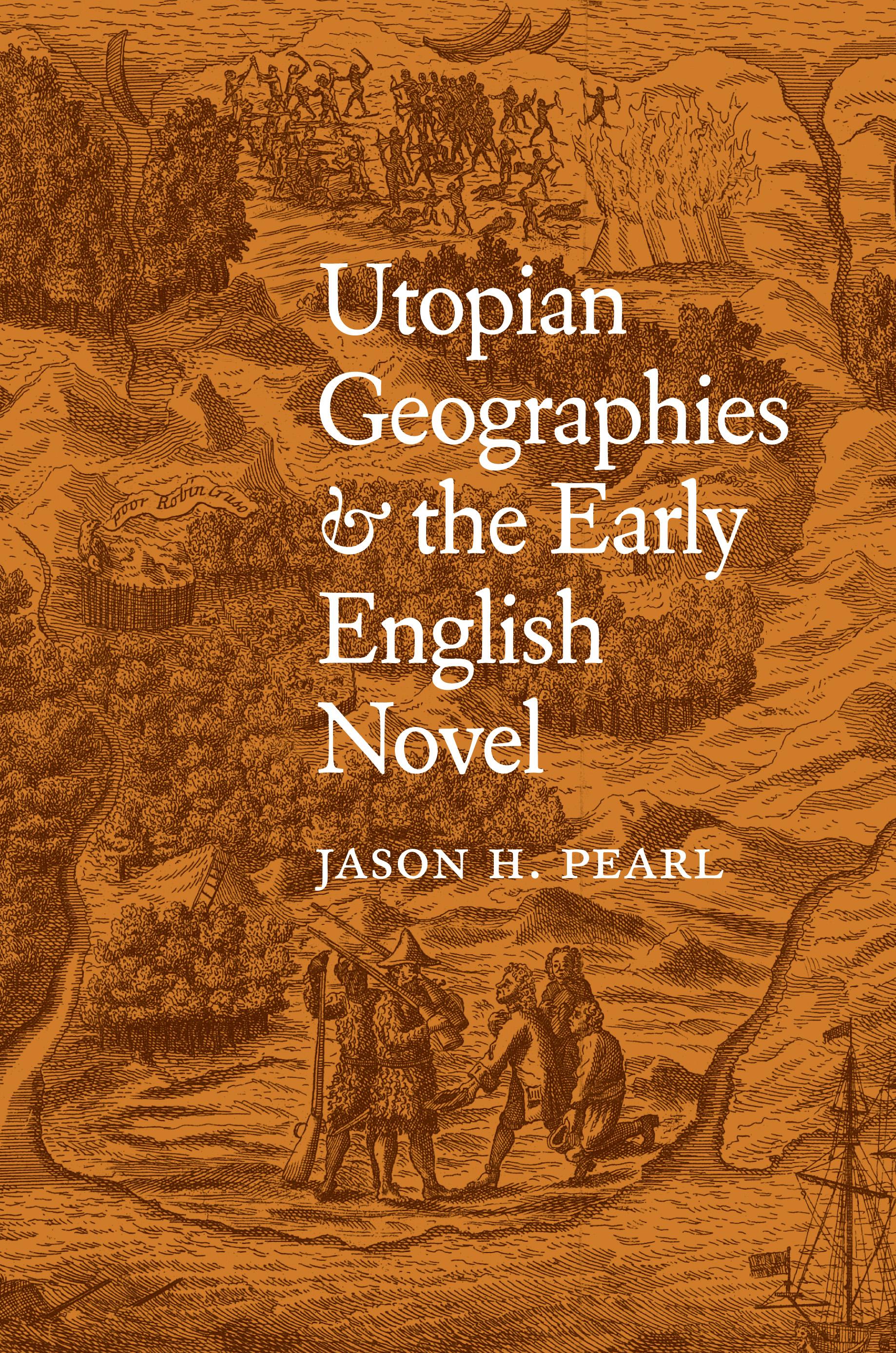
Historians of the Enlightenment have studied the period’s substantial advances in world cartography, as well as the decline of utopia imagined in geographic terms. Literary critics, meanwhile, have assessed the emerging novel’s realism and in particular the genre’s awareness of the wider world beyond Europe. Jason Pearl unites these lines of inquiry in Utopian Geographies and the Early English Novel, arguing that prose fiction from 1660 to 1740 helped demystify blank spaces on the map and make utopia available anywhere. This literature incorporated, debunked, and reformulated utopian conceptions of geography.
Reports of ideal societies have always prompted skepticism, and it is now common to imagine them in the future, rather than on some undiscovered island or continent. At precisely the time when novels began turning from the fabulous settings of romance to the actual locations described in contemporaneous travel accounts, a number of writers nevertheless tried to preserve and reconfigure utopia by giving it new coordinates and parameters.
Margaret Cavendish, Aphra Behn, Daniel Defoe, Jonathan Swift, and others told of adventurous voyages and extraordinary worlds. They engaged critically and creatively with the idea of utopia. If these writers ultimately concede that utopian geographies were nowhere to be found, they also reimagine the essential ideals as new forms of interiority and sociability that could be brought back to England. Questions about geography and utopia drove many of the formal innovations of the early novel. As this book shows, what resulted were new ways of representing both world geography and utopian possibility.
Before Memmo my notes were scattered across PDFs. Now a workspace pulls everything into one place — I see exactly what's still left to study.
Memmo's summaries are gold before exams. I don't have to re-read 800 pages two weeks before — just the important parts.
The AI chat has saved me the night before an exam more than once. I just keep asking until I get it — no waiting on a study group to reply.
The quizzes hit exactly what I need to know. Memmo tracks what I get stuck on — so I only practice what's worth it.
Flashcards with spaced repetition are magic. Memmo knows when I'm about to forget something and brings it back.
The AI podcasts are my favorite. I listen on my way to school and get a recap without sitting at a computer.

Handbok i kvalitativa metoder
281 kr

Hållbar utveckling: en introduktion för ingenjörer och andra problemlösare
334 kr

Brymans Samhällsvetenskapliga metoder
390 kr

Projektledning
491 kr

Den orättvisa hälsan: om socioekonomiska skillnader i hälsa och livslängd
326 kr

Vetenskapsteori för nybörjare
196 kr

Organizational Leadership
429 kr

På väg mot läraryrket
172 kr

Det sociala livet i skolan: Socialpsykologiska perspektiv
253 kr

Betygsättningens didaktik
151 kr

Personality
402 kr

Studying Leadership
404 kr

Managing Innovation
477 kr

Introduktion till samhällsvetenskaplig metod
347 kr

The Psychology of Sex and Gender
698 kr

Evidens och kunskap för socialt arbete
207 kr

Introduction to Leadership
605 kr