
Before Memmo my notes were scattered across PDFs. Now a workspace pulls everything into one place — I see exactly what's still left to study.
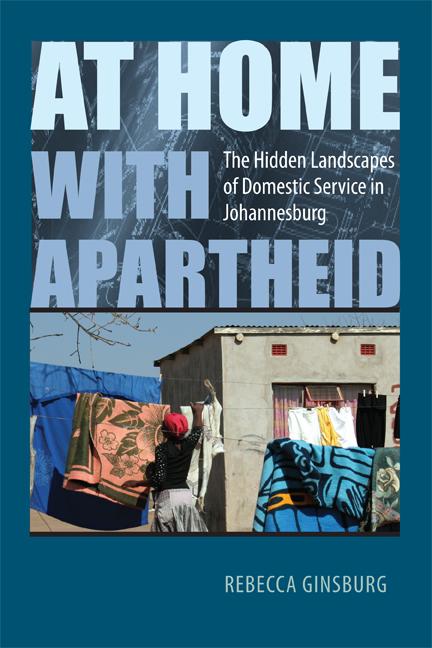
Despite their peaceful, bucolic appearance, the tree-lined streets of South African suburbia were no refuge from the racial tensions and indignities of apartheid’s most repressive years. In At Home with Apartheid, Rebecca Ginsburg provides an intimate examination of the cultural landscapes of Johannesburg’s middle- and upper-middle-class neighborhoods during the height of apartheid (c. 1960–1975) and incorporates recent scholarship on gender, the home, and family.
More subtly but no less significantly than factory floors, squatter camps, prisons, and courtrooms, the homes of white South Africans were sites of important contests between white privilege and black aspiration. Subtle negotiations within the domestic sphere between white, mostly female, householders and their black domestic workers, also primarily women, played out over and around this space. These seemingly mundane, private conflicts were part of larger contemporary struggles between whites and blacks over territory and power.
Ginsburg gives special attention to the distinct social and racial geographies produced by the workers’ detached living quarters, designed by builders and architects as landscape complements to the main houses. Ranch houses, Italianate villas, modernist cubes, and Victorian bungalows filled Johannesburg’s suburbs. What distinguished these neighborhoods from their precedents in the United States or the United Kingdom was the presence of the ubiquitous back rooms and of the African women who inhabited them in these otherwise exclusively white areas.
The author conducted more than seventy-five personal interviews for this book, an approach that sets it apart from other architectural histories. In addition to these oral accounts, Ginsburg draws from plans, drawings, and onsite analysis of the physical properties themselves. While the issues addressed span the disciplines of South African and architectural history, feminist studies, material culture studies, and psychology, the book’s strong narrative, powerful oral histories, and compelling subject matter bring the neighborhoods and residents it examines vividly to life.
Before Memmo my notes were scattered across PDFs. Now a workspace pulls everything into one place — I see exactly what's still left to study.
Memmo's summaries are gold before exams. I don't have to re-read 800 pages two weeks before — just the important parts.
The AI chat has saved me the night before an exam more than once. I just keep asking until I get it — no waiting on a study group to reply.
The quizzes hit exactly what I need to know. Memmo tracks what I get stuck on — so I only practice what's worth it.
Flashcards with spaced repetition are magic. Memmo knows when I'm about to forget something and brings it back.
The AI podcasts are my favorite. I listen on my way to school and get a recap without sitting at a computer.

Handbok i kvalitativa metoder
281 kr

Hållbar utveckling: en introduktion för ingenjörer och andra problemlösare
334 kr

Brymans Samhällsvetenskapliga metoder
390 kr

Projektledning
491 kr

Den orättvisa hälsan: om socioekonomiska skillnader i hälsa och livslängd
326 kr

Vetenskapsteori för nybörjare
196 kr

Organizational Leadership
429 kr

På väg mot läraryrket
172 kr

Det sociala livet i skolan: Socialpsykologiska perspektiv
253 kr

Betygsättningens didaktik
151 kr

Personality
402 kr

Studying Leadership
404 kr

Managing Innovation
477 kr

Introduktion till samhällsvetenskaplig metod
347 kr

The Psychology of Sex and Gender
698 kr

Evidens och kunskap för socialt arbete
207 kr

Introduction to Leadership
605 kr