
Before Memmo my notes were scattered across PDFs. Now a workspace pulls everything into one place — I see exactly what's still left to study.
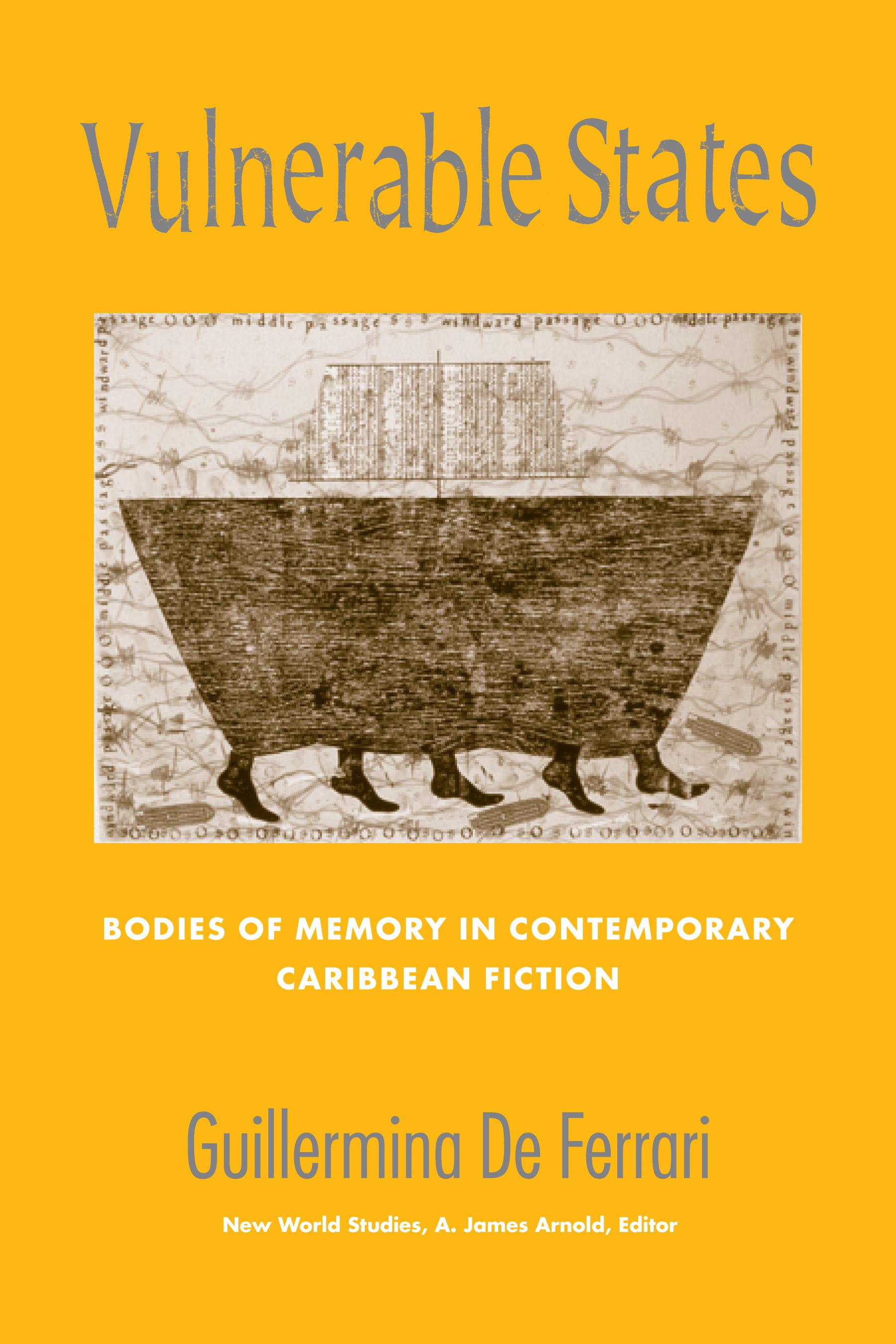
According to Martinican theorist Édouard Glissant, the twentieth century has been dominated in the Caribbean by a passion for the remembrance of colonial history. But while Glissant identifies this passion for memory in the thematizing of nature in Caribbean modernist life, scholar Guillermina De Ferrari claims it is the vulnerability of the human body that has become the trope to which Caribbean postmodernist authors largely appeal in their efforts to revise the discourse that has shaped postcolonial societies. In Vulnerable States: Bodies of Memory in Contemporary Caribbean Fiction, De Ferrari offers a comparative study of novels from across the Caribbean, arguing that vulnerability (symbolic and therefore political) should be seen as the true foundation of Caribbeanness.
While most theories of the region have traditionally emphasized corporeality as a constitutive aspect of Caribbean societies, they assume its uniqueness is founded on race, itself understood either as a "fact" of the body or as the "ethnic" fusion of distinctive cultures of origin. In reconceptualizing corporeality as vulnerability, De Ferrari proposes an alternative view of Caribbeanness based on affect—that is, on an emotional disposition that results from the alienating role historical, medical, and anthropological notions of the body have traditionally played in determining how the region understands itself. While vulnerability thus addresses the role historically played by race in determining systems of social and political powerlessness, it also prefigures other ways in which Caribbeanness is currently negotiated at local and international levels, ranging from the stigmatization of the ill to the global fetishization of the region’s physical beauty, material degradation, and political stagnation.Positioned at the intersection of literary and anthropological study, Vulnerable States will appeal to Caribbeanists of the three major language areas of the region as well as to postcolonial scholars interested in issues of race, gender, and nation formation
Before Memmo my notes were scattered across PDFs. Now a workspace pulls everything into one place — I see exactly what's still left to study.
Memmo's summaries are gold before exams. I don't have to re-read 800 pages two weeks before — just the important parts.
The AI chat has saved me the night before an exam more than once. I just keep asking until I get it — no waiting on a study group to reply.
The quizzes hit exactly what I need to know. Memmo tracks what I get stuck on — so I only practice what's worth it.
Flashcards with spaced repetition are magic. Memmo knows when I'm about to forget something and brings it back.
The AI podcasts are my favorite. I listen on my way to school and get a recap without sitting at a computer.

Handbok i kvalitativa metoder
281 kr

Hållbar utveckling: en introduktion för ingenjörer och andra problemlösare
334 kr

Brymans Samhällsvetenskapliga metoder
390 kr

Projektledning
491 kr

Den orättvisa hälsan: om socioekonomiska skillnader i hälsa och livslängd
326 kr

Vetenskapsteori för nybörjare
196 kr

Organizational Leadership
429 kr

På väg mot läraryrket
172 kr

Det sociala livet i skolan: Socialpsykologiska perspektiv
253 kr

Betygsättningens didaktik
151 kr

Personality
402 kr

Studying Leadership
404 kr

Managing Innovation
477 kr

Introduktion till samhällsvetenskaplig metod
347 kr

The Psychology of Sex and Gender
698 kr

Evidens och kunskap för socialt arbete
207 kr

Introduction to Leadership
605 kr