
Before Memmo my notes were scattered across PDFs. Now a workspace pulls everything into one place — I see exactly what's still left to study.
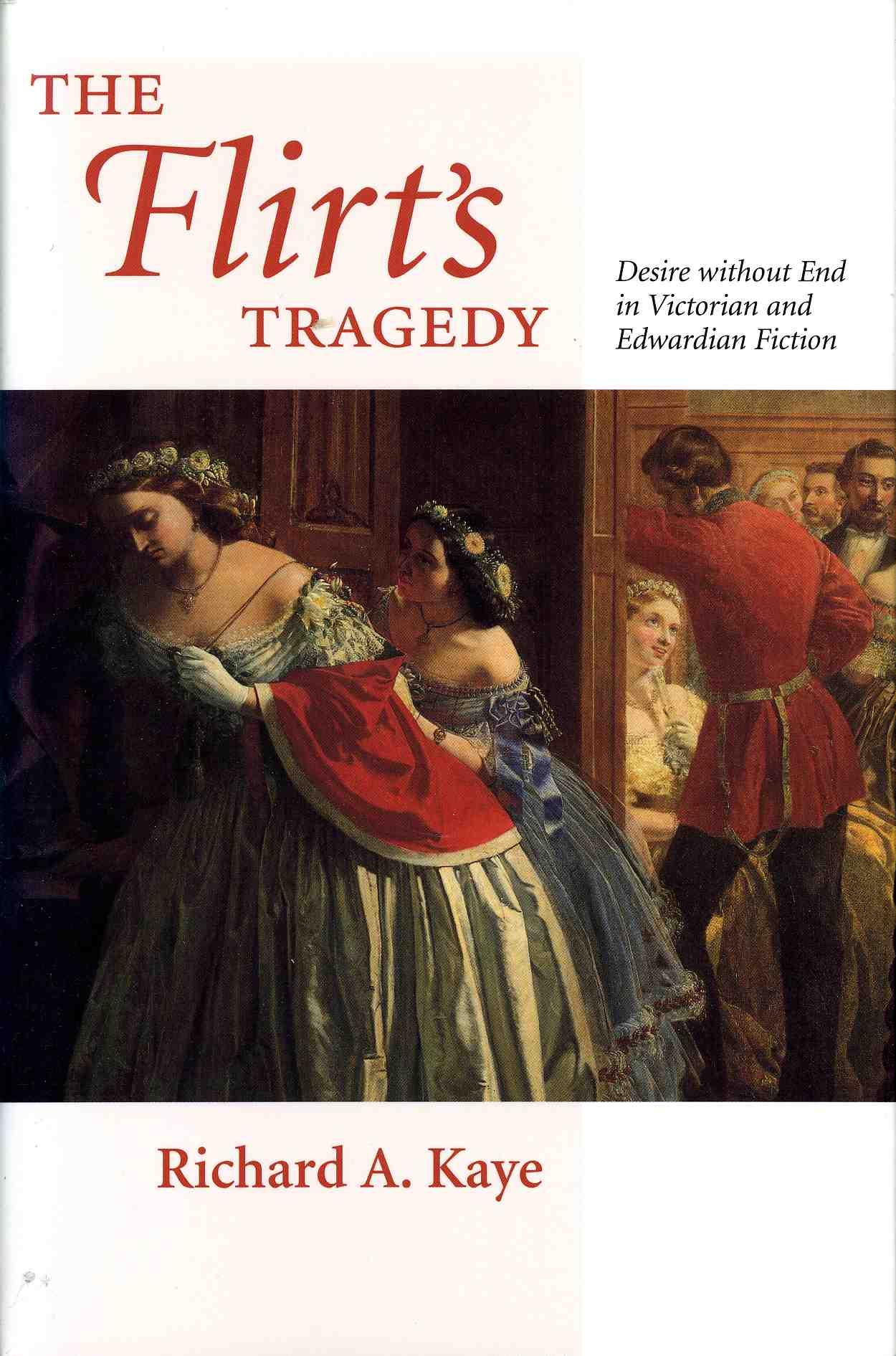
In the flirtation plots of novels by Jane Austen, Charlotte Brontë, and W. M. Thackeray, heroines learn sociability through competition with naughty coquette-doubles. In the writing of George Eliot and Thomas Hardy, flirting harbors potentially tragic consequences, a perilous game then adapted by male flirts in the novels of Oscar Wilde and Henry James. In revising Gustave Flaubert’s Sentimental Education in The Age of Innocence, Edith Wharton critiques the nineteenth-century European novel as morbidly obsessed with deferred desires. Finally, in works by D. H. Lawrence and E. M. Forster, flirtation comes to reshape the modernist representation of homoerotic relations.
In The Flirt’s Tragedy: Desire without End in Victorian and Edwardian Fiction, Richard Kaye makes a case for flirtation as a unique, neglected species of eros that finds its deepest, most elaborately sustained fulfillment in the nineteenth-century and early twentieth-century novel. The author examines flirtation in major British, French, and American texts to demonstrate how the changing aesthetic of such fiction fastened on flirtatious desire as a paramount subject for distinctly novelistic inquiry. The novel, he argues, accentuated questions of ambiguity and ambivalence on which an erotics of deliberate imprecision thrived. But the impact of flirtation was not only formal. Kaye views coquetry as an arena of freedom built on a dialectic of simultaneous consent and refusal, as well as an expression of "managed desire," a risky display of female power, and a cagey avenue for the expression of dissident sexualities. Through coquetry, novelists offered their response to important scientific and social changes and to the rise of the metropolis as a realm of increasingly transient amorous relations.
Challenging current trends in gender, post-gender, and queer-theory criticism, and considering texts as diverse as Darwin’s The Descent of Man and Gilbert and Sullivan’s The Mikado, Kaye insists that critical appraisals of Victorian and Edwardian fiction must move beyond existing paradigms defining considerations of flirtation in the novel. The Flirt’s Tragedy offers a lively, revisionary, often startling assessment of nineteenth-century fiction that will alter our understanding of the history of the novel.
Before Memmo my notes were scattered across PDFs. Now a workspace pulls everything into one place — I see exactly what's still left to study.
Memmo's summaries are gold before exams. I don't have to re-read 800 pages two weeks before — just the important parts.
The AI chat has saved me the night before an exam more than once. I just keep asking until I get it — no waiting on a study group to reply.
The quizzes hit exactly what I need to know. Memmo tracks what I get stuck on — so I only practice what's worth it.
Flashcards with spaced repetition are magic. Memmo knows when I'm about to forget something and brings it back.
The AI podcasts are my favorite. I listen on my way to school and get a recap without sitting at a computer.

Handbok i kvalitativa metoder
281 kr

Hållbar utveckling: en introduktion för ingenjörer och andra problemlösare
334 kr

Brymans Samhällsvetenskapliga metoder
390 kr

Projektledning
491 kr

Den orättvisa hälsan: om socioekonomiska skillnader i hälsa och livslängd
326 kr

Vetenskapsteori för nybörjare
196 kr

Organizational Leadership
429 kr

På väg mot läraryrket
172 kr

Det sociala livet i skolan: Socialpsykologiska perspektiv
253 kr

Betygsättningens didaktik
151 kr

Personality
402 kr

Studying Leadership
404 kr

Managing Innovation
477 kr

Introduktion till samhällsvetenskaplig metod
347 kr

The Psychology of Sex and Gender
698 kr

Evidens och kunskap för socialt arbete
207 kr

Introduction to Leadership
605 kr