
Before Memmo my notes were scattered across PDFs. Now a workspace pulls everything into one place — I see exactly what's still left to study.
"An important and timely expansion of American racial discourse. Tucker’s demonstration of how the comic is not (just) funny and how rage is not (just) destructive is a welcome reminder that willful injustice merits irreverent scorn. "—Derek C. Maus, coeditor of Post-Soul Satire: Black Identity after Civil Rights
"Adroitly explores how comic rage is a skillfully crafted, multifaceted critique of white supremacy and a soaring articulation of African American humanity and possibility. Sparkling and highly readable scholarship."—Keith Gilyard, author of John Oliver Killens: A Life of Black Literary Activism
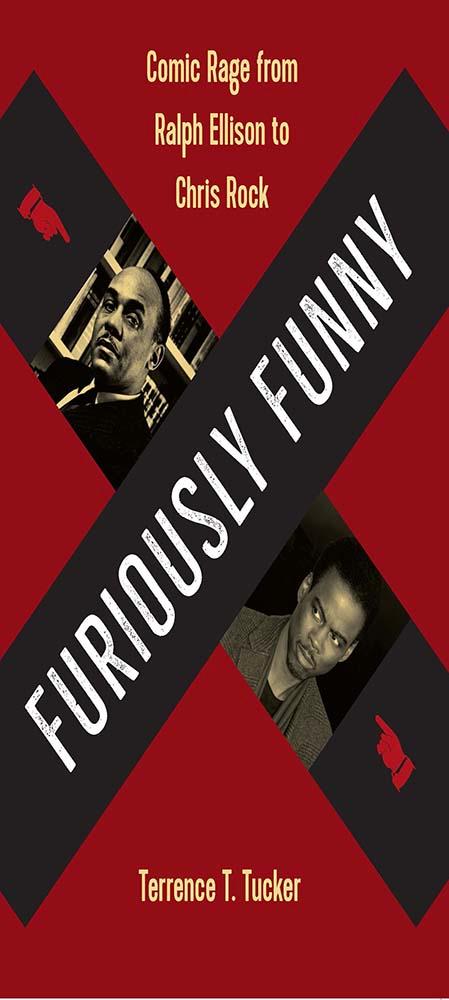
A combustible mix of fury and radicalism, pathos and pain, wit and love—Terrence Tucker calls it "comic rage," and he shows how it has been used by African American artists to aggressively critique America’s racial divide.
In Furiously Funny, Tucker finds that comic rage developed from black oral tradition and first shows up in literature by George Schuyler and Ralph Ellison shortly after World War II. He examines its role in novels and plays, following the growth of the expression into comics and stand-up comedy and film, where Richard Pryor, Spike Lee, Whoopi Goldberg, and Chris Rock have all used the technique.
Their work, Tucker argues, shares a comic vision that centralizes the African American experience and realigns racial discourse through an unequivocal frustration at white perceptions of blackness. They perpetuate images of black culture that run the risk of confirming stereotypes as a means to ridicule whites for allowing those destructive depictions to reinforce racist hierarchies. At the center of comic rage, then, is a full-throated embrace of African American folk life and cultural traditions that have emerged in defiance of white hegemony’s attempts to devalue, exploit, or distort those traditions. The simultaneous expression of comedy and militancy enables artists to reject the mainstream perspective by confronting white audiences with America’s legacy of racial oppression.
Tucker shows how this important art form continues to expand in new ways in the twenty-first century and how it acts as a form of resistance where audiences can engage in subjects that are otherwise taboo.
Before Memmo my notes were scattered across PDFs. Now a workspace pulls everything into one place — I see exactly what's still left to study.
Memmo's summaries are gold before exams. I don't have to re-read 800 pages two weeks before — just the important parts.
The AI chat has saved me the night before an exam more than once. I just keep asking until I get it — no waiting on a study group to reply.
The quizzes hit exactly what I need to know. Memmo tracks what I get stuck on — so I only practice what's worth it.
Flashcards with spaced repetition are magic. Memmo knows when I'm about to forget something and brings it back.
The AI podcasts are my favorite. I listen on my way to school and get a recap without sitting at a computer.

Handbok i kvalitativa metoder
281 kr

Hållbar utveckling: en introduktion för ingenjörer och andra problemlösare
334 kr

Brymans Samhällsvetenskapliga metoder
390 kr

Projektledning
491 kr

Den orättvisa hälsan: om socioekonomiska skillnader i hälsa och livslängd
326 kr

Organizational Leadership
429 kr

Vetenskapsteori för nybörjare
196 kr

På väg mot läraryrket
172 kr

Det sociala livet i skolan: Socialpsykologiska perspektiv
253 kr

Betygsättningens didaktik
151 kr

Personality
402 kr

Studying Leadership
404 kr

Managing Innovation
477 kr

Introduktion till samhällsvetenskaplig metod
347 kr

The Psychology of Sex and Gender
698 kr

Evidens och kunskap för socialt arbete
207 kr

Introduction to Leadership
605 kr