
Before Memmo my notes were scattered across PDFs. Now a workspace pulls everything into one place — I see exactly what's still left to study.
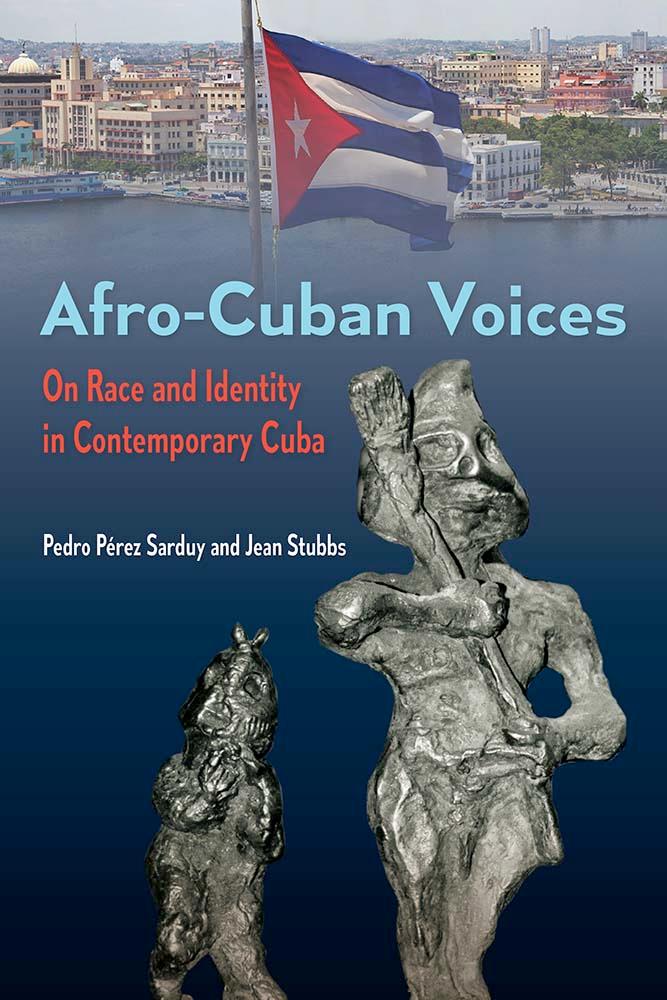
From the forewords: "At a time when Cuba is undergoing immense economic and social changes, race becomes a kind of cultural litmus test for the national identity. . . . This anthology illustrates fully that it is possible to be both revolutionary and black in Cuba."—Manning Marable, Columbia University
"The authors of Afro-Cuban Voices, also key actors in the new, unfolding dialogue about race in Cuba, make a seminal contribution through a forthright critique of ‘racial blind spots’ in official history and present-day racial discrimination."—James Early, director of cultural studies and communication, Smithsonian Institution
From the series editor: "A courageous attempt to deal head-on with the issue of race in Cuba today. . . . Pérez Sarduy and Stubbs [seek to] put a human face on this debate, and do so well. The book will be received with relief by some and with frustration by others. Controversial it will undoubtedly be, since—as with most things Cuban—strong emotions are a given assumption. It will be an admirable beginning for the series and, it is hoped, will spark a much-needed debate in the United States on many aspects of the ‘Cuban question.’ It is about time."—John M. Kirk
Based on the vivid firsthand testimony of prominent Afro-Cubans who live in Cuba, this book of interviews looks at ways that race affects daily life on the island. While celebrating their racial and national identity, the collected voices express an urgent need to end the silences and distortions of history in both pre- and postrevolutionary Cuba. The 14 people interviewed—of different generations and from different geographic areas of Cuba—come from the arts, the media, industry, academia, and medicine. They include a doctor who calls for joint U.S.-Cuban studies on high blood pressure and a craftsman who makes the batá drums used in Yoruba worship ceremonies. All responded to four controversial questions: What is it like to be black in Cuba? How has the revolution made a difference? To what extent is that difference true today? What can be done? Exposing the contradictions of both racial stereotyping and cultural assimilation, their eloquent answers make the case that the issue of race in Cuba, no matter how hard to define, will not be ignored.
A volume in the series Contemporary Cuba, edited by John M. Kirk
Before Memmo my notes were scattered across PDFs. Now a workspace pulls everything into one place — I see exactly what's still left to study.
Memmo's summaries are gold before exams. I don't have to re-read 800 pages two weeks before — just the important parts.
The AI chat has saved me the night before an exam more than once. I just keep asking until I get it — no waiting on a study group to reply.
The quizzes hit exactly what I need to know. Memmo tracks what I get stuck on — so I only practice what's worth it.
Flashcards with spaced repetition are magic. Memmo knows when I'm about to forget something and brings it back.
The AI podcasts are my favorite. I listen on my way to school and get a recap without sitting at a computer.

Handbok i kvalitativa metoder
281 kr

Hållbar utveckling: en introduktion för ingenjörer och andra problemlösare
334 kr

Brymans Samhällsvetenskapliga metoder
390 kr

Projektledning
491 kr

Den orättvisa hälsan: om socioekonomiska skillnader i hälsa och livslängd
326 kr

Organizational Leadership
429 kr

Vetenskapsteori för nybörjare
196 kr

På väg mot läraryrket
172 kr

Det sociala livet i skolan: Socialpsykologiska perspektiv
253 kr

Betygsättningens didaktik
151 kr

Personality
402 kr

Studying Leadership
404 kr

Managing Innovation
477 kr

Introduktion till samhällsvetenskaplig metod
347 kr

The Psychology of Sex and Gender
698 kr

Evidens och kunskap för socialt arbete
207 kr

Introduction to Leadership
605 kr