
Before Memmo my notes were scattered across PDFs. Now a workspace pulls everything into one place — I see exactly what's still left to study.
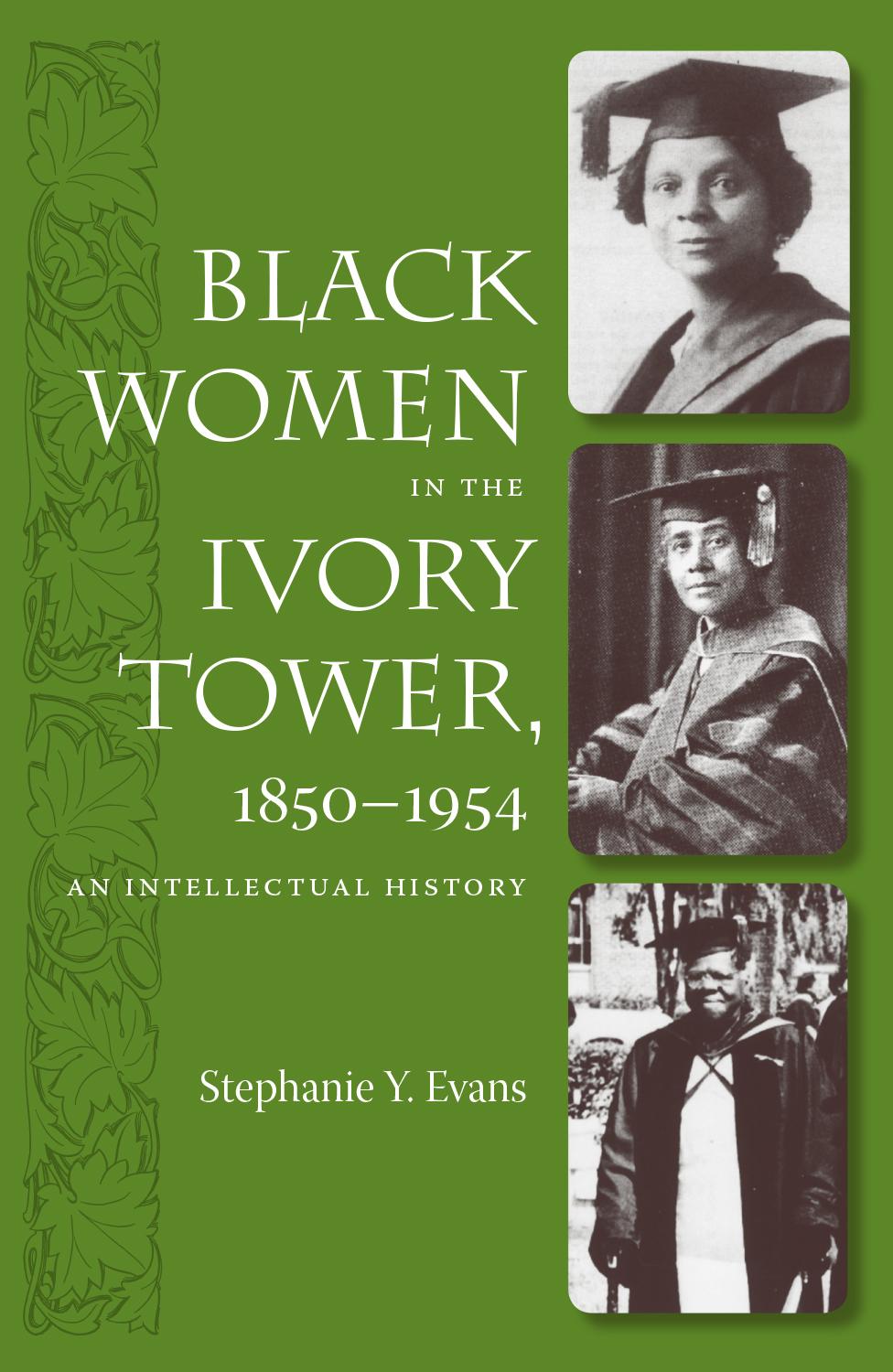
Evans chronicles the stories of African American women who struggled for and won access to formal education, beginning in 1850, when Lucy Stanton, a student at Oberlin College, earned the first college diploma conferred on an African American woman. In the century between the Civil War and the civil rights movement, a critical increase in black women's educational attainment mirrored unprecedented national growth in American education. Evans reveals how black women demanded space as students and asserted their voices as educators--despite such barriers as violence, discrimination, and oppressive campus policies--contributing in significant ways to higher education in the United States. She argues that their experiences, ideas, and practices can inspire contemporary educators to create an intellectual democracy in which all people have a voice.
Among those Evans profiles are Anna Julia Cooper, who was born enslaved yet ultimately earned a doctoral degree from the Sorbonne, and Mary McLeod Bethune, founder of Bethune-Cookman College. Exposing the hypocrisy in American assertions of democracy and discrediting European notions of intellectual superiority, Cooper argued that all human beings had a right to grow. Bethune believed that education is the right of all citizens in a democracy. Both women's philosophies raised questions of how human and civil rights are intertwined with educational access, scholarly research, pedagogy, and community service. This first complete educational and intellectual history of black women carefully traces quantitative research, explores black women's collegiate memories, and identifies significant geographic patterns in America's institutional development. Evans reveals historic perspectives, patterns, and philosophies in academia that will be an important reference for scholars of gender, race, and education.
Before Memmo my notes were scattered across PDFs. Now a workspace pulls everything into one place — I see exactly what's still left to study.
Memmo's summaries are gold before exams. I don't have to re-read 800 pages two weeks before — just the important parts.
The AI chat has saved me the night before an exam more than once. I just keep asking until I get it — no waiting on a study group to reply.
The quizzes hit exactly what I need to know. Memmo tracks what I get stuck on — so I only practice what's worth it.
Flashcards with spaced repetition are magic. Memmo knows when I'm about to forget something and brings it back.
The AI podcasts are my favorite. I listen on my way to school and get a recap without sitting at a computer.

Handbok i kvalitativa metoder
281 kr

Hållbar utveckling: en introduktion för ingenjörer och andra problemlösare
334 kr

Brymans Samhällsvetenskapliga metoder
390 kr

Projektledning
491 kr

Den orättvisa hälsan: om socioekonomiska skillnader i hälsa och livslängd
326 kr

Vetenskapsteori för nybörjare
196 kr

Organizational Leadership
429 kr

På väg mot läraryrket
172 kr

Det sociala livet i skolan: Socialpsykologiska perspektiv
253 kr

Betygsättningens didaktik
151 kr

Personality
402 kr

Studying Leadership
404 kr

Managing Innovation
477 kr

Introduktion till samhällsvetenskaplig metod
347 kr

The Psychology of Sex and Gender
698 kr

Evidens och kunskap för socialt arbete
207 kr

Introduction to Leadership
605 kr