
Before Memmo my notes were scattered across PDFs. Now a workspace pulls everything into one place — I see exactly what's still left to study.
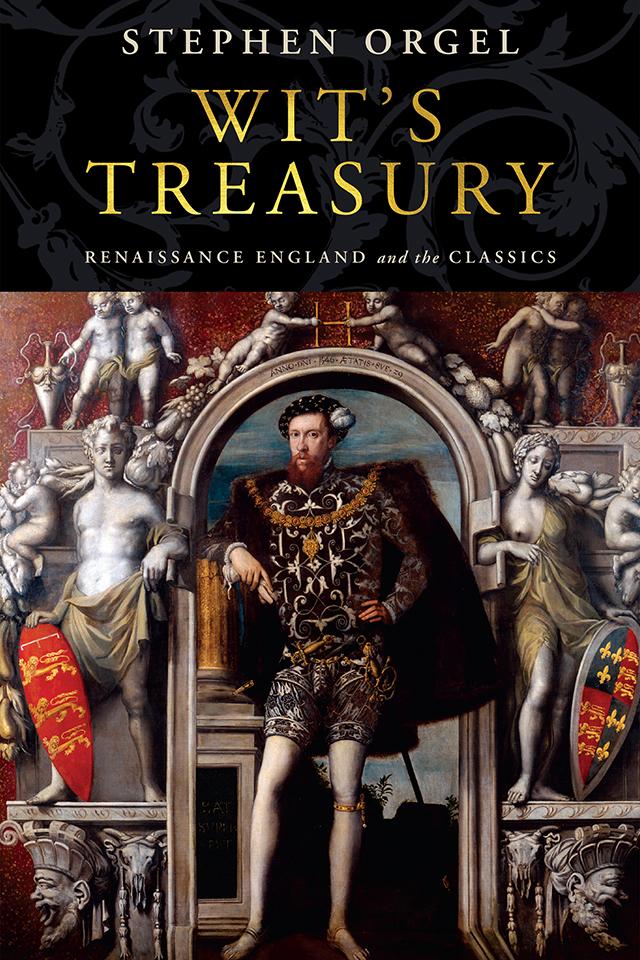
As England entered the Renaissance and as humanism, with its focus on classical literature and philosophy, informed the educational system, English intellectuals engaged in a concerted effort to remake the culture, language, manners—indeed, the whole national style—through adapting the classics. But how could English literature, art, and culture, become "classical," not only in imitating the ancients, but in the sense subsequently applied to music: "classical" as opposed to popular, as formal, serious, and therefore as good?
For several decades in the sixteenth and early seventeenth centuries, Stephen Orgel writes, the return to the classics held out the promise of refinement and civility. Poetry was to be modeled on Greek and Roman examples rather than on the great English medieval works, which though admirable, lacked "correctness." More than poetry was at stake, however, and the transition would not be easy. Classical rules seemed the wave of the future, rescuing England from what was seen as the crudeness and the sheer popularity of its native traditions, but advocacy was tempered with a good deal of ambivalence: classical manners and morals were often at variance with Christian principles, and the classicism of the age would need to be deeply revisionist. "Christian humanism" was never untroubled, Orgel writes, always an unstable or even paradoxical amalgam.
In Wit's Treasury, one of our foremost interpreters of Renaissance literature and culture charts how this ambivalence yielded the rich creative tension out of which emerged an unprecedented flowering of drama, lyric, and the arts. Orgel has here written a book that will appeal to anyone interested in English Renaissance art and literature, and particularly in the cultural ferment that produced Shakespeare, Marlowe, Spenser, Jonson, and Milton.
Before Memmo my notes were scattered across PDFs. Now a workspace pulls everything into one place — I see exactly what's still left to study.
Memmo's summaries are gold before exams. I don't have to re-read 800 pages two weeks before — just the important parts.
The AI chat has saved me the night before an exam more than once. I just keep asking until I get it — no waiting on a study group to reply.
The quizzes hit exactly what I need to know. Memmo tracks what I get stuck on — so I only practice what's worth it.
Flashcards with spaced repetition are magic. Memmo knows when I'm about to forget something and brings it back.
The AI podcasts are my favorite. I listen on my way to school and get a recap without sitting at a computer.

Handbok i kvalitativa metoder
281 kr

Hållbar utveckling: en introduktion för ingenjörer och andra problemlösare
334 kr

Brymans Samhällsvetenskapliga metoder
390 kr

Projektledning
491 kr

Den orättvisa hälsan: om socioekonomiska skillnader i hälsa och livslängd
326 kr

Organizational Leadership
429 kr

Vetenskapsteori för nybörjare
196 kr

På väg mot läraryrket
172 kr

Det sociala livet i skolan: Socialpsykologiska perspektiv
253 kr

Betygsättningens didaktik
151 kr

Personality
402 kr

Studying Leadership
404 kr

Managing Innovation
477 kr

Introduktion till samhällsvetenskaplig metod
347 kr

The Psychology of Sex and Gender
698 kr

Evidens och kunskap för socialt arbete
207 kr

Introduction to Leadership
605 kr