
Before Memmo my notes were scattered across PDFs. Now a workspace pulls everything into one place — I see exactly what's still left to study.
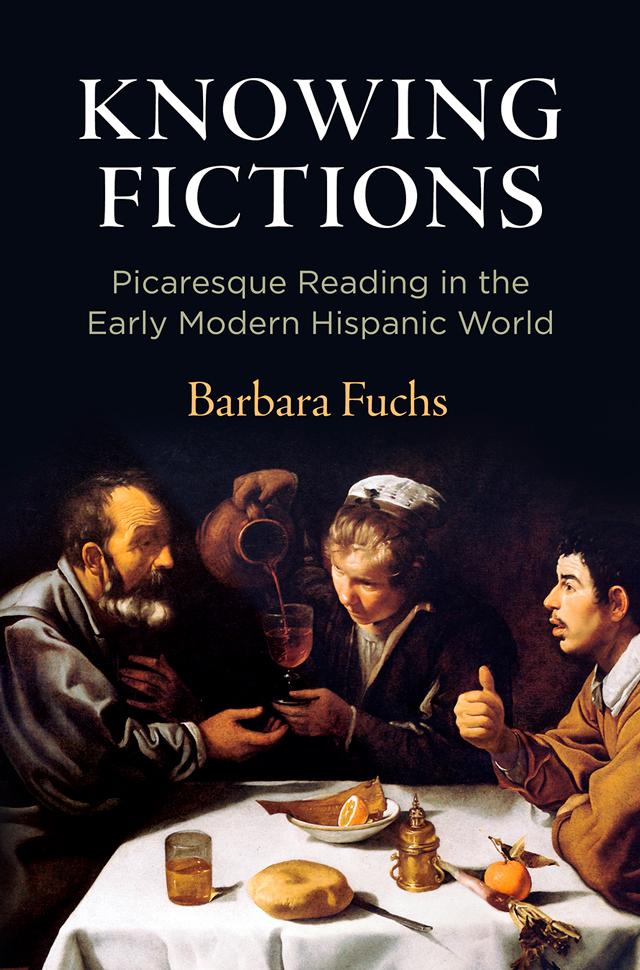
European exploration and conquest expanded exponentially in the late fifteenth and sixteenth centuries, and as the horizons of imperial experience grew more distant, strategies designed to convey the act of witnessing came to be a key source of textual authority. From the relación to the captivity narrative, the Hispanic imperial project relied heavily on the first-person authority of genres whose authenticity undergirded the ideological armature of national consolidation, expansion, and conquest. At the same time, increasing pressures for religious conformity in Spain, as across Europe, required subjects to bare themselves before external authorities in intimate confessions of their faith. Emerging from this charged context, the unreliable voice of the pícaro poses a rhetorical challenge to the authority of the witness, destabilizing the possibility of trustworthy representation precisely because of his or her intimate involvement in the narrative.
In Knowing Fictions, Barbara Fuchs seeks at once to rethink the category of the picaresque while firmly centering it once more in the early modern Hispanic world from which it emerged. Venturing beyond the traditional picaresque canon, Fuchs traces Mediterranean itineraries of diaspora, captivity, and imperial rivalry in a corpus of texts that employ picaresque conventions to contest narrative authority. By engaging the picaresque not just as a genre with more or less strictly defined boundaries, but as a set of literary strategies that interrogate the mechanisms of truth-telling itself, Fuchs shows how self-consciously fictional picaresque texts effectively encouraged readers to adopt a critical stance toward the truth claims implicit in the forms of authoritative discourse proliferating in Imperial Spain.
Before Memmo my notes were scattered across PDFs. Now a workspace pulls everything into one place — I see exactly what's still left to study.
Memmo's summaries are gold before exams. I don't have to re-read 800 pages two weeks before — just the important parts.
The AI chat has saved me the night before an exam more than once. I just keep asking until I get it — no waiting on a study group to reply.
The quizzes hit exactly what I need to know. Memmo tracks what I get stuck on — so I only practice what's worth it.
Flashcards with spaced repetition are magic. Memmo knows when I'm about to forget something and brings it back.
The AI podcasts are my favorite. I listen on my way to school and get a recap without sitting at a computer.

Handbok i kvalitativa metoder
281 kr

Hållbar utveckling: en introduktion för ingenjörer och andra problemlösare
334 kr

Brymans Samhällsvetenskapliga metoder
390 kr

Projektledning
491 kr

Den orättvisa hälsan: om socioekonomiska skillnader i hälsa och livslängd
326 kr

Organizational Leadership
429 kr

Vetenskapsteori för nybörjare
196 kr

På väg mot läraryrket
172 kr

Det sociala livet i skolan: Socialpsykologiska perspektiv
253 kr

Betygsättningens didaktik
151 kr

Personality
402 kr

Studying Leadership
404 kr

Managing Innovation
477 kr

Introduktion till samhällsvetenskaplig metod
347 kr

The Psychology of Sex and Gender
698 kr

Evidens och kunskap för socialt arbete
207 kr

Introduction to Leadership
605 kr