
Before Memmo my notes were scattered across PDFs. Now a workspace pulls everything into one place — I see exactly what's still left to study.
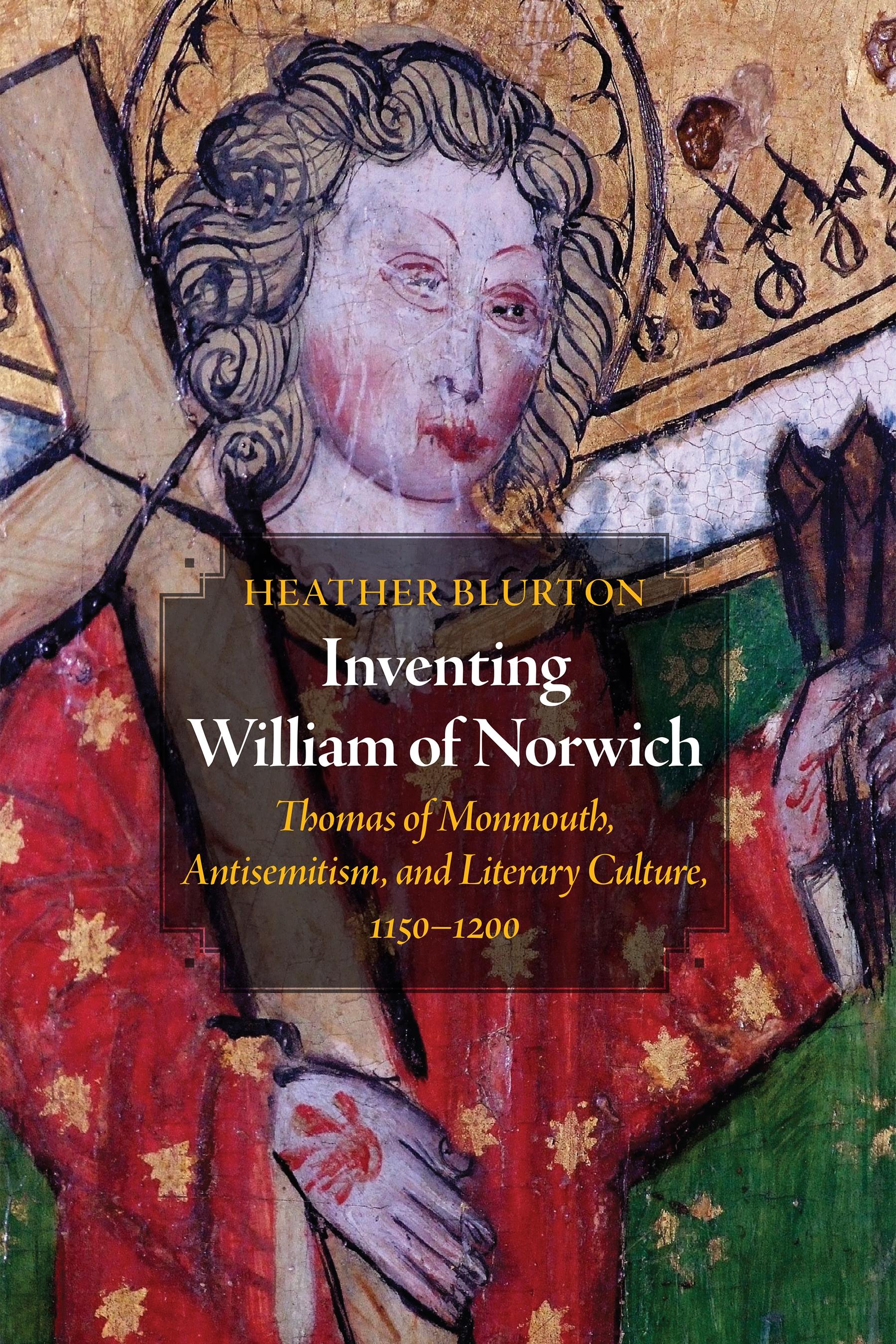
William of Norwich is the name of a young boy purported to have been killed by Jews in or about 1144, thus becoming the victim of the first recorded case of such a ritual murder in Western Europe and a seminal figure in the long history of antisemitism. His story is first told in Thomas of Monmouth's The Life and Miracles of William of Norwich, a work that elaborates the bizarre allegation, invented in twelfth-century England, that Jews kidnapped Christian children and murdered them in memory and mockery of the crucifixion of Christ.
In Inventing William of Norwich Heather Blurton resituates Thomas's account by offering the first full analysis of it as a specifically literary work. The second half of the twelfth century was a time of great literary innovation encompassing an efflorescence of saints' lives and historiography, as well as the emergence of vernacular romance, Blurton observes. She examines The Life and Miracles within the framework of these new textual developments and alongside innovations in liturgical and devotional practices to argue that the origin of the ritual murder accusation is imbricated as much in literary culture as it is in the realities of Christian-Jewish relations or the emergence of racially based discourses of antisemitism. Resisting the urge to interpret this first narrative of the blood libel with the hindsight knowledge of later developments, she considers only the period from about 1150-1200. In so doing, Blurton redirects critical attention away from the social and economic history of the ritual murder accusation to the textual genres and tastes that shaped its forms and themes and provided its immediate context of reception. Thomas of Monmouth's narrative in particular, and the ritual murder accusation more generally, were strongly shaped by literary convention.
Before Memmo my notes were scattered across PDFs. Now a workspace pulls everything into one place — I see exactly what's still left to study.
Memmo's summaries are gold before exams. I don't have to re-read 800 pages two weeks before — just the important parts.
The AI chat has saved me the night before an exam more than once. I just keep asking until I get it — no waiting on a study group to reply.
The quizzes hit exactly what I need to know. Memmo tracks what I get stuck on — so I only practice what's worth it.
Flashcards with spaced repetition are magic. Memmo knows when I'm about to forget something and brings it back.
The AI podcasts are my favorite. I listen on my way to school and get a recap without sitting at a computer.

Handbok i kvalitativa metoder
281 kr

Hållbar utveckling: en introduktion för ingenjörer och andra problemlösare
334 kr

Brymans Samhällsvetenskapliga metoder
390 kr

Projektledning
491 kr

Den orättvisa hälsan: om socioekonomiska skillnader i hälsa och livslängd
326 kr

Vetenskapsteori för nybörjare
196 kr

Organizational Leadership
429 kr

På väg mot läraryrket
172 kr

Det sociala livet i skolan: Socialpsykologiska perspektiv
253 kr

Betygsättningens didaktik
151 kr

Personality
402 kr

Studying Leadership
404 kr

Managing Innovation
477 kr

Introduktion till samhällsvetenskaplig metod
347 kr

The Psychology of Sex and Gender
698 kr

Evidens och kunskap för socialt arbete
207 kr

Introduction to Leadership
605 kr