
Before Memmo my notes were scattered across PDFs. Now a workspace pulls everything into one place — I see exactly what's still left to study.
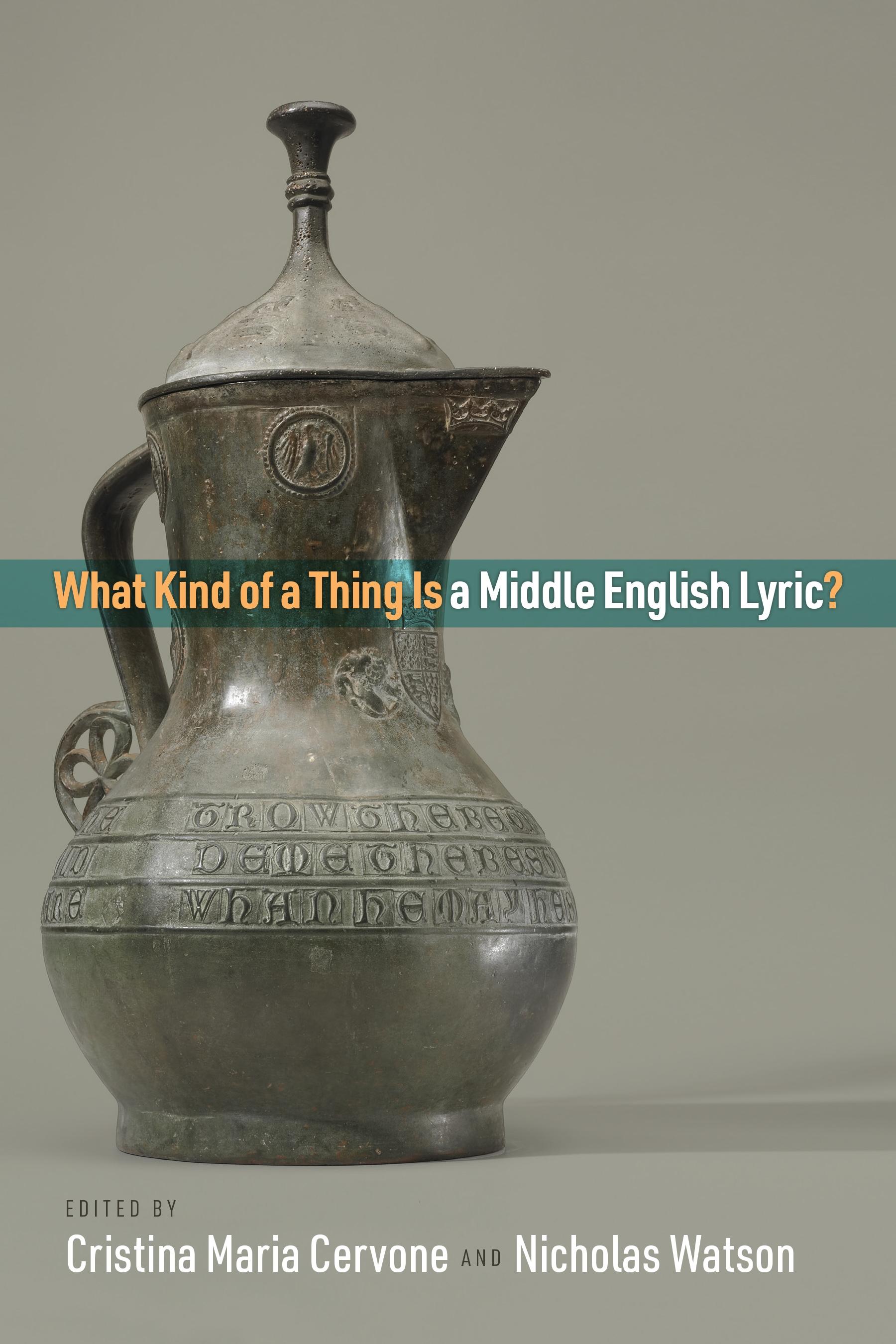
What Kind of a Thing Is a Middle English Lyric? considers issues pertaining to a corpus of several hundred short poems written in Middle English between the twelfth and early fifteenth centuries. The chapters draw on perspectives from varied disciplines, including literary criticism, musicology, art history, and cognitive science. Since the early 1900s, the poems have been categorized as “lyrics,” the term now used for most kinds of short poetry, yet neither the difficulties nor the promise of this treatment have received enough attention. In one way, the book argues, considering these poems to be lyrics obscures much of what is interesting about them. Since the nineteenth century, lyrics have been thought of as subjective and best read without reference to cultural context, yet nonetheless they are taken to form a distinct literary tradition. Since Middle English short poems are often communal and usually spoken, sung, and/or danced, this lyric template is not a good fit. In another way, however, the very differences between these poems and the later ones on which current debates about the lyric still focus suggest they have much to offer those debates, and vice versa.
As its title suggests, this book thus goes back to the basics, asking fundamental questions about what these poems are, how they function formally and culturally, how they are (and are not) related to other bodies of short poetry, and how they might illuminate and be illuminated by contemporary lyric scholarship. Eleven chapters by medievalists and two responses by modernists, all in careful conversation with one another, reflect on these questions and suggest very different answers. The editors’ introduction synthesizes these answers by suggesting that these poems can most usefully be read as a kind of “play,” in several senses of that word. The book ends with eight “new Middle English lyrics” by seven contemporary poets.
Before Memmo my notes were scattered across PDFs. Now a workspace pulls everything into one place — I see exactly what's still left to study.
Memmo's summaries are gold before exams. I don't have to re-read 800 pages two weeks before — just the important parts.
The AI chat has saved me the night before an exam more than once. I just keep asking until I get it — no waiting on a study group to reply.
The quizzes hit exactly what I need to know. Memmo tracks what I get stuck on — so I only practice what's worth it.
Flashcards with spaced repetition are magic. Memmo knows when I'm about to forget something and brings it back.
The AI podcasts are my favorite. I listen on my way to school and get a recap without sitting at a computer.

Handbok i kvalitativa metoder
281 kr

Hållbar utveckling: en introduktion för ingenjörer och andra problemlösare
334 kr

Brymans Samhällsvetenskapliga metoder
390 kr

Projektledning
491 kr

Den orättvisa hälsan: om socioekonomiska skillnader i hälsa och livslängd
326 kr

Vetenskapsteori för nybörjare
196 kr

Organizational Leadership
429 kr

På väg mot läraryrket
172 kr

Det sociala livet i skolan: Socialpsykologiska perspektiv
253 kr

Betygsättningens didaktik
151 kr

Personality
402 kr

Studying Leadership
404 kr

Managing Innovation
477 kr

Introduktion till samhällsvetenskaplig metod
347 kr

The Psychology of Sex and Gender
698 kr

Evidens och kunskap för socialt arbete
207 kr

Introduction to Leadership
605 kr