
Before Memmo my notes were scattered across PDFs. Now a workspace pulls everything into one place — I see exactly what's still left to study.
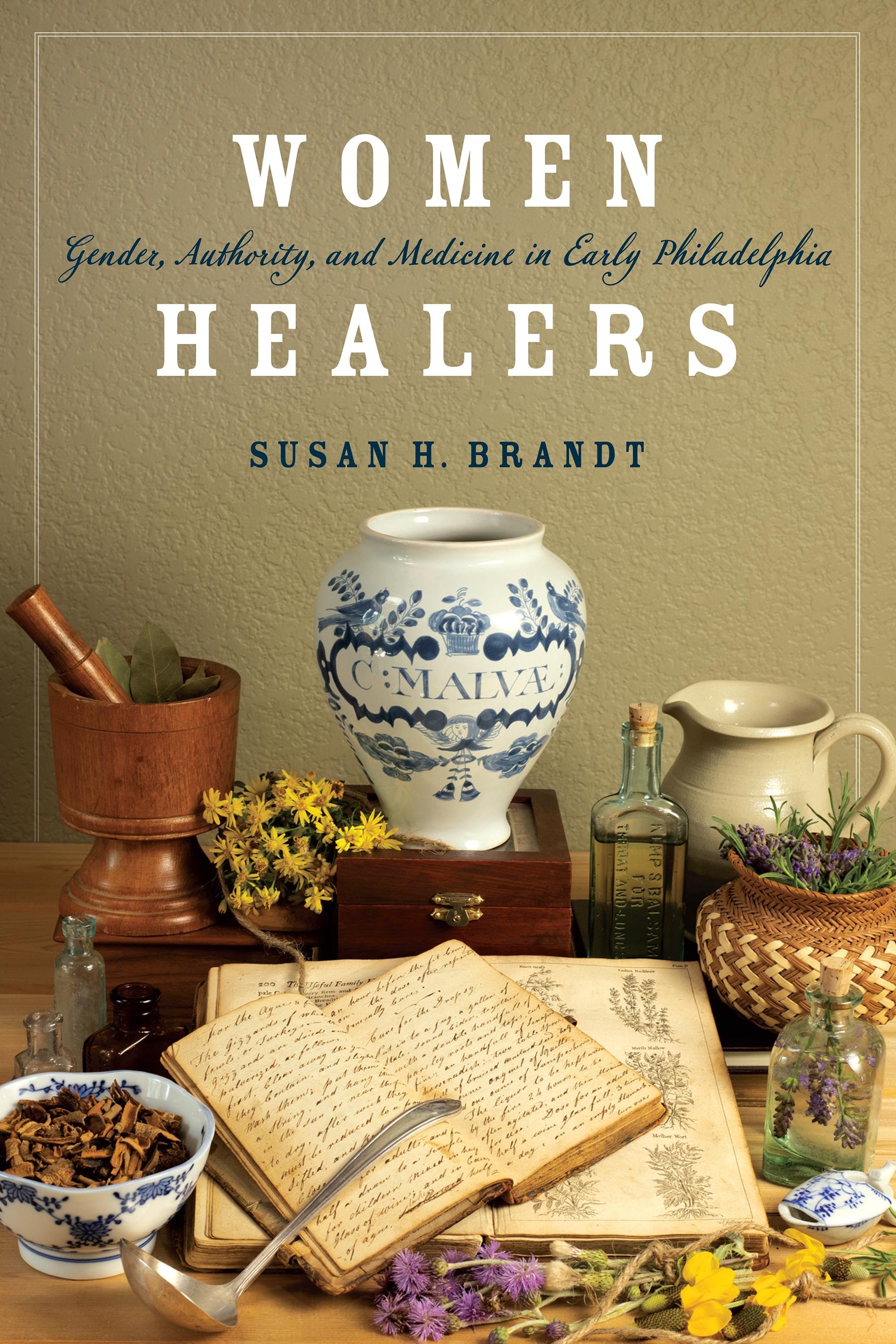
In her eighteenth-century medical recipe manuscript, the Philadelphia healer Elizabeth Coates Paschall asserted her ingenuity and authority with the bold strokes of her pen. Paschall developed an extensive healing practice, consulted medical texts, and conducted experiments based on personal observations. As British North America’s premier city of medicine and science, Philadelphia offered Paschall a nurturing environment enriched by diverse healing cultures and the Quaker values of gender equality and women’s education. She participated in transatlantic medical and scientific networks with her friend, Benjamin Franklin. Paschall was not unique, however. Women Healers recovers numerous women of European, African, and Native American descent who provided the bulk of health care in the greater Philadelphia area for centuries.
Although the history of women practitioners often begins with the 1850 founding of Philadelphia’s Female Medical College, the first women’s medical school in the United States, these students merely continued the legacies of women like Paschall. Remarkably, though, the lives and work of early American female practitioners have gone largely unexplored. While some sources depict these women as amateurs whose influence declined, Susan Brandt documents women’s authoritative medical work that continued well into the nineteenth century. Spanning a century and a half, Women Healers traces the transmission of European women’s medical remedies to the Delaware Valley where they blended with African and Indigenous women’s practices, forming hybrid healing cultures.
Drawing on extensive archival research, Brandt demonstrates that women healers were not inflexible traditional practitioners destined to fall victim to the onward march of Enlightenment science, capitalism, and medical professionalization. Instead, women of various classes and ethnicities found new sources of healing authority, engaged in the consumer medical marketplace, and resisted physicians’ attempts to marginalize them. Brandt reveals that women healers participated actively in medical and scientific knowledge production and the transition to market capitalism.
Before Memmo my notes were scattered across PDFs. Now a workspace pulls everything into one place — I see exactly what's still left to study.
Memmo's summaries are gold before exams. I don't have to re-read 800 pages two weeks before — just the important parts.
The AI chat has saved me the night before an exam more than once. I just keep asking until I get it — no waiting on a study group to reply.
The quizzes hit exactly what I need to know. Memmo tracks what I get stuck on — so I only practice what's worth it.
Flashcards with spaced repetition are magic. Memmo knows when I'm about to forget something and brings it back.
The AI podcasts are my favorite. I listen on my way to school and get a recap without sitting at a computer.

Handbok i kvalitativa metoder
281 kr

Hållbar utveckling: en introduktion för ingenjörer och andra problemlösare
334 kr

Brymans Samhällsvetenskapliga metoder
390 kr

Projektledning
491 kr

Den orättvisa hälsan: om socioekonomiska skillnader i hälsa och livslängd
326 kr

Vetenskapsteori för nybörjare
196 kr

Organizational Leadership
429 kr

På väg mot läraryrket
172 kr

Det sociala livet i skolan: Socialpsykologiska perspektiv
253 kr

Betygsättningens didaktik
151 kr

Personality
402 kr

Studying Leadership
404 kr

Managing Innovation
477 kr

Introduktion till samhällsvetenskaplig metod
347 kr

The Psychology of Sex and Gender
698 kr

Evidens och kunskap för socialt arbete
207 kr

Introduction to Leadership
605 kr