
Before Memmo my notes were scattered across PDFs. Now a workspace pulls everything into one place — I see exactly what's still left to study.
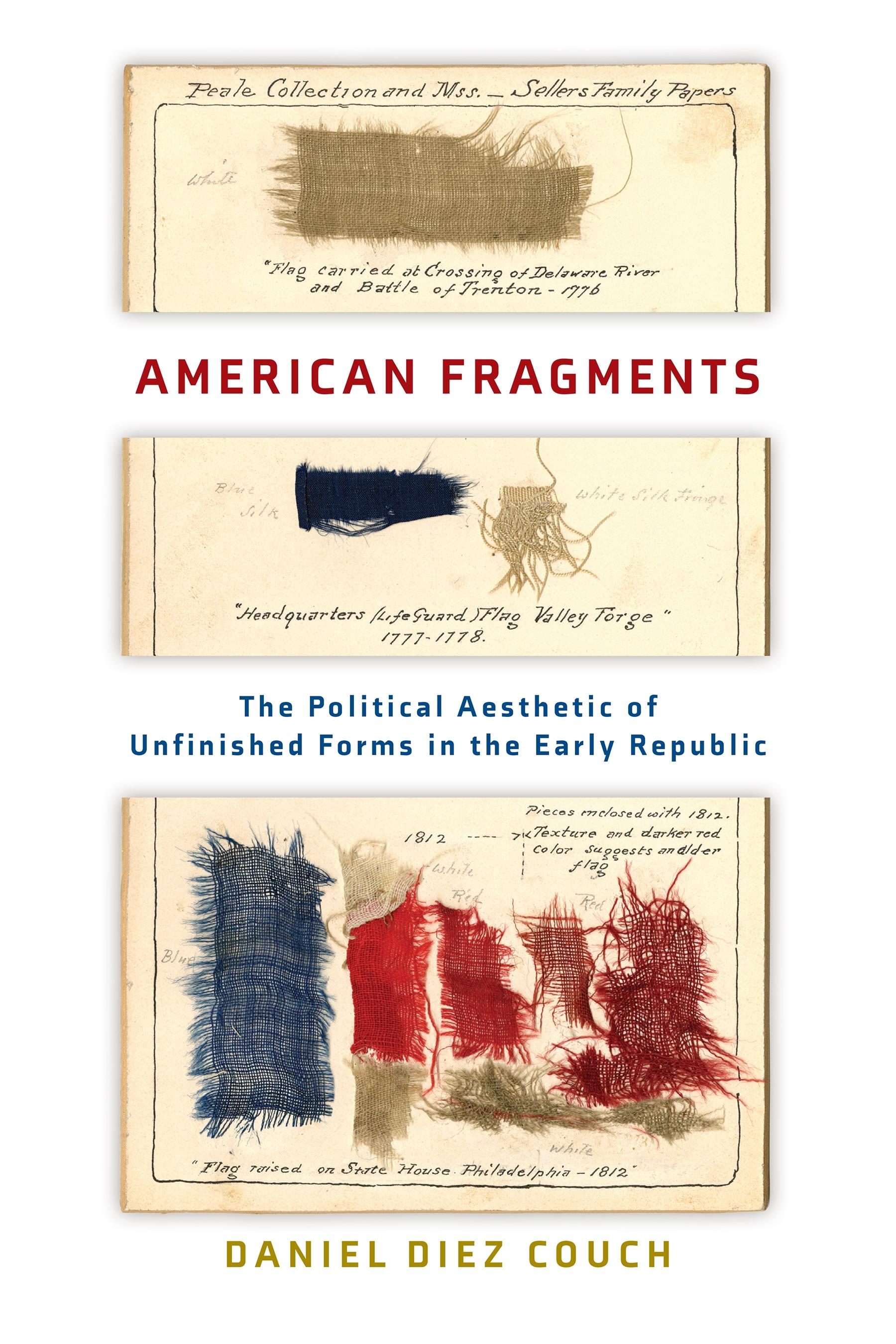
In the years between the independence of the colonies from Britain and the start of the Jacksonian age, American readers consumed an enormous number of literary texts called "fragments." American Fragments recovers this archive of the romantic period to raise a set of pressing questions about the relationship between aesthetic and national realities: What kind of artistic creation was a fragment?, And how and why did deliberately unfinished writing emerge alongside a country that was itself still unfinished?
Through discussions of eighteenth-century transatlantic aesthetics, the Revolutionary War, seduction novels, religious culture, and the construction of authorship, Daniel Diez Couch argues that the literary fragment was used as a means of representing individuals who did not fit neatly into the social fabric of the nation: beggars, prostitutes, veterans, and other ostracized figures. These individuals did not have a secure place in designs for the country's future, yet writers wielded the artistic form of the fragment as an apparatus for surveying their disputed positionality. Time and again, fragments asked what kind of identity marginalized individuals had, and how fictionalized versions of their life stories influenced the sociopolitical circumstances of the emergent nation. In their most progressive moments, the writers of fragments depicted their subjects as being "in process," opting for a fluid version of the self instead of the bounded and coherent one typically hailed as the liberal individual.
Traversing aesthetics, political philosophy, material culture, and history, American Fragments gives new life to a literary form that at once played a significant role in the print ecology of the early republic, and that endures in the works of modernist and postmodernist writers and artists.
Before Memmo my notes were scattered across PDFs. Now a workspace pulls everything into one place — I see exactly what's still left to study.
Memmo's summaries are gold before exams. I don't have to re-read 800 pages two weeks before — just the important parts.
The AI chat has saved me the night before an exam more than once. I just keep asking until I get it — no waiting on a study group to reply.
The quizzes hit exactly what I need to know. Memmo tracks what I get stuck on — so I only practice what's worth it.
Flashcards with spaced repetition are magic. Memmo knows when I'm about to forget something and brings it back.
The AI podcasts are my favorite. I listen on my way to school and get a recap without sitting at a computer.

Handbok i kvalitativa metoder
281 kr

Hållbar utveckling: en introduktion för ingenjörer och andra problemlösare
334 kr

Brymans Samhällsvetenskapliga metoder
390 kr

Projektledning
491 kr

Den orättvisa hälsan: om socioekonomiska skillnader i hälsa och livslängd
326 kr

Vetenskapsteori för nybörjare
196 kr

Organizational Leadership
429 kr

På väg mot läraryrket
172 kr

Det sociala livet i skolan: Socialpsykologiska perspektiv
253 kr

Betygsättningens didaktik
151 kr

Personality
402 kr

Studying Leadership
404 kr

Managing Innovation
477 kr

Introduktion till samhällsvetenskaplig metod
347 kr

The Psychology of Sex and Gender
698 kr

Evidens och kunskap för socialt arbete
207 kr

Introduction to Leadership
605 kr