
Before Memmo my notes were scattered across PDFs. Now a workspace pulls everything into one place — I see exactly what's still left to study.
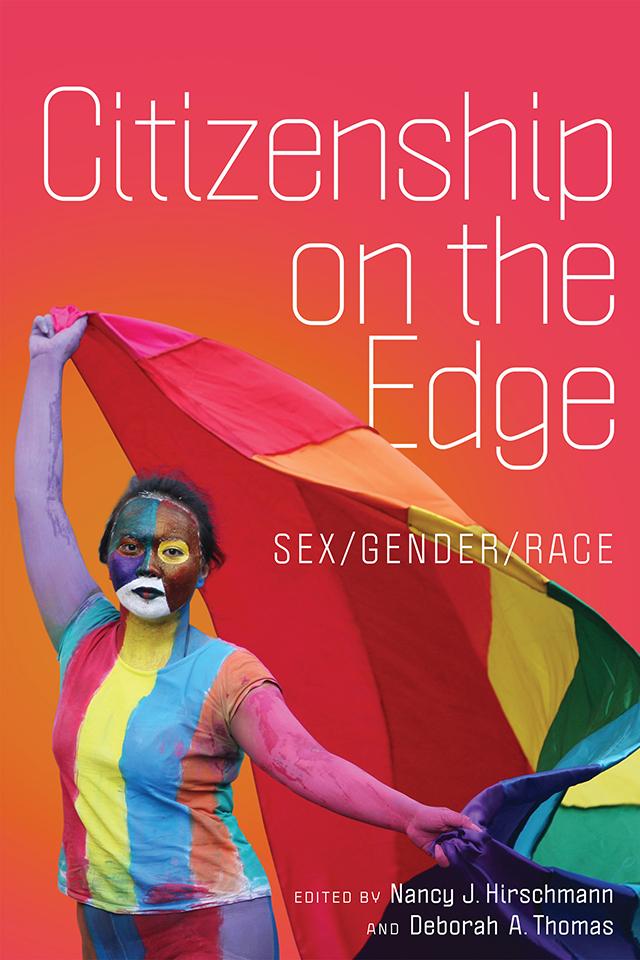
What does it mean to claim, two decades into the twenty-first century, that citizenship is on the edge? The questions that animate this volume focus attention on the relationships between liberal conceptions of citizenship and democracy on one hand, and sex, race, and gender on the other. Who "counts" as a citizen in today's world, and what are the mechanisms through which the rights, benefits, and protections of liberal citizenship are differentially bestowed upon diverse groups? What are the relationships between global economic processes and political and legal empowerment? What forms of violence emerge in order to defend and define these rights, benefits, and protections, and how do these forms of violence reflect long histories? How might we recognize and account for the various avenues through which people attempt to make themselves as political subjects?
Citizenship on the Edge approaches these questions from multiple disciplines, including Africana Studies, anthropology, disability studies, film studies, gender studies, history, law, political science, and sociology. Contributors explore the ways in which compounding social inequalities redound to the conditions and expressions of citizenship in the U.S. and throughout the world. They give a sense of the breathtaking range of the ways that citizenship is controlled, repressed, undercut, and denied at the same time as they outline people's attempts to claim citizenship in ways that are meaningful to them. From university speech policies, to labor and immigration policies, to a rethinking of the security theatre, to women's empowerment in the family and economy and a rethinking of marriage and the family, we see slivers of possibility for a more inclusive and less hostile world, in which citizenship is no longer so in doubt, so on the edge, for so many. As a whole, the volume argues that citizenship cannot be conceptualized as a transcendent good but must instead always be contextualized within specific places and times, and in relation to dynamic struggle.
Contributors: Erez Aloni, Ange-Marie Hancock Alfaro, Nancy J. Hirschmann, Samantha Majic, Valentine M. Moghadam, Michael Rembis, Tracy Robinson, Ellen Samuels, Kimberly Theidon, Deborah A. Thomas.
Before Memmo my notes were scattered across PDFs. Now a workspace pulls everything into one place — I see exactly what's still left to study.
Memmo's summaries are gold before exams. I don't have to re-read 800 pages two weeks before — just the important parts.
The AI chat has saved me the night before an exam more than once. I just keep asking until I get it — no waiting on a study group to reply.
The quizzes hit exactly what I need to know. Memmo tracks what I get stuck on — so I only practice what's worth it.
Flashcards with spaced repetition are magic. Memmo knows when I'm about to forget something and brings it back.
The AI podcasts are my favorite. I listen on my way to school and get a recap without sitting at a computer.

Handbok i kvalitativa metoder
281 kr

Hållbar utveckling: en introduktion för ingenjörer och andra problemlösare
334 kr

Brymans Samhällsvetenskapliga metoder
390 kr

Projektledning
491 kr

Den orättvisa hälsan: om socioekonomiska skillnader i hälsa och livslängd
326 kr

Organizational Leadership
429 kr

Vetenskapsteori för nybörjare
196 kr

På väg mot läraryrket
172 kr

Det sociala livet i skolan: Socialpsykologiska perspektiv
253 kr

Betygsättningens didaktik
151 kr

Personality
402 kr

Studying Leadership
404 kr

Managing Innovation
477 kr

Introduktion till samhällsvetenskaplig metod
347 kr

The Psychology of Sex and Gender
698 kr

Evidens och kunskap för socialt arbete
207 kr

Introduction to Leadership
605 kr