
Before Memmo my notes were scattered across PDFs. Now a workspace pulls everything into one place — I see exactly what's still left to study.
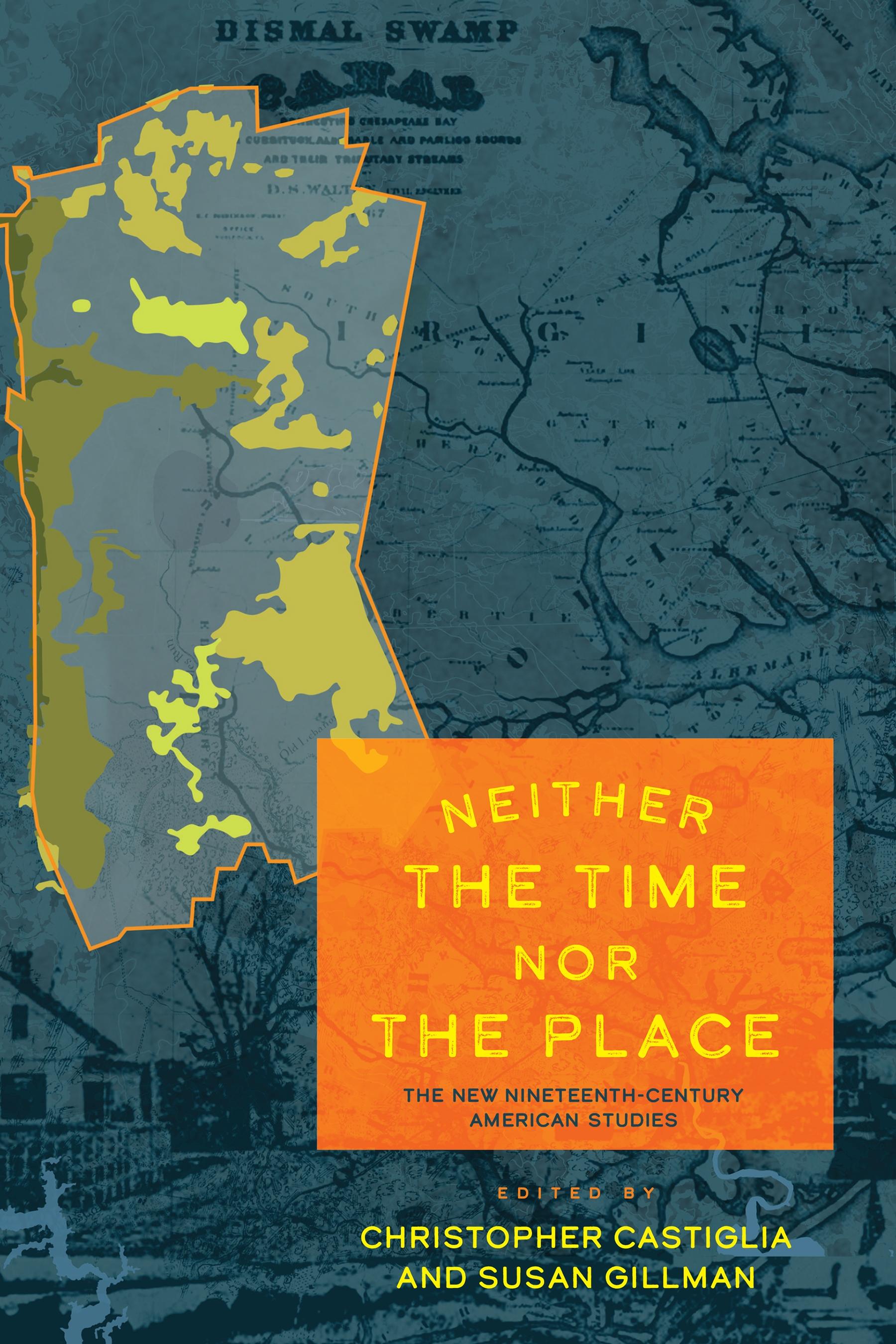
The usefulness of time and place as defining categories would seem to be baked into the very notion of nineteenth-century American literary studies, yet they have challenged scholars practically since the field's inception. In Neither the Time nor the Place seventeen critics consider how the space-time dyad has both troubled and invigorated Americanist scholarship in recent decades and make explicit how time and place are best considered in tandem, interrogating each other.
Taken together, the essays challenge depictions of place and time as bounded and linear, fixed and teleological, or mere ideological constructions. They address both familiar and unexpected objects, practices, and texts, including a born-digital Melville, documents from the construction of the Panama Canal, the hollow earth, the desiring body, textual editing, marble statuary, the sound of frogs, spirit photography, and twentieth-century Civil War fiction. The essays draw on an equally wide variety of critical methodologies, integrating affect studies, queer theory, book history, information studies, sound studies, environmental humanities, new media studies, and genre theory to explore the unexpected dimensions that emerge when time and place are taken as a unit. The pieces are organized around considerations of citizenship, environment, historiography, media, and bodies—five political, cultural, and/or methodological foci for some of the most provocative new work being done in American literary studies.
Neither the Time nor the Place is a book not only for scholars and students already well grounded in the study of nineteenth-century American literature and culture, but for anyone, scholar or student, looking for a roadmap to some of the most vibrant work in the field.
Contributors: Wai Chee Dimock, Stephanie Foote, Matthew Pratt Guterl, Coleman Hutchison, Rodrigo Lazo, Caroline Levander, Robert S. Levine, Christopher Looby, Dana Luciano, Timothy Marr, Dana D. Nelson, Ifeoma C. Kiddoe Nwankwo, Mark Storey, Matthew E. Suazo, and Edward Sugden.
Before Memmo my notes were scattered across PDFs. Now a workspace pulls everything into one place — I see exactly what's still left to study.
Memmo's summaries are gold before exams. I don't have to re-read 800 pages two weeks before — just the important parts.
The AI chat has saved me the night before an exam more than once. I just keep asking until I get it — no waiting on a study group to reply.
The quizzes hit exactly what I need to know. Memmo tracks what I get stuck on — so I only practice what's worth it.
Flashcards with spaced repetition are magic. Memmo knows when I'm about to forget something and brings it back.
The AI podcasts are my favorite. I listen on my way to school and get a recap without sitting at a computer.

Handbok i kvalitativa metoder
281 kr

Hållbar utveckling: en introduktion för ingenjörer och andra problemlösare
334 kr

Brymans Samhällsvetenskapliga metoder
390 kr

Projektledning
491 kr

Den orättvisa hälsan: om socioekonomiska skillnader i hälsa och livslängd
326 kr

Organizational Leadership
429 kr

Vetenskapsteori för nybörjare
196 kr

På väg mot läraryrket
172 kr

Det sociala livet i skolan: Socialpsykologiska perspektiv
253 kr

Betygsättningens didaktik
151 kr

Personality
402 kr

Studying Leadership
404 kr

Managing Innovation
477 kr

Introduktion till samhällsvetenskaplig metod
347 kr

The Psychology of Sex and Gender
698 kr

Evidens och kunskap för socialt arbete
207 kr

Introduction to Leadership
605 kr