
Before Memmo my notes were scattered across PDFs. Now a workspace pulls everything into one place — I see exactly what's still left to study.
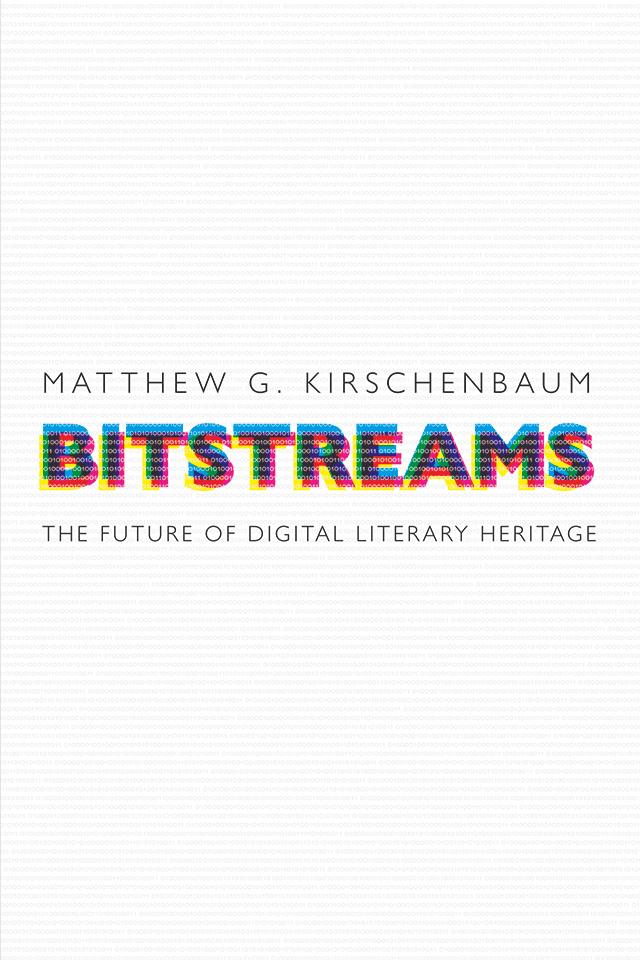
What are the future prospects for literary knowledge now that literary texts—and the material remains of authorship, publishing, and reading—are reduced to bitstreams, strings of digital ones and zeros? What are the opportunities and obligations for book history, textual criticism, and bibliography when literary texts are distributed across digital platforms, devices, formats, and networks? Indeed, what is textual scholarship when the "text" of our everyday speech is a verb as often as it is a noun?
These are the questions that motivate Matthew G. Kirschenbaum in Bitstreams, a distillation of twenty years of thinking about the intersection of digital media, textual studies, and literary archives. With an intimate narrative style that belies the cold technics of computing, Kirschenbaum takes the reader into the library where all access to Toni Morrison's "papers" is mediated by digital technology; to the bitmapped fonts of Kamau Brathwaite's Macintosh; to the process of recovering and restoring fourteen lost "HyperPoems" by the noted poet William Dickey; and finally, into the offices of Melcher Media, a small boutique design studio reimagining the future of the codex.
A persistent theme is that bits—the ubiquitous ones and zeros of computing—are never self-identical, but always inflected by the material realities of particular systems, platforms, and protocols. These materialities are not liabilities: they are the very bulwark on which we stake the enterprise for preserving the future of literary heritage.
Before Memmo my notes were scattered across PDFs. Now a workspace pulls everything into one place — I see exactly what's still left to study.
Memmo's summaries are gold before exams. I don't have to re-read 800 pages two weeks before — just the important parts.
The AI chat has saved me the night before an exam more than once. I just keep asking until I get it — no waiting on a study group to reply.
The quizzes hit exactly what I need to know. Memmo tracks what I get stuck on — so I only practice what's worth it.
Flashcards with spaced repetition are magic. Memmo knows when I'm about to forget something and brings it back.
The AI podcasts are my favorite. I listen on my way to school and get a recap without sitting at a computer.

Handbok i kvalitativa metoder
281 kr

Hållbar utveckling: en introduktion för ingenjörer och andra problemlösare
334 kr

Brymans Samhällsvetenskapliga metoder
390 kr

Projektledning
491 kr

Den orättvisa hälsan: om socioekonomiska skillnader i hälsa och livslängd
326 kr

Vetenskapsteori för nybörjare
196 kr

Organizational Leadership
429 kr

På väg mot läraryrket
172 kr

Det sociala livet i skolan: Socialpsykologiska perspektiv
253 kr

Betygsättningens didaktik
151 kr

Personality
402 kr

Studying Leadership
404 kr

Managing Innovation
477 kr

Introduktion till samhällsvetenskaplig metod
347 kr

The Psychology of Sex and Gender
698 kr

Evidens och kunskap för socialt arbete
207 kr

Introduction to Leadership
605 kr