
Before Memmo my notes were scattered across PDFs. Now a workspace pulls everything into one place — I see exactly what's still left to study.
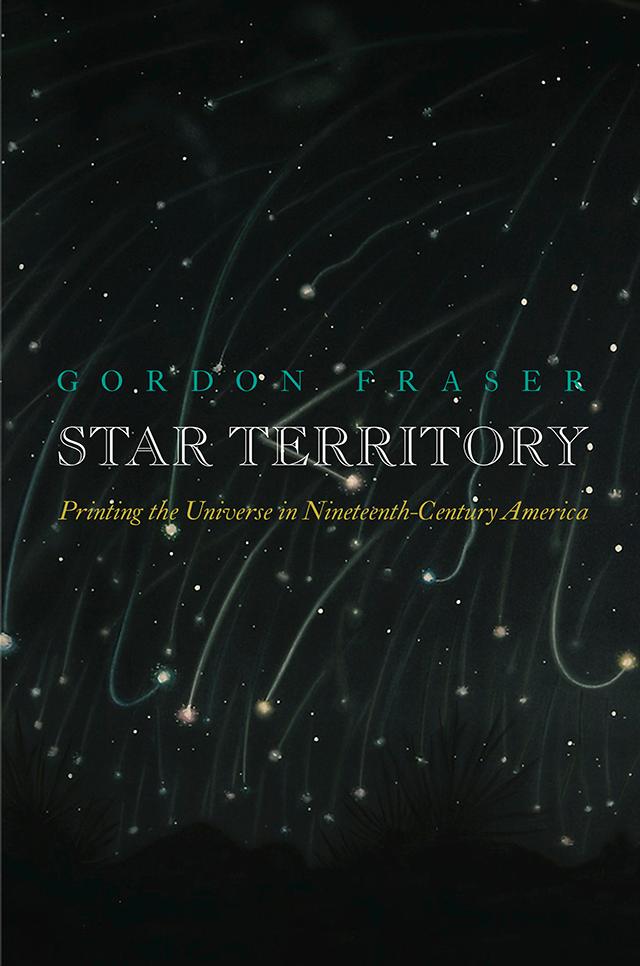
The United States has been a space power since its founding, Gordon Fraser writes. The white stars on its flag reveal the dream of continental elites that the former colonies might constitute a "new constellation" in the firmament of nations. The streets and avenues of its capital city were mapped in reference to celestial observations. And as the nineteenth century unfolded, all efforts to colonize the North American continent depended upon the science of surveying, or mapping with reference to celestial movement. Through its built environment, cultural mythology, and exercise of military power, the United States has always treated the cosmos as a territory available for exploitation.
In Star Territory Fraser explores how from its beginning, agents of the state, including President John Adams, Admiral Charles Henry Davis, and astronomer Maria Mitchell, participated in large-scale efforts to map the nation onto cosmic space. Through almanacs, maps, and star charts, practical information and exceptionalist mythologies were transmitted to the nation's soldiers, scientists, and citizens.
This is, however, only one part of the story Fraser tells. From the country's first Black surveyors, seamen, and publishers to the elected officials of the Cherokee Nation and Hawaiian resistance leaders, other actors established alternative cosmic communities. These Black and indigenous astronomers, prophets, and printers offered ways of understanding the heavens that broke from the work of the U.S. officials for whom the universe was merely measurable and exploitable.
Today, NASA administrators advocate public-private partnerships for the development of space commerce while the military seeks to control strategic regions above the atmosphere. If observers imagine that these developments are the direct offshoots of a mid-twentieth-century space race, Fraser brilliantly demonstrates otherwise. The United States' efforts to exploit the cosmos, as well as the resistance to these efforts, have a history that starts nearly two centuries before the Gemini and Apollo missions of the 1960s.
Before Memmo my notes were scattered across PDFs. Now a workspace pulls everything into one place — I see exactly what's still left to study.
Memmo's summaries are gold before exams. I don't have to re-read 800 pages two weeks before — just the important parts.
The AI chat has saved me the night before an exam more than once. I just keep asking until I get it — no waiting on a study group to reply.
The quizzes hit exactly what I need to know. Memmo tracks what I get stuck on — so I only practice what's worth it.
Flashcards with spaced repetition are magic. Memmo knows when I'm about to forget something and brings it back.
The AI podcasts are my favorite. I listen on my way to school and get a recap without sitting at a computer.

Handbok i kvalitativa metoder
281 kr

Hållbar utveckling: en introduktion för ingenjörer och andra problemlösare
334 kr

Brymans Samhällsvetenskapliga metoder
390 kr

Projektledning
491 kr

Den orättvisa hälsan: om socioekonomiska skillnader i hälsa och livslängd
326 kr

Vetenskapsteori för nybörjare
196 kr

Organizational Leadership
429 kr

På väg mot läraryrket
172 kr

Det sociala livet i skolan: Socialpsykologiska perspektiv
253 kr

Betygsättningens didaktik
151 kr

Personality
402 kr

Studying Leadership
404 kr

Managing Innovation
477 kr

Introduktion till samhällsvetenskaplig metod
347 kr

The Psychology of Sex and Gender
698 kr

Evidens och kunskap för socialt arbete
207 kr

Introduction to Leadership
605 kr