
Before Memmo my notes were scattered across PDFs. Now a workspace pulls everything into one place — I see exactly what's still left to study.
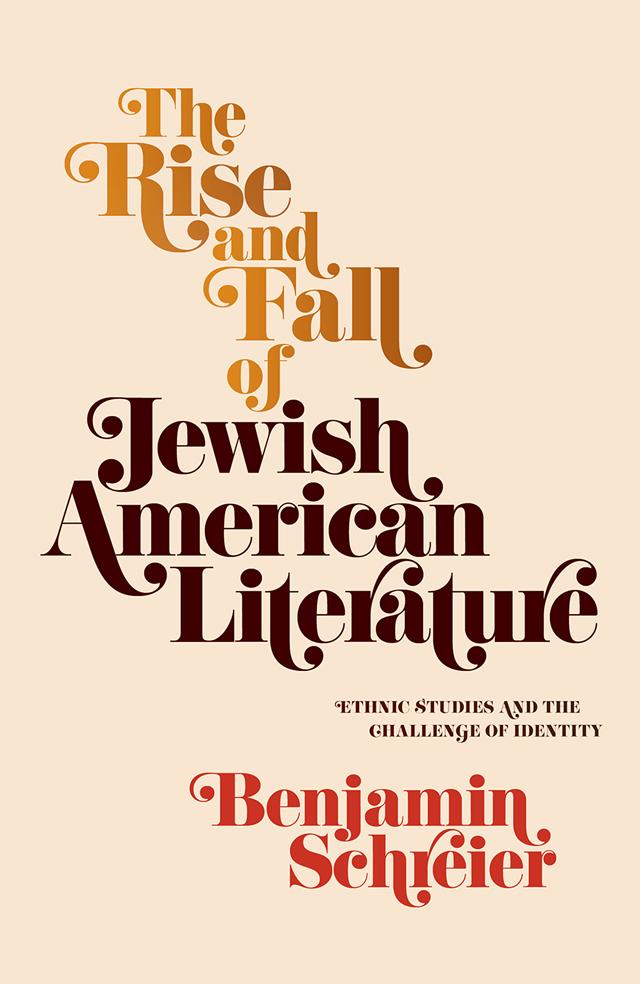
Benjamin Schreier argues that Jewish American literature's dominant cliché of "breakthrough"—that is, the irruption into the heart of the American cultural scene during the 1950s of Jewish American writers like Bernard Malamud, Philip Roth, Saul Bellow, and Grace Paley—must also be seen as the critically originary moment of Jewish American literary study. According to Schreier, this is the primal scene of the Jewish American literary field, the point that the field cannot avoid repeating and replaying in instantiating itself as the more or less formalized academic study of Jewish American literature. More than sixty years later, the field's legibility, the very condition of its possibility, remains overwhelmingly grounded in a reliance on this single ethnological narrative.
In a polemic against what he sees as the unexamined foundations and stagnant state of the field, Schreier interrogates a series of professionally powerful assumptions about Jewish American literary history—how they came into being and how they hardened into cliché. He offers a critical genealogy of breakthrough and other narratives through which Jewish Studies has asserted its compelling self-evidence, not simply under the banner of the historical realities Jewish Studies claims to represent but more fundamentally for the intellectual and institutional structures through which it produces these representations. He shows how a historicist scholarly narrative quickly consolidated and became hegemonic, in part because of its double articulation of a particular American subject and of a transnational historiography that categorically identified that subject as Jewish. The ethnological grounding of the Jewish American literary field is no longer tenable, Schreier asserts, in an argument with broad implications for the reconceptualization of Jewish and other identity-based ethnic studies.
Before Memmo my notes were scattered across PDFs. Now a workspace pulls everything into one place — I see exactly what's still left to study.
Memmo's summaries are gold before exams. I don't have to re-read 800 pages two weeks before — just the important parts.
The AI chat has saved me the night before an exam more than once. I just keep asking until I get it — no waiting on a study group to reply.
The quizzes hit exactly what I need to know. Memmo tracks what I get stuck on — so I only practice what's worth it.
Flashcards with spaced repetition are magic. Memmo knows when I'm about to forget something and brings it back.
The AI podcasts are my favorite. I listen on my way to school and get a recap without sitting at a computer.

Handbok i kvalitativa metoder
281 kr

Hållbar utveckling: en introduktion för ingenjörer och andra problemlösare
334 kr

Brymans Samhällsvetenskapliga metoder
390 kr

Projektledning
491 kr

Den orättvisa hälsan: om socioekonomiska skillnader i hälsa och livslängd
326 kr

Vetenskapsteori för nybörjare
196 kr

Organizational Leadership
429 kr

På väg mot läraryrket
172 kr

Det sociala livet i skolan: Socialpsykologiska perspektiv
253 kr

Betygsättningens didaktik
151 kr

Personality
402 kr

Studying Leadership
404 kr

Managing Innovation
477 kr

Introduktion till samhällsvetenskaplig metod
347 kr

The Psychology of Sex and Gender
698 kr

Evidens och kunskap för socialt arbete
207 kr

Introduction to Leadership
605 kr