
Before Memmo my notes were scattered across PDFs. Now a workspace pulls everything into one place — I see exactly what's still left to study.
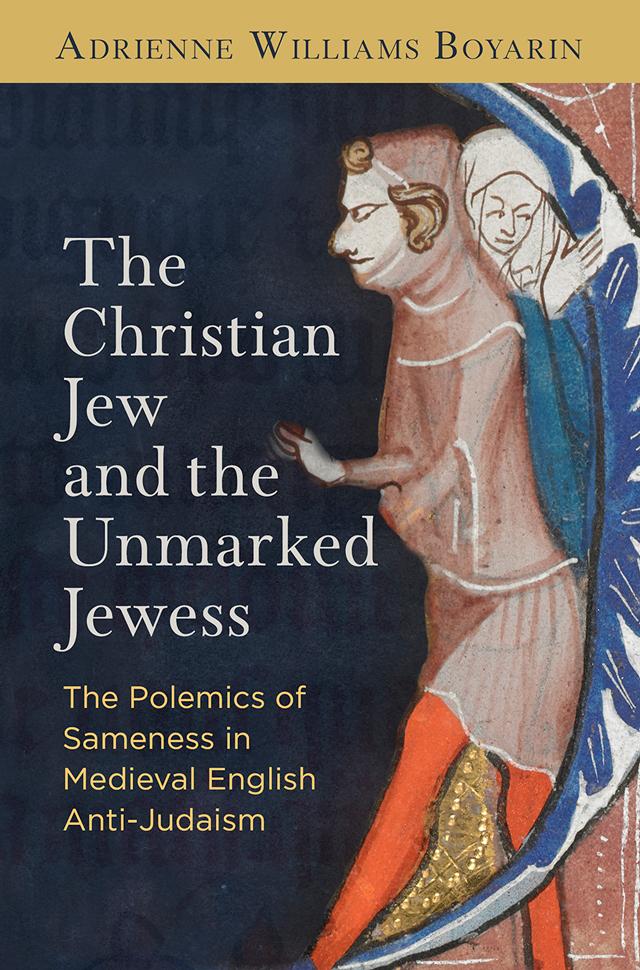
In the Plea Rolls of the Exchequer of the Jews, Trinity Term 1277, Adrienne Williams Boyarin finds the case of one Sampson son of Samuel, a Jew of Northampton, arrested for impersonating a Franciscan friar and preaching false Christianity. He was sentenced to walk for three days through the centers of London, Canterbury, Oxford, Lincoln, and Northampton carrying the entrails and flayed skin of a calf and exposing his naked, circumcised body to onlookers. Sampson's crime and sentence, Williams Boyarin argues, suggest that he made a convincing friar—when clothed. Indeed, many English texts of this era struggle with the similarities of Jews and Christians, but especially of Jewish and Christian women. Unlike men, Jewish women did not typically wear specific identifying clothing, nor were they represented as physiognomically distinct. Williams Boyarin observes that both before and after the periods in which art historians note a consistent visual repertoire of villainy and difference around Jewish men, English authors highlight and exploit Jewish women's indistinguishability from Christians. Exploring what she calls a "polemics of sameness," she elucidates an essential part of the rhetoric employed by medieval anti-Jewish materials, which could assimilate the Jew into the Christian and, as a consequence, render the Jewess a dangerous but unseeable enemy or a sign of the always-convertible self.
The Christian Jew and the Unmarked Jewess considers realities and fantasies of indistinguishability. It focuses on how medieval Christians could identify with Jews and even think of themselves as Jewish—positively or negatively, historically or figurally. Williams Boyarin identifies and explores polemics of sameness through a broad range of theological, historical, and literary works from medieval England before turning more specifically to stereotypes of Jewish women and the ways in which rhetorical strategies that blur the line between "saming" and "othering" reveal gendered habits of representation.
Before Memmo my notes were scattered across PDFs. Now a workspace pulls everything into one place — I see exactly what's still left to study.
Memmo's summaries are gold before exams. I don't have to re-read 800 pages two weeks before — just the important parts.
The AI chat has saved me the night before an exam more than once. I just keep asking until I get it — no waiting on a study group to reply.
The quizzes hit exactly what I need to know. Memmo tracks what I get stuck on — so I only practice what's worth it.
Flashcards with spaced repetition are magic. Memmo knows when I'm about to forget something and brings it back.
The AI podcasts are my favorite. I listen on my way to school and get a recap without sitting at a computer.

Handbok i kvalitativa metoder
281 kr

Hållbar utveckling: en introduktion för ingenjörer och andra problemlösare
334 kr

Brymans Samhällsvetenskapliga metoder
390 kr

Projektledning
491 kr

Den orättvisa hälsan: om socioekonomiska skillnader i hälsa och livslängd
326 kr

Vetenskapsteori för nybörjare
196 kr

Organizational Leadership
429 kr

På väg mot läraryrket
172 kr

Det sociala livet i skolan: Socialpsykologiska perspektiv
253 kr

Betygsättningens didaktik
151 kr

Personality
402 kr

Studying Leadership
404 kr

Managing Innovation
477 kr

Introduktion till samhällsvetenskaplig metod
347 kr

The Psychology of Sex and Gender
698 kr

Evidens och kunskap för socialt arbete
207 kr

Introduction to Leadership
605 kr