
Before Memmo my notes were scattered across PDFs. Now a workspace pulls everything into one place — I see exactly what's still left to study.
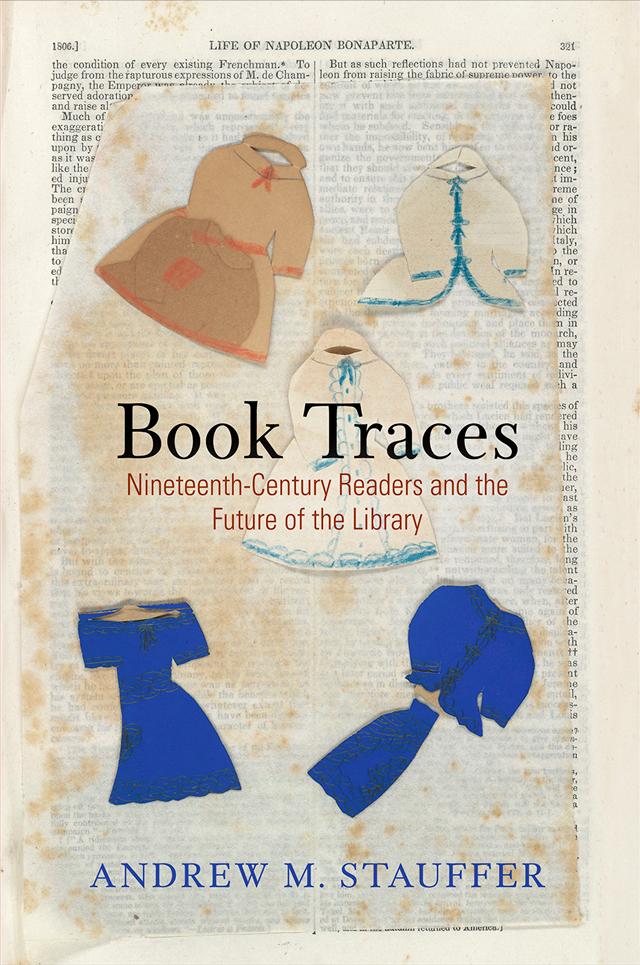
In most college and university libraries, materials published before 1800 have been moved into special collections, while the post-1923 books remain in general circulation. But books published between these dates are vulnerable to deaccessioning, as libraries increasingly reconfigure access to public-domain texts via digital repositories such as Google Books. Even libraries with strong commitments to their print collections are clearing out the duplicates, assuming that circulating copies of any given nineteenth-century edition are essentially identical to one another. When you look closely, however, you see that they are not.
Many nineteenth-century books were donated by alumni or their families decades ago, and many of them bear traces left behind by the people who first owned and used them. In Book Traces, Andrew M. Stauffer adopts what he calls "guided serendipity" as a tactic in pursuit of two goals: first, to read nineteenth-century poetry through the clues and objects earlier readers left in their books and, second, to defend the value of keeping the physical volumes on the shelves. Finding in such books of poetry the inscriptions, annotations, and insertions made by their original owners, and using them as exemplary case studies, Stauffer shows how the physical, historical book enables a modern reader to encounter poetry through the eyes of someone for whom it was personal.
Before Memmo my notes were scattered across PDFs. Now a workspace pulls everything into one place — I see exactly what's still left to study.
Memmo's summaries are gold before exams. I don't have to re-read 800 pages two weeks before — just the important parts.
The AI chat has saved me the night before an exam more than once. I just keep asking until I get it — no waiting on a study group to reply.
The quizzes hit exactly what I need to know. Memmo tracks what I get stuck on — so I only practice what's worth it.
Flashcards with spaced repetition are magic. Memmo knows when I'm about to forget something and brings it back.
The AI podcasts are my favorite. I listen on my way to school and get a recap without sitting at a computer.

Handbok i kvalitativa metoder
281 kr

Hållbar utveckling: en introduktion för ingenjörer och andra problemlösare
334 kr

Brymans Samhällsvetenskapliga metoder
390 kr

Projektledning
491 kr

Den orättvisa hälsan: om socioekonomiska skillnader i hälsa och livslängd
326 kr

Vetenskapsteori för nybörjare
196 kr

Organizational Leadership
429 kr

På väg mot läraryrket
172 kr

Det sociala livet i skolan: Socialpsykologiska perspektiv
253 kr

Betygsättningens didaktik
151 kr

Personality
402 kr

Studying Leadership
404 kr

Managing Innovation
477 kr

Introduktion till samhällsvetenskaplig metod
347 kr

The Psychology of Sex and Gender
698 kr

Evidens och kunskap för socialt arbete
207 kr

Introduction to Leadership
605 kr