
Before Memmo my notes were scattered across PDFs. Now a workspace pulls everything into one place — I see exactly what's still left to study.
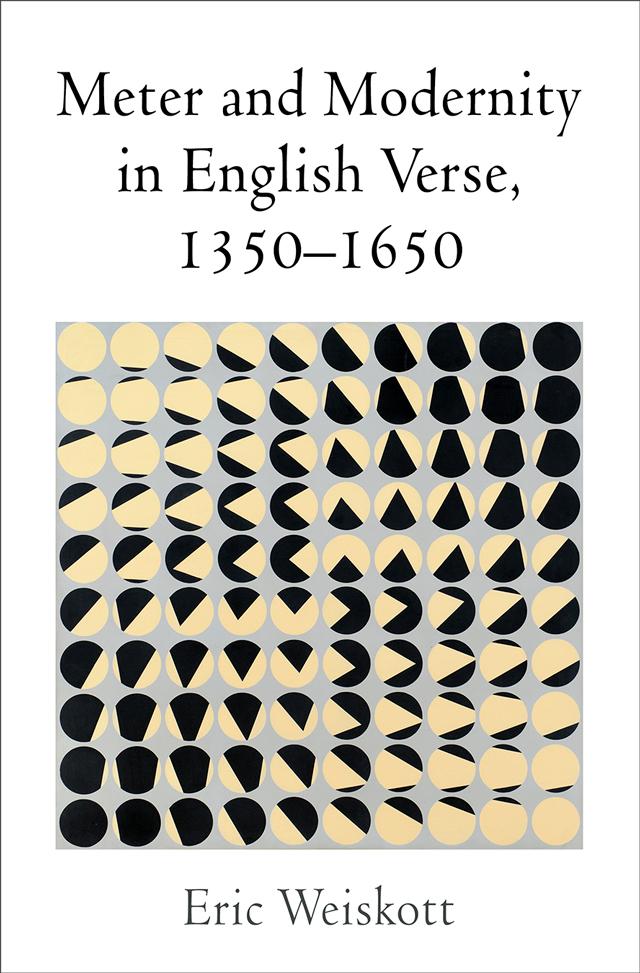
What would English literary history look like if the unit of measure were not the political reign but the poetic tradition? The earliest poems in English were written in alliterative verse, the meter of Beowulf. Alliterative meter preceded tetrameter, which first appeared in the twelfth century, and tetrameter in turn preceded pentameter, the five-stress line that would become the dominant English verse form of modernity, though it was invented by Chaucer in the 1380s. While this chronology is accurate, Eric Weiskott argues, the traditional periodization of literature in modern scholarship distorts the meaning of meters as they appeared to early poets and readers.
In Meter and Modernity in English Verse, 1350-1650, Weiskott examines the uses and misuses of these three meters as markers of literary time, "medieval" or "modern," though all three were in concurrent use both before and after 1500. In each section of the book, he considers two of the traditions through the prism of a third element: alliterative meter and tetrameter in poems of political prophecy; alliterative meter and pentameter in William Langland's Piers Plowman and early blank verse; and tetrameter and pentameter in Chaucer, his predecessors, and his followers. Reversing the historical perspective in which scholars conventionally view these authors, Weiskott reveals Langland to be metrically precocious and Chaucer metrically nostalgic.
More than a history of prosody, Weiskott's book challenges the divide between medieval and modern literature. Rejecting the premise that modernity occurred as a specifiable event, he uses metrical history to renegotiate the trajectories of English literary history and advances a narrative of sociocultural change that runs parallel to metrical change, exploring the relationship between literary practice, social placement, and historical time.
Before Memmo my notes were scattered across PDFs. Now a workspace pulls everything into one place — I see exactly what's still left to study.
Memmo's summaries are gold before exams. I don't have to re-read 800 pages two weeks before — just the important parts.
The AI chat has saved me the night before an exam more than once. I just keep asking until I get it — no waiting on a study group to reply.
The quizzes hit exactly what I need to know. Memmo tracks what I get stuck on — so I only practice what's worth it.
Flashcards with spaced repetition are magic. Memmo knows when I'm about to forget something and brings it back.
The AI podcasts are my favorite. I listen on my way to school and get a recap without sitting at a computer.

Handbok i kvalitativa metoder
281 kr

Hållbar utveckling: en introduktion för ingenjörer och andra problemlösare
334 kr

Brymans Samhällsvetenskapliga metoder
390 kr

Projektledning
491 kr

Den orättvisa hälsan: om socioekonomiska skillnader i hälsa och livslängd
326 kr

Vetenskapsteori för nybörjare
196 kr

Organizational Leadership
429 kr

På väg mot läraryrket
172 kr

Det sociala livet i skolan: Socialpsykologiska perspektiv
253 kr

Betygsättningens didaktik
151 kr

Personality
402 kr

Studying Leadership
404 kr

Managing Innovation
477 kr

Introduktion till samhällsvetenskaplig metod
347 kr

The Psychology of Sex and Gender
698 kr

Evidens och kunskap för socialt arbete
207 kr

Introduction to Leadership
605 kr