
Before Memmo my notes were scattered across PDFs. Now a workspace pulls everything into one place — I see exactly what's still left to study.
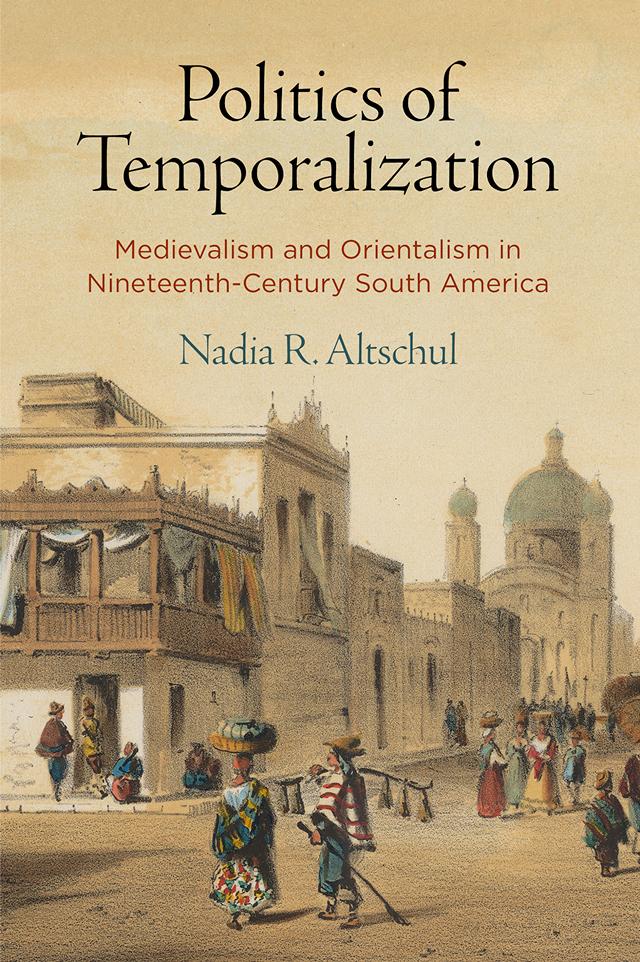
A postcolonial study of the conceptualization of nineteenth- and twentieth-century Latin America as medieval and oriental
If Spain and Portugal were perceived as backward in the nineteenth century—still tainted, in the minds of European writers and thinkers, by more than a whiff of the medieval and Moorish—Ibero-America lagged even further behind. Originally colonized in the late fifteenth century, Chile, Argentina, and Brazil were characterized by European travelers and South American elites alike as both feudal and oriental, as if they retained an oriental-Moorish character due to the centuries-long presence of Islam in the Iberian Peninsula. So, Nadia R. Altschul observes, the Scottish metropolitan writer Maria Graham (1785-1842) depicted the Chile in which she found herself stranded after the death of her sea captain husband as a premodern, precapitalist, and orientalized place that could only benefit from the free trade imperialism of the British. Domingo F. Sarmiento (1811-1888), the most influential Latin American writer and statesman of his day, conceived of his own Euro-American creole class as medieval in such works as Civilization and Barbarism: The Life of Juan Facundo Quiroga (1845) and Recollections of a Provincial Past (1850), and wrote of the inherited Moorish character of Spanish America in his 1883 Conflict and Harmony of the Races in America. Moving forward into the first half of the twentieth century, Altschul explores the oriental character that Gilberto Freyre assigned to Portuguese colonization in his The Masters and the Slaves (1933), in which he postulated the "Mozarabic" essence of Brazil.
In Politics of Temporalization, Altschul examines the case of South America to ask more broadly what is at stake—what is harmed, what is excused—when the present is temporalized, when elements of "the now" are characterized as belonging to, and consequently imposed upon, a constructed and othered "past."
Before Memmo my notes were scattered across PDFs. Now a workspace pulls everything into one place — I see exactly what's still left to study.
Memmo's summaries are gold before exams. I don't have to re-read 800 pages two weeks before — just the important parts.
The AI chat has saved me the night before an exam more than once. I just keep asking until I get it — no waiting on a study group to reply.
The quizzes hit exactly what I need to know. Memmo tracks what I get stuck on — so I only practice what's worth it.
Flashcards with spaced repetition are magic. Memmo knows when I'm about to forget something and brings it back.
The AI podcasts are my favorite. I listen on my way to school and get a recap without sitting at a computer.

Handbok i kvalitativa metoder
281 kr

Hållbar utveckling: en introduktion för ingenjörer och andra problemlösare
334 kr

Brymans Samhällsvetenskapliga metoder
390 kr

Projektledning
491 kr

Den orättvisa hälsan: om socioekonomiska skillnader i hälsa och livslängd
326 kr

Organizational Leadership
429 kr

Vetenskapsteori för nybörjare
196 kr

På väg mot läraryrket
172 kr

Det sociala livet i skolan: Socialpsykologiska perspektiv
253 kr

Betygsättningens didaktik
151 kr

Personality
402 kr

Studying Leadership
404 kr

Managing Innovation
477 kr

Introduktion till samhällsvetenskaplig metod
347 kr

The Psychology of Sex and Gender
698 kr

Evidens och kunskap för socialt arbete
207 kr

Introduction to Leadership
605 kr