
Before Memmo my notes were scattered across PDFs. Now a workspace pulls everything into one place — I see exactly what's still left to study.
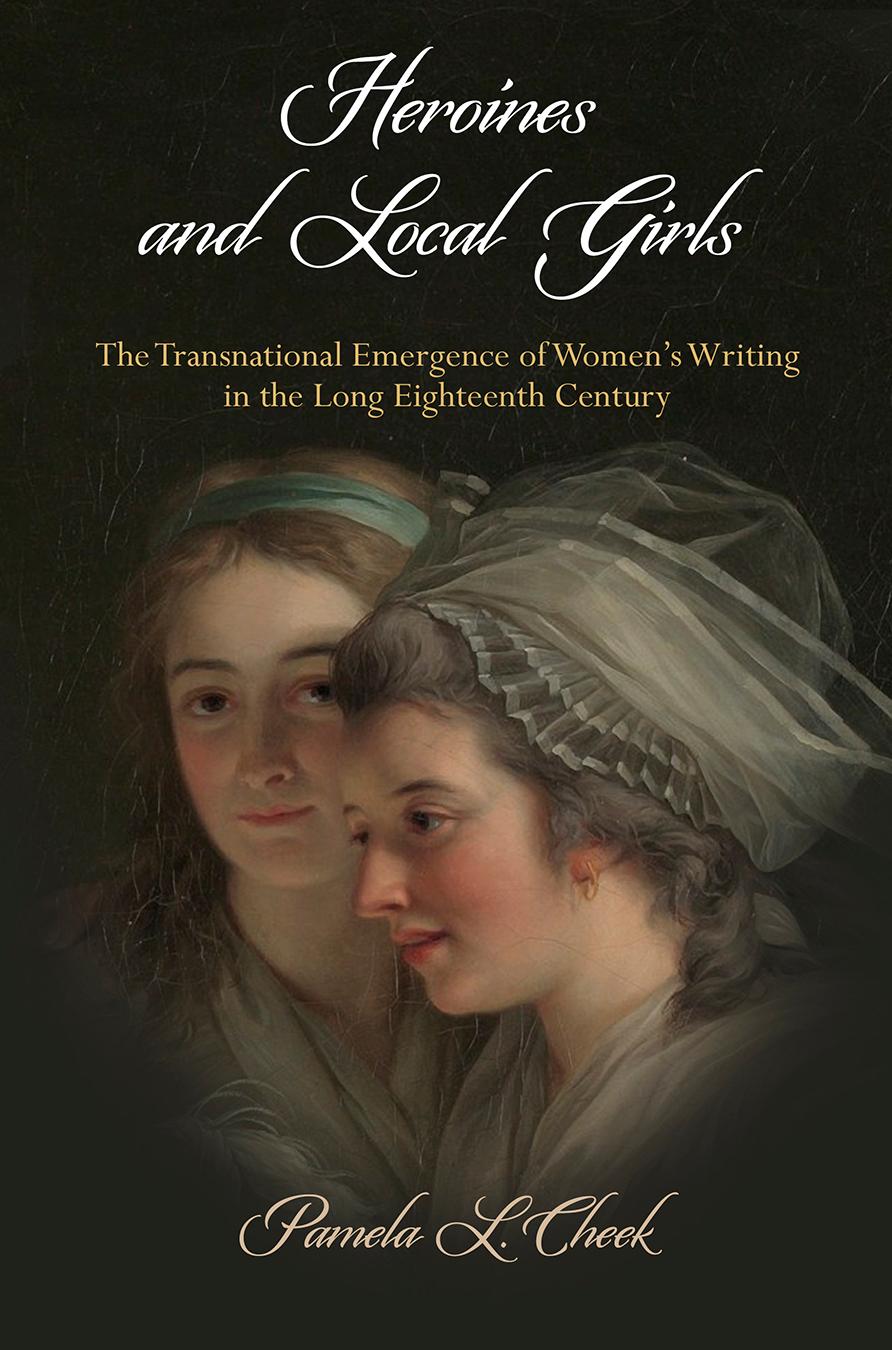
Over the course of the long eighteenth century, a network of some fifty women writers, working in French, English, Dutch, and German, staked out a lasting position in the European literary field. These writers were multilingual and lived for many years outside of their countries of origin, translated and borrowed from each others' works, attended literary circles and salons, and fashioned a transnational women's literature characterized by highly recognizable codes. Drawing on a literary geography of national types, women writers across Western Europe read, translated, wrote, and rewrote stories about exceptional young women, literary heroines who transcend the gendered destiny of their distinctive cultural and national contexts. These transcultural heroines struggle against the cultural constraints determining the sexualized fates of local girls.
In Heroines and Local Girls, Pamela L. Cheek explores the rise of women's writing as a distinct, transnational category in Britain and Europe between 1650 and 1810. Starting with an account of a remarkable tea party that brought together Frances Burney, Sophie von La Roche, and Marie Elisabeth de La Fite in conversation about Stéphanie de Genlis, she excavates a complex community of European and British women authors. In chapters that incorporate history, network theory, and feminist literary history, she examines the century-and-a-half literary lineage connecting Madame de Maintenon to Mary Wollstonecraft, including Charlotte Lennox and Françoise de Graffigny and their radical responses to sexual violence. Neither simply a reaction to, nor collusion with, patriarchal and national literary forms but, rather, both, women's writing offered an invitation to group membership through a literary project of self-transformation. In so doing, argues Cheek, women's writing was the first modern literary category to capitalize transnationally on the virtue of identity, anticipating the global literary marketplace's segmentation of affinity-based reading publics, and continuing to define women's writing to this day.
Before Memmo my notes were scattered across PDFs. Now a workspace pulls everything into one place — I see exactly what's still left to study.
Memmo's summaries are gold before exams. I don't have to re-read 800 pages two weeks before — just the important parts.
The AI chat has saved me the night before an exam more than once. I just keep asking until I get it — no waiting on a study group to reply.
The quizzes hit exactly what I need to know. Memmo tracks what I get stuck on — so I only practice what's worth it.
Flashcards with spaced repetition are magic. Memmo knows when I'm about to forget something and brings it back.
The AI podcasts are my favorite. I listen on my way to school and get a recap without sitting at a computer.

Handbok i kvalitativa metoder
281 kr

Hållbar utveckling: en introduktion för ingenjörer och andra problemlösare
334 kr

Brymans Samhällsvetenskapliga metoder
390 kr

Projektledning
491 kr

Den orättvisa hälsan: om socioekonomiska skillnader i hälsa och livslängd
326 kr

Vetenskapsteori för nybörjare
196 kr

Organizational Leadership
429 kr

På väg mot läraryrket
172 kr

Det sociala livet i skolan: Socialpsykologiska perspektiv
253 kr

Betygsättningens didaktik
151 kr

Personality
402 kr

Studying Leadership
404 kr

Managing Innovation
477 kr

Introduktion till samhällsvetenskaplig metod
347 kr

The Psychology of Sex and Gender
698 kr

Evidens och kunskap för socialt arbete
207 kr

Introduction to Leadership
605 kr