
Before Memmo my notes were scattered across PDFs. Now a workspace pulls everything into one place — I see exactly what's still left to study.
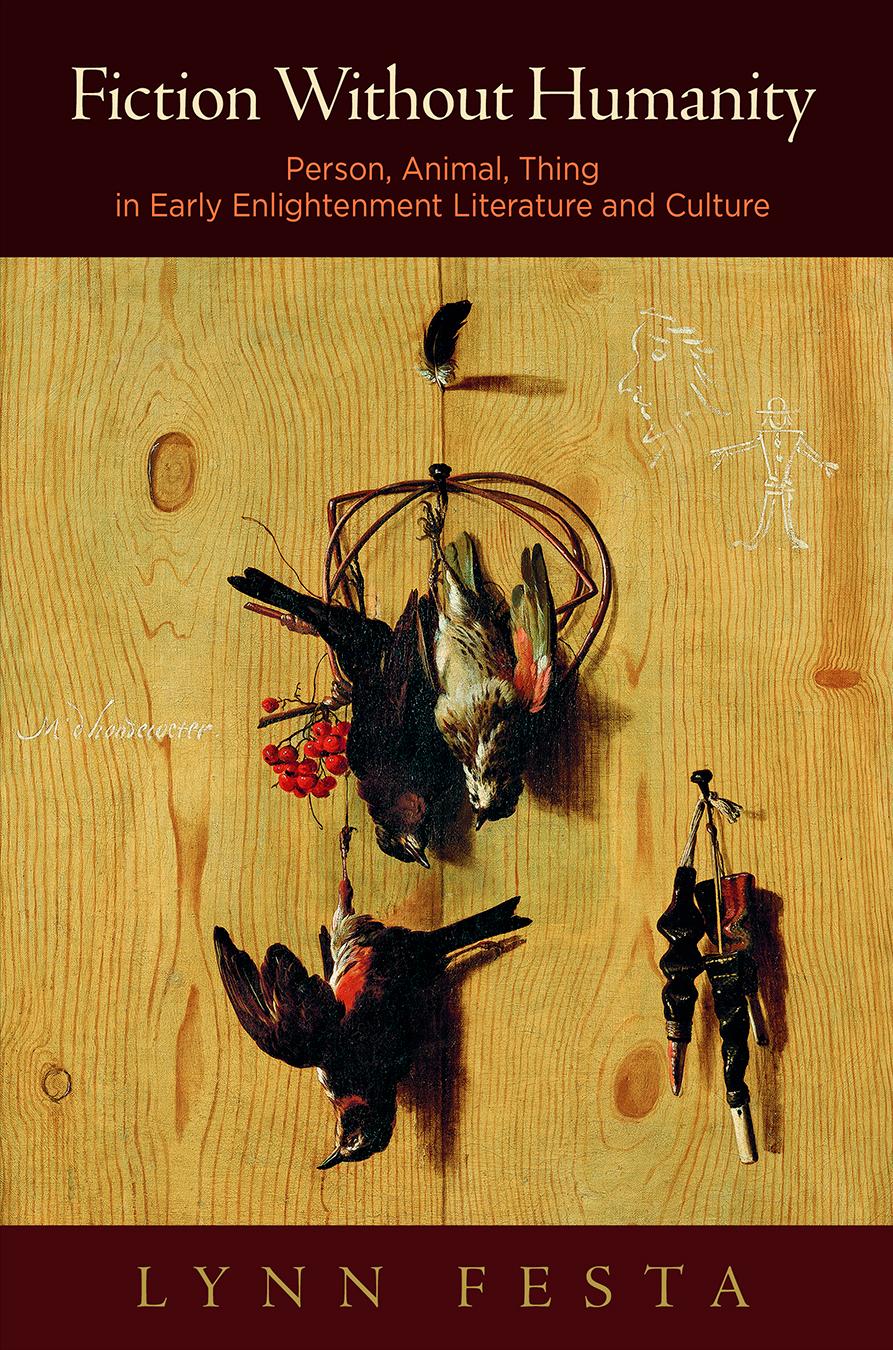
Although the Enlightenment is often associated with the emergence of human rights and humanitarian sensibility, "humanity" is an elusive category in the literary, philosophical, scientific, and political writings of the period. Fiction Without Humanity offers a literary history of late seventeenth- and early eighteenth-century efforts to define the human. Focusing on the shifting terms in which human difference from animals, things, and machines was expressed, Lynn Festa argues that writers and artists treated humanity as an indefinite class, which needed to be called into being through literature and the arts.
Drawing on an array of literary, scientific, artistic, and philosophical devices— the riddle, the fable, the microscope, the novel, and trompe l'oeil and still-life painting— Fiction Without Humanity focuses on experiments with the perspectives of nonhuman creatures and inanimate things. Rather than deriving species membership from sympathetic identification or likeness to a fixed template, early Enlightenment writers and artists grounded humanity in the enactment of capacities (reason, speech, educability) that distinguish humans from other creatures, generating a performative model of humanity capacious enough to accommodate broader claims to human rights.
In addressing genres typically excluded from canonical literary histories, Fiction Without Humanity offers an alternative account of the rise of the novel, showing how these early experiments with nonhuman perspectives helped generate novelistic techniques for the representation of consciousness. By placing the novel in a genealogy that embraces paintings, riddles, scientific plates, and fables, Festa shows realism to issue less from mimetic exactitude than from the tailoring of the represented world to a distinctively human point of view.
Before Memmo my notes were scattered across PDFs. Now a workspace pulls everything into one place — I see exactly what's still left to study.
Memmo's summaries are gold before exams. I don't have to re-read 800 pages two weeks before — just the important parts.
The AI chat has saved me the night before an exam more than once. I just keep asking until I get it — no waiting on a study group to reply.
The quizzes hit exactly what I need to know. Memmo tracks what I get stuck on — so I only practice what's worth it.
Flashcards with spaced repetition are magic. Memmo knows when I'm about to forget something and brings it back.
The AI podcasts are my favorite. I listen on my way to school and get a recap without sitting at a computer.

Handbok i kvalitativa metoder
281 kr

Hållbar utveckling: en introduktion för ingenjörer och andra problemlösare
334 kr

Brymans Samhällsvetenskapliga metoder
390 kr

Projektledning
491 kr

Den orättvisa hälsan: om socioekonomiska skillnader i hälsa och livslängd
326 kr

Organizational Leadership
429 kr

Vetenskapsteori för nybörjare
196 kr

På väg mot läraryrket
172 kr

Det sociala livet i skolan: Socialpsykologiska perspektiv
253 kr

Betygsättningens didaktik
151 kr

Personality
402 kr

Studying Leadership
404 kr

Managing Innovation
477 kr

Introduktion till samhällsvetenskaplig metod
347 kr

The Psychology of Sex and Gender
698 kr

Evidens och kunskap för socialt arbete
207 kr

Introduction to Leadership
605 kr