
Before Memmo my notes were scattered across PDFs. Now a workspace pulls everything into one place — I see exactly what's still left to study.
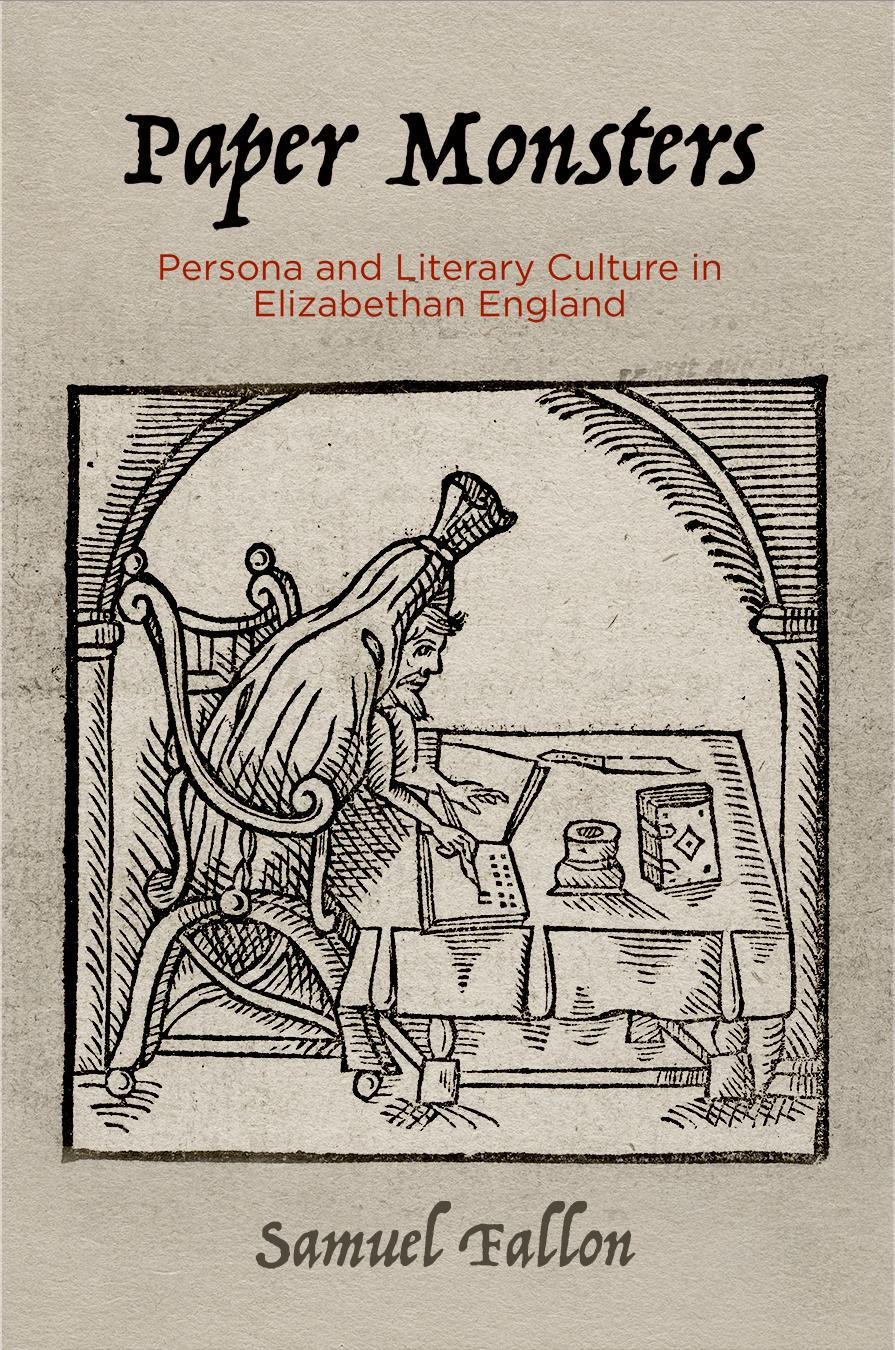
In Paper Monsters, Samuel Fallon charts the striking rise, at the turn to the seventeenth century, of a new species of textual being: the serial, semifictional persona. When Thomas Nashe introduced his charismatic alter ego Pierce Penilesse in a 1592 text, he described the figure as a "paper monster," not fashioned but "begotten" into something curiously like life. The next decade bore this description out, as Pierce took on a life of his own, inspiring other writers to insert him into their own works. And Pierce was hardly alone: such figures as the polemicist Martin Marprelate, the lovers Philisides and Astrophil, the shepherd-laureate Colin Clout, the prodigal wit Euphues, and, in an odd twist, the historical author Robert Greene all outgrew their fictional origins, moving from text to text and author to author, purporting to speak their own words, even surviving their creators' deaths, and installing themselves in the process as agents at large in the real world of writing, publication, and reception.
In seeking to understand these "paper monsters" as a historically specific and rather short-lived phenomenon, Fallon looks to the rapid expansion of the London book trade in the years of their ascendancy. Personae were products of print, the medium that rendered them portable, free-floating figures. But they were also the central fictions of a burgeoning literary field: they embodied that field's negotiations between manuscript and print, and they forged a new form of public, textual selfhood. Sustained by the appropriative rewritings they inspired, personae came to seem like autonomous citizens of the literary public. Fallon argues that their status as collective fictions, passed among writers, publishers, and readers, positioned personae as the animating figures of what we have come to call "print culture."
Before Memmo my notes were scattered across PDFs. Now a workspace pulls everything into one place — I see exactly what's still left to study.
Memmo's summaries are gold before exams. I don't have to re-read 800 pages two weeks before — just the important parts.
The AI chat has saved me the night before an exam more than once. I just keep asking until I get it — no waiting on a study group to reply.
The quizzes hit exactly what I need to know. Memmo tracks what I get stuck on — so I only practice what's worth it.
Flashcards with spaced repetition are magic. Memmo knows when I'm about to forget something and brings it back.
The AI podcasts are my favorite. I listen on my way to school and get a recap without sitting at a computer.

Handbok i kvalitativa metoder
281 kr

Hållbar utveckling: en introduktion för ingenjörer och andra problemlösare
334 kr

Brymans Samhällsvetenskapliga metoder
390 kr

Projektledning
491 kr

Den orättvisa hälsan: om socioekonomiska skillnader i hälsa och livslängd
326 kr

Vetenskapsteori för nybörjare
196 kr

Organizational Leadership
429 kr

På väg mot läraryrket
172 kr

Det sociala livet i skolan: Socialpsykologiska perspektiv
253 kr

Betygsättningens didaktik
151 kr

Personality
402 kr

Studying Leadership
404 kr

Managing Innovation
477 kr

Introduktion till samhällsvetenskaplig metod
347 kr

The Psychology of Sex and Gender
698 kr

Evidens och kunskap för socialt arbete
207 kr

Introduction to Leadership
605 kr