
Before Memmo my notes were scattered across PDFs. Now a workspace pulls everything into one place — I see exactly what's still left to study.
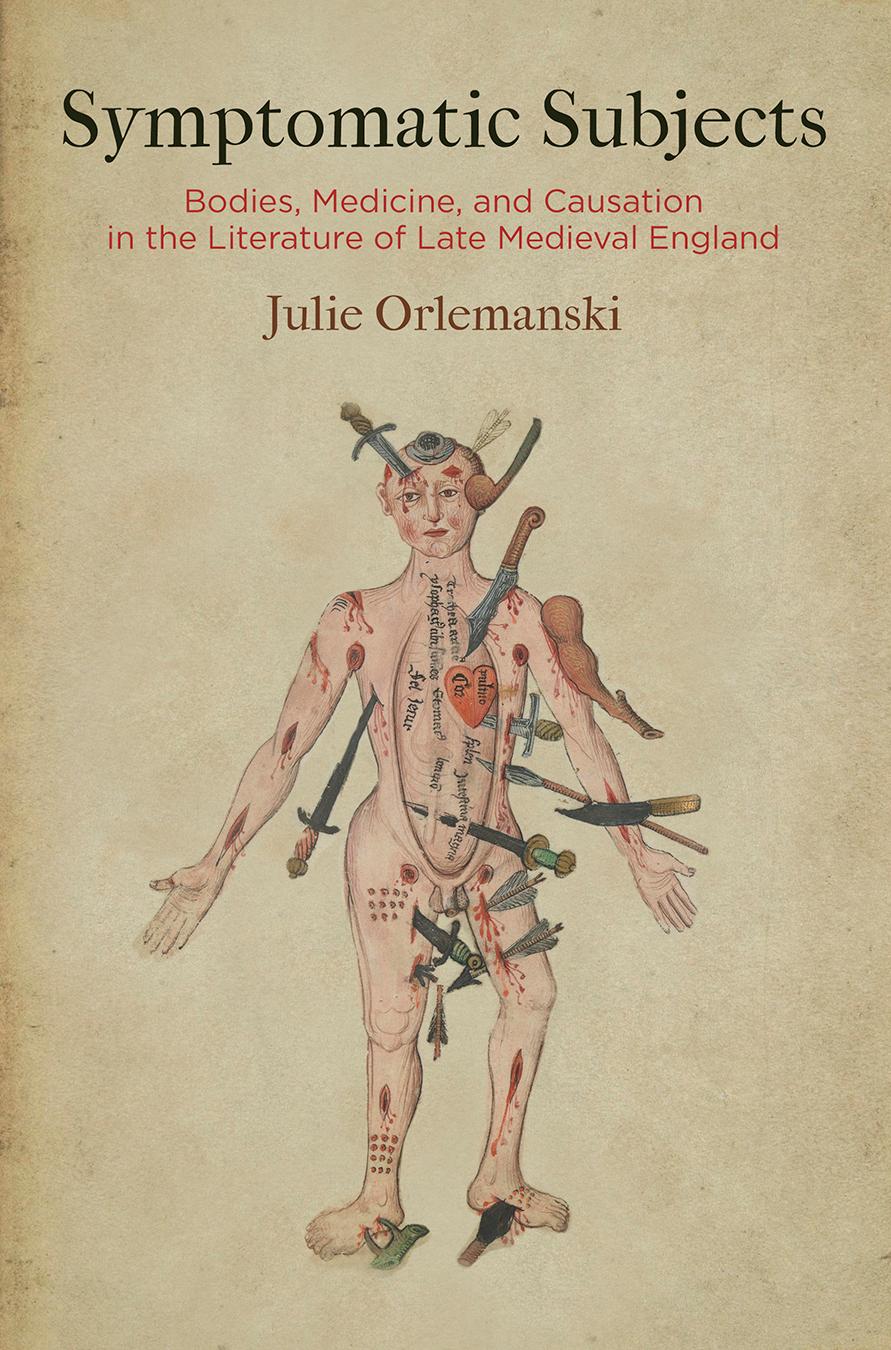
In the period just prior to medicine's modernity—before the rise of Renaissance anatomy, the centralized regulation of medical practice, and the valorization of scientific empiricism—England was the scene of a remarkable upsurge in medical writing. Between the arrival of the Black Death in 1348 and the emergence of printed English books a century and a quarter later, thousands of discrete medical texts were copied, translated, and composed, largely for readers outside universities. These widely varied texts shared a model of a universe crisscrossed with physical forces and a picture of the human body as a changeable, composite thing, tuned materially to the world's vicissitudes. According to Julie Orlemanski, when writers like Geoffrey Chaucer, Robert Henryson, Thomas Hoccleve, and Margery Kempe drew on the discourse of phisik—the language of humors and complexions, leprous pustules and love sickness, regimen and pharmacopeia—they did so to chart new circuits of legibility between physiology and personhood.
Orlemanski explores the texts of her vernacular writers to show how they deployed the rich terminology of embodiment and its ailments to portray symptomatic figures who struggled to control both their bodies and the interpretations that gave their bodies meaning. As medical paradigms mingled with penitential, miraculous, and socially symbolic systems, these texts demanded that a growing number of readers negotiate the conflicting claims of material causation, intentional action, and divine power. Examining both the medical writings of late medieval England and the narrative and poetic works that responded to them, Symptomatic Subjects illuminates the period's conflicts over who had the authority to construe bodily signs and what embodiment could be made to mean.
Before Memmo my notes were scattered across PDFs. Now a workspace pulls everything into one place — I see exactly what's still left to study.
Memmo's summaries are gold before exams. I don't have to re-read 800 pages two weeks before — just the important parts.
The AI chat has saved me the night before an exam more than once. I just keep asking until I get it — no waiting on a study group to reply.
The quizzes hit exactly what I need to know. Memmo tracks what I get stuck on — so I only practice what's worth it.
Flashcards with spaced repetition are magic. Memmo knows when I'm about to forget something and brings it back.
The AI podcasts are my favorite. I listen on my way to school and get a recap without sitting at a computer.

Handbok i kvalitativa metoder
281 kr

Hållbar utveckling: en introduktion för ingenjörer och andra problemlösare
334 kr

Brymans Samhällsvetenskapliga metoder
390 kr

Projektledning
491 kr

Den orättvisa hälsan: om socioekonomiska skillnader i hälsa och livslängd
326 kr

Vetenskapsteori för nybörjare
196 kr

Organizational Leadership
429 kr

På väg mot läraryrket
172 kr

Det sociala livet i skolan: Socialpsykologiska perspektiv
253 kr

Betygsättningens didaktik
151 kr

Personality
402 kr

Studying Leadership
404 kr

Managing Innovation
477 kr

Introduktion till samhällsvetenskaplig metod
347 kr

The Psychology of Sex and Gender
698 kr

Evidens och kunskap för socialt arbete
207 kr

Introduction to Leadership
605 kr