
Before Memmo my notes were scattered across PDFs. Now a workspace pulls everything into one place — I see exactly what's still left to study.
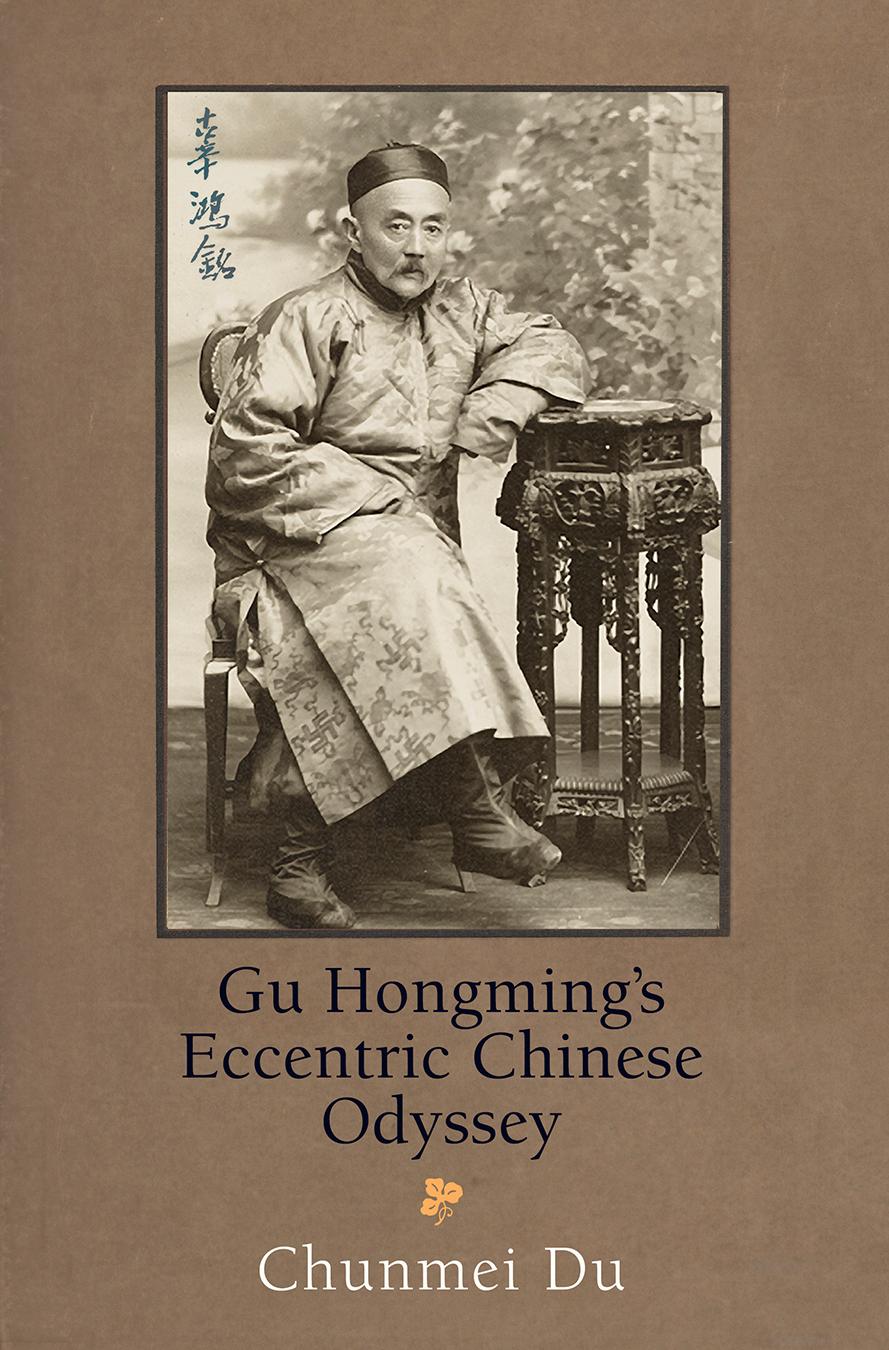
Known for his ultraconservatism and eccentricity, Gu Hongming (1857-1928) remains one of the most controversial figures in modern Chinese intellectual history. A former member of the colonial elite from Penang who was educated in Europe, Gu, in his late twenties, became a Qing loyalist and Confucian spokesman who also defended concubinage, footbinding, and the queue. Seen as a reactionary by his Chinese contemporaries, Gu nevertheless gained fame as an Eastern prophet following the carnage of World War I, often paired with Rabindranath Tagore and Leo Tolstoy by Western and Japanese intellectuals.
Rather than resort to the typical conception of Gu as an inscrutable eccentric, Chunmei Du argues that Gu was a trickster-sage figure who fought modern Western civilization in a time dominated by industrial power, utilitarian values, and imperialist expansion. A shape-shifter, Gu was by turns a lampooning jester, defying modern political and economic systems and, at other times, an avenging cultural hero who denounced colonial ideologies with formidable intellect, symbolic performances, and calculated pranks. A cultural amphibian, Gu transformed from an "imitation Western man" to "a Chinaman again," and reinterpreted, performed, and embodied "authentic Chineseness" in a time when China itself was adopting the new identity of a modern nation-state.
Gu Hongming's Eccentric Chinese Odyssey is the first comprehensive study in English of Gu Hongming, both the private individual and the public cultural figure. It examines the controversial scholar's intellectual and psychological journeys across geographical, national, and cultural boundaries in new global contexts. In addition to complicating existing studies of Chinese conservatism and global discussions on civilization around the World War I era, the book sheds new light on the contested notion of authenticity within the Chinese diaspora and the psychological impact of colonialism.
Before Memmo my notes were scattered across PDFs. Now a workspace pulls everything into one place — I see exactly what's still left to study.
Memmo's summaries are gold before exams. I don't have to re-read 800 pages two weeks before — just the important parts.
The AI chat has saved me the night before an exam more than once. I just keep asking until I get it — no waiting on a study group to reply.
The quizzes hit exactly what I need to know. Memmo tracks what I get stuck on — so I only practice what's worth it.
Flashcards with spaced repetition are magic. Memmo knows when I'm about to forget something and brings it back.
The AI podcasts are my favorite. I listen on my way to school and get a recap without sitting at a computer.

Handbok i kvalitativa metoder
281 kr

Hållbar utveckling: en introduktion för ingenjörer och andra problemlösare
334 kr

Brymans Samhällsvetenskapliga metoder
390 kr

Projektledning
491 kr

Den orättvisa hälsan: om socioekonomiska skillnader i hälsa och livslängd
326 kr

Vetenskapsteori för nybörjare
196 kr

Organizational Leadership
429 kr

På väg mot läraryrket
172 kr

Det sociala livet i skolan: Socialpsykologiska perspektiv
253 kr

Betygsättningens didaktik
151 kr

Personality
402 kr

Studying Leadership
404 kr

Managing Innovation
477 kr

Introduktion till samhällsvetenskaplig metod
347 kr

The Psychology of Sex and Gender
698 kr

Evidens och kunskap för socialt arbete
207 kr

Introduction to Leadership
605 kr