
Before Memmo my notes were scattered across PDFs. Now a workspace pulls everything into one place — I see exactly what's still left to study.
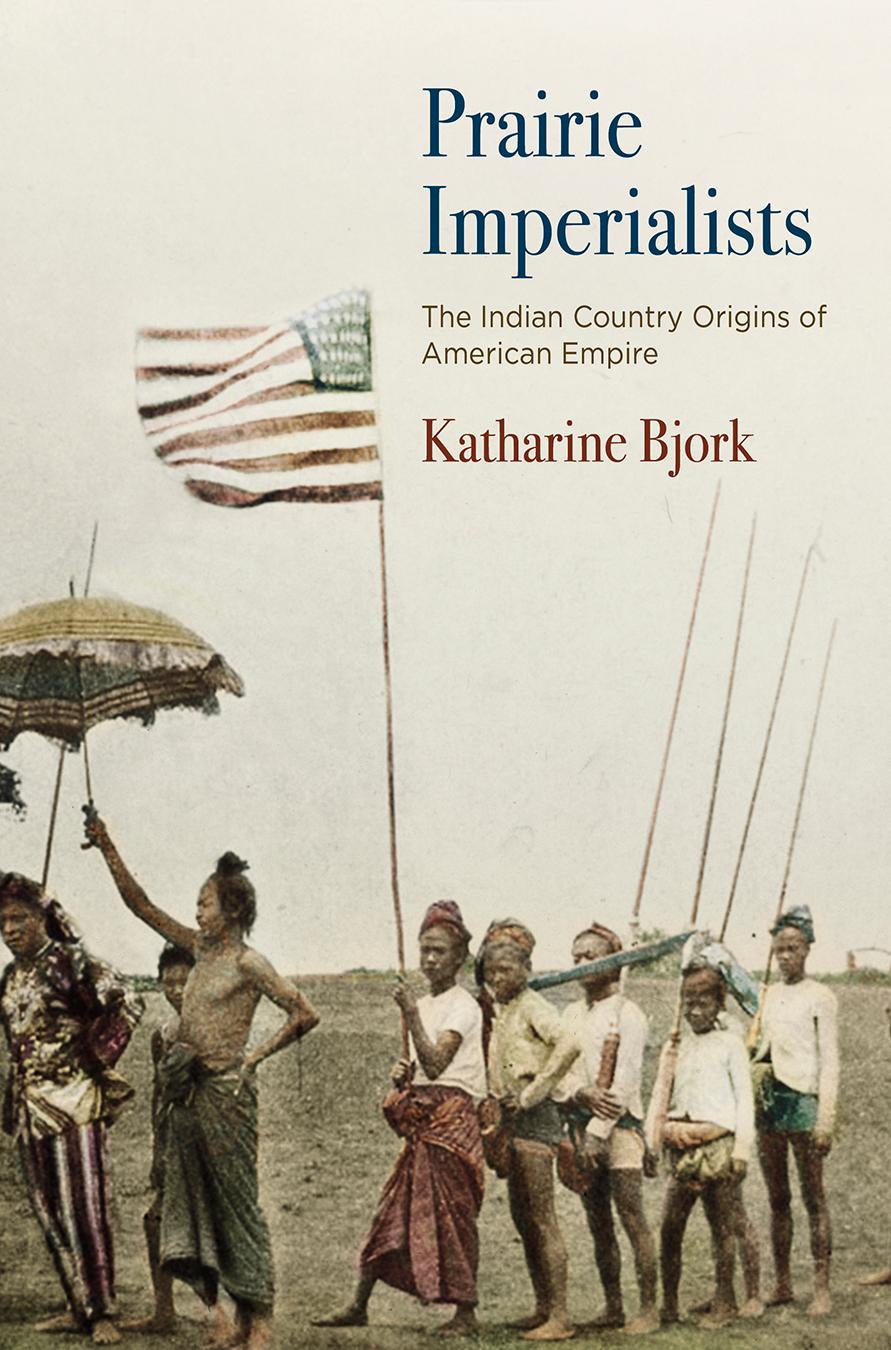
The Spanish-American War marked the emergence of the United States as an imperial power. It was when the United States first landed troops overseas and established governments of occupation in the Philippines, Cuba, and other formerly Spanish colonies. But such actions to extend U.S. sovereignty abroad, argues Katharine Bjork, had a precedent in earlier relations with Native nations at home. In Prairie Imperialists, Bjork traces the arc of American expansion by showing how the Army's conquests of what its soldiers called "Indian Country" generated a repertoire of actions and understandings that structured encounters with the racial others of America's new island territories following the War of 1898.
Prairie Imperialists follows the colonial careers of three Army officers from the domestic frontier to overseas posts in Cuba and the Philippines. The men profiled—Hugh Lenox Scott, Robert Lee Bullard, and John J. Pershing—internalized ways of behaving in Indian Country that shaped their approach to later colonial appointments abroad. Scott's ethnographic knowledge and experience with Native Americans were valorized as an asset for colonial service; Bullard and Pershing, who had commanded African American troops, were regarded as particularly suited for roles in the pacification and administration of colonial peoples overseas. After returning to the mainland, these three men played prominent roles in the "Punitive Expedition" President Woodrow Wilson sent across the southern border in 1916, during which Mexico figured as the next iteration of "Indian Country."
With rich biographical detail and ambitious historical scope, Prairie Imperialists makes fundamental connections between American colonialism and the racial dimensions of domestic political and social life—during peacetime and while at war. Ultimately, Bjork contends, the concept of "Indian Country" has served as the guiding force of American imperial expansion and nation building for the past two and a half centuries and endures to this day.
Before Memmo my notes were scattered across PDFs. Now a workspace pulls everything into one place — I see exactly what's still left to study.
Memmo's summaries are gold before exams. I don't have to re-read 800 pages two weeks before — just the important parts.
The AI chat has saved me the night before an exam more than once. I just keep asking until I get it — no waiting on a study group to reply.
The quizzes hit exactly what I need to know. Memmo tracks what I get stuck on — so I only practice what's worth it.
Flashcards with spaced repetition are magic. Memmo knows when I'm about to forget something and brings it back.
The AI podcasts are my favorite. I listen on my way to school and get a recap without sitting at a computer.

Handbok i kvalitativa metoder
281 kr

Hållbar utveckling: en introduktion för ingenjörer och andra problemlösare
334 kr

Brymans Samhällsvetenskapliga metoder
390 kr

Projektledning
491 kr

Den orättvisa hälsan: om socioekonomiska skillnader i hälsa och livslängd
326 kr

Vetenskapsteori för nybörjare
196 kr

Organizational Leadership
429 kr

På väg mot läraryrket
172 kr

Det sociala livet i skolan: Socialpsykologiska perspektiv
253 kr

Betygsättningens didaktik
151 kr

Personality
402 kr

Studying Leadership
404 kr

Managing Innovation
477 kr

Introduktion till samhällsvetenskaplig metod
347 kr

The Psychology of Sex and Gender
698 kr

Evidens och kunskap för socialt arbete
207 kr

Introduction to Leadership
605 kr