
Before Memmo my notes were scattered across PDFs. Now a workspace pulls everything into one place — I see exactly what's still left to study.
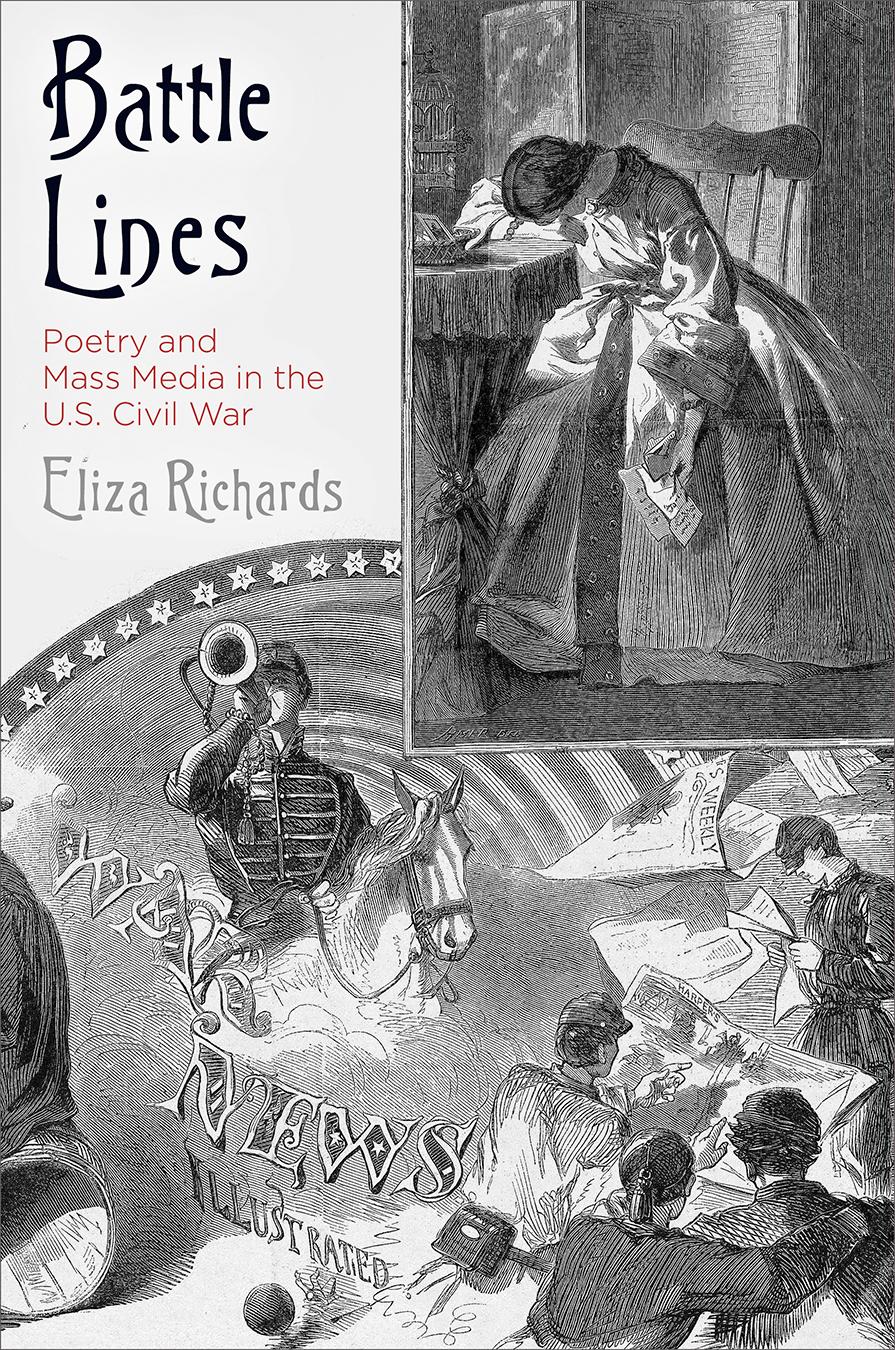
During the U.S. Civil War, a combination of innovative technologies and catastrophic events stimulated the development of news media into a central cultural force. Reacting to the dramatic increases in news reportage and circulation, poets responded to an urgent need to make their work immediately relevant to current events. As poetry's compressed forms traveled more quickly and easily than stories, novels, or essays through ephemeral print media, it moved alongside and engaged with news reports, often taking on the task of imagining the mental states of readers on receiving accounts from the war front. Newspaper and magazine poetry had long editorialized on political happenings—Indian wars, slavery and abolition, prison reform, women's rights—but the unprecedented scope of what has been called the first modern war, and the centrality of the issues involved for national futures, generated a powerful sense of single-mindedness among readers and writers that altered the terms of poetic expression.
In Battle Lines, Eliza Richards charts the transformation of Civil War poetry, arguing that it was fueled by a symbiotic relationship between the development of mass media networks and modern warfare. Focusing primarily on the North, Richards explores how poets working in this new environment mediated events via received literary traditions. Collectively and with a remarkable consistency, poems pulled out key features of events and drew on common tropes and practices to mythologize, commemorate, and ponder the consequences of distant battles. The lines of communication reached outward through newspapers and magazines to writers such as Dickinson, Whitman, and Melville, who drew their inspiration from their peers' poetic practices and reconfigured them in ways that bear the traces of their engagements.
Before Memmo my notes were scattered across PDFs. Now a workspace pulls everything into one place — I see exactly what's still left to study.
Memmo's summaries are gold before exams. I don't have to re-read 800 pages two weeks before — just the important parts.
The AI chat has saved me the night before an exam more than once. I just keep asking until I get it — no waiting on a study group to reply.
The quizzes hit exactly what I need to know. Memmo tracks what I get stuck on — so I only practice what's worth it.
Flashcards with spaced repetition are magic. Memmo knows when I'm about to forget something and brings it back.
The AI podcasts are my favorite. I listen on my way to school and get a recap without sitting at a computer.

Handbok i kvalitativa metoder
281 kr

Hållbar utveckling: en introduktion för ingenjörer och andra problemlösare
334 kr

Brymans Samhällsvetenskapliga metoder
390 kr

Projektledning
491 kr

Den orättvisa hälsan: om socioekonomiska skillnader i hälsa och livslängd
326 kr

Vetenskapsteori för nybörjare
196 kr

Organizational Leadership
429 kr

På väg mot läraryrket
172 kr

Det sociala livet i skolan: Socialpsykologiska perspektiv
253 kr

Betygsättningens didaktik
151 kr

Personality
402 kr

Studying Leadership
404 kr

Managing Innovation
477 kr

Introduktion till samhällsvetenskaplig metod
347 kr

The Psychology of Sex and Gender
698 kr

Evidens och kunskap för socialt arbete
207 kr

Introduction to Leadership
605 kr