
Before Memmo my notes were scattered across PDFs. Now a workspace pulls everything into one place — I see exactly what's still left to study.
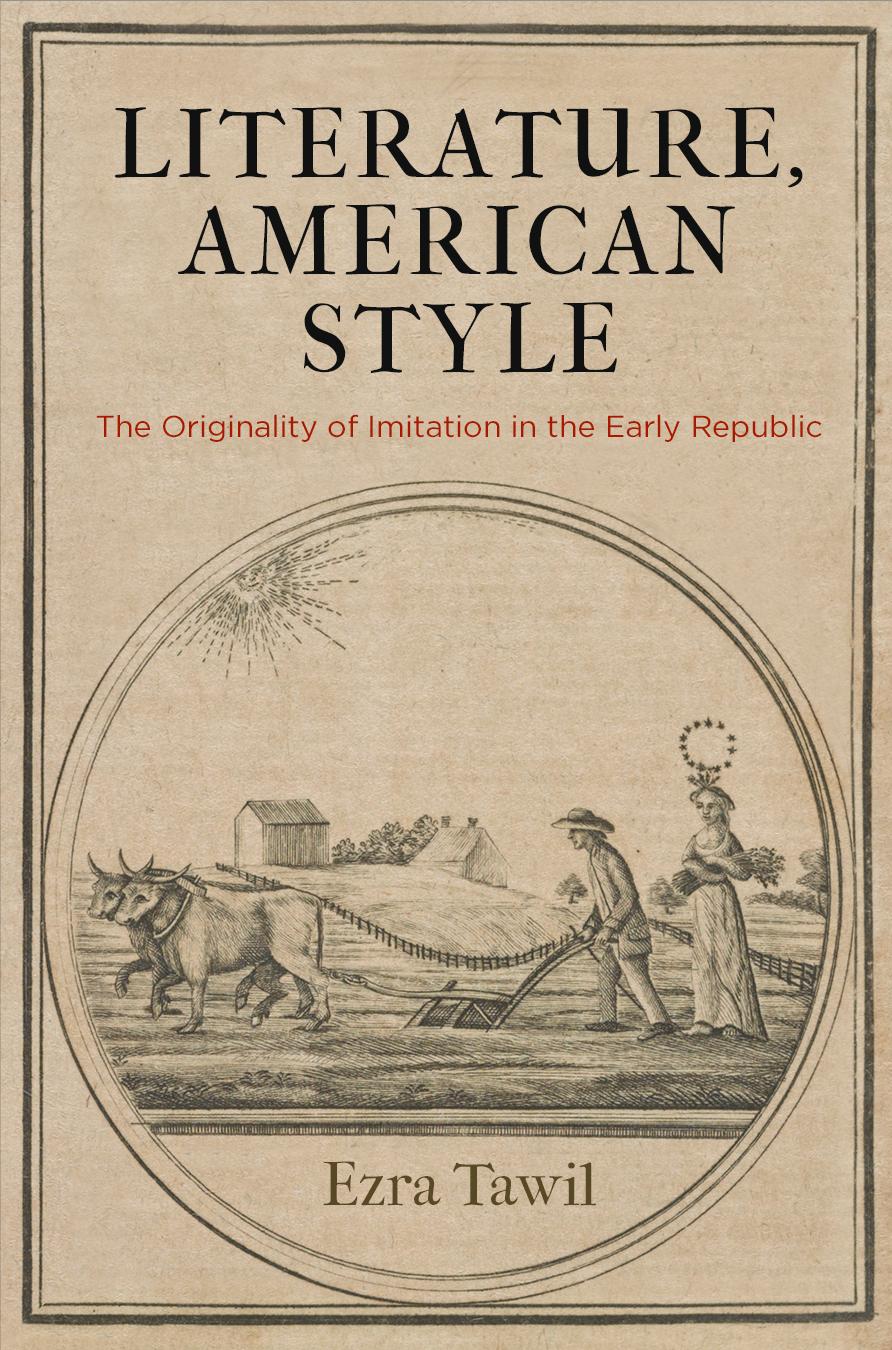
Between 1780 and 1800, authors of imaginative literature in the new United States wanted to assert that their works, which bore obvious connections to anglophone literature on the far side of the Atlantic, nevertheless constituted a properly "American" tradition. No one had yet figured out, however, what it would mean to write like an American, what literature with an American origin would look like, nor what literary characteristics the elusive quality of Americanness could generate. Literature, American Style returns to this historical moment—decades before the romantic nationalism of Cooper, the transcendentalism of Emerson and Thoreau, or the iconoclastic poetics of Whitman—when a fantasy about the unique characteristics of U.S. literature first took shape, and when that notion was linked to literary style.
While late eighteenth-century U.S. literature advertised itself as the cultural manifestation of a radically innovative nation, Ezra Tawil argues, it was not primarily marked by invention or disruption. In fact, its authors self-consciously imitated European literary traditions while adapting them to a new cultural environment. These writers gravitated to the realm of style, then, because it provided a way of sidestepping the uncomfortable reality of cultural indebtedness; it was their use of style that provided a way of departing from European literary precedents. Tawil analyzes Noah Webster's plan to reform the American tongue; J. Hector St. John de Crèvecoeur's fashioning of an extravagantly naïve American style from well-worn topoi; Charles Brockden Brown's adaptations of the British gothic; and the marriage of seduction plots to American "plain style" in works such as Susanna Rowson's Charlotte Temple and Hannah Webster Foster's The Coquette. Each of these works claims to embody something "American" in style yet, according to Tawil, remains legible only in the context of stylistic, generic, and conceptual forms that animated English cultural life through the century.
Before Memmo my notes were scattered across PDFs. Now a workspace pulls everything into one place — I see exactly what's still left to study.
Memmo's summaries are gold before exams. I don't have to re-read 800 pages two weeks before — just the important parts.
The AI chat has saved me the night before an exam more than once. I just keep asking until I get it — no waiting on a study group to reply.
The quizzes hit exactly what I need to know. Memmo tracks what I get stuck on — so I only practice what's worth it.
Flashcards with spaced repetition are magic. Memmo knows when I'm about to forget something and brings it back.
The AI podcasts are my favorite. I listen on my way to school and get a recap without sitting at a computer.

Handbok i kvalitativa metoder
281 kr

Hållbar utveckling: en introduktion för ingenjörer och andra problemlösare
334 kr

Brymans Samhällsvetenskapliga metoder
390 kr

Projektledning
491 kr

Den orättvisa hälsan: om socioekonomiska skillnader i hälsa och livslängd
326 kr

Organizational Leadership
429 kr

Vetenskapsteori för nybörjare
196 kr

På väg mot läraryrket
172 kr

Det sociala livet i skolan: Socialpsykologiska perspektiv
253 kr

Betygsättningens didaktik
151 kr

Personality
402 kr

Studying Leadership
404 kr

Managing Innovation
477 kr

Introduktion till samhällsvetenskaplig metod
347 kr

The Psychology of Sex and Gender
698 kr

Evidens och kunskap för socialt arbete
207 kr

Introduction to Leadership
605 kr