
Before Memmo my notes were scattered across PDFs. Now a workspace pulls everything into one place — I see exactly what's still left to study.
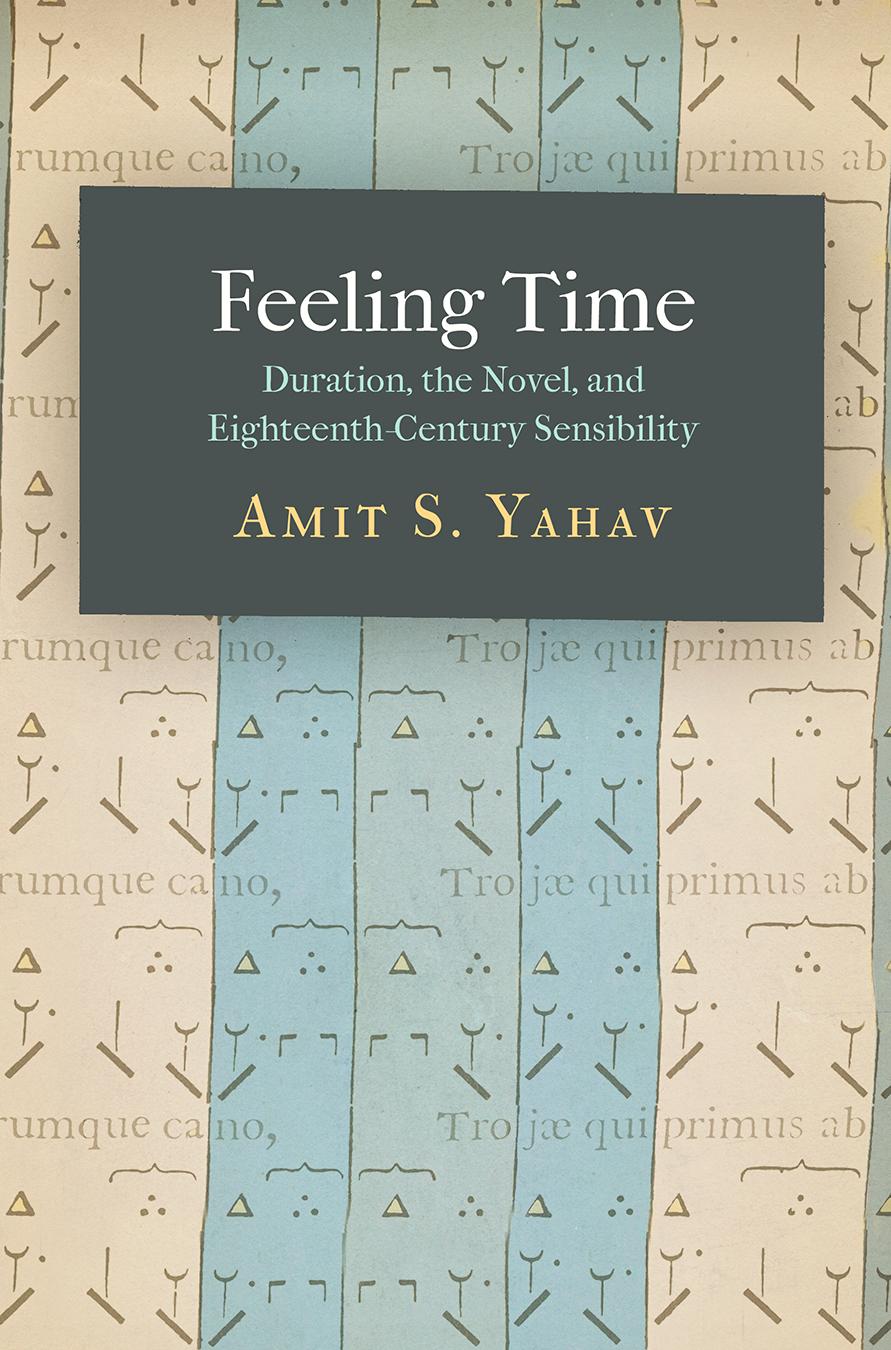
Literary historians have tended to associate the eighteenth century with the rise of the tyranny of the clock—the notion of time as ruled by mechanical chronometry. The transition to standardized scheduling and time-discipline, the often-told story goes, inevitably results in modernity's time-keeper societies and the characterization of modern experience as qualitatively diminished.
In Feeling Time, Amit Yahav challenges this narrative of the triumph of chronometry and the consequent impoverishment of individual experience. She explores the fascination eighteenth-century writers had with the mental and affective processes through which human beings come not only to know that time has passed but also to feel the durations they inhabit. Yahav begins by elucidating discussions by Locke and Hume that examine how humans come to know time, noting how these philosophers often consider not only knowledge but also experience. She then turns to novels by Richardson, Sterne, and Radcliffe, attending to the material dimensions of literary language to show how novelists shape the temporal experience of readers through their formal choices. Along the way, she considers a wide range of eighteenth-century aesthetic and moral treatises, finding that these identify the subjective experience of duration as the crux of pleasure and judgment, described more as patterned durational activity than as static state.
Feeling Time highlights the temporal underpinnings of the eighteenth century's culture of sensibility, arguing that novelists have often drawn on the logic of musical composition to make their writing an especially effective tool for exploring time and for shaping durational experience.
Before Memmo my notes were scattered across PDFs. Now a workspace pulls everything into one place — I see exactly what's still left to study.
Memmo's summaries are gold before exams. I don't have to re-read 800 pages two weeks before — just the important parts.
The AI chat has saved me the night before an exam more than once. I just keep asking until I get it — no waiting on a study group to reply.
The quizzes hit exactly what I need to know. Memmo tracks what I get stuck on — so I only practice what's worth it.
Flashcards with spaced repetition are magic. Memmo knows when I'm about to forget something and brings it back.
The AI podcasts are my favorite. I listen on my way to school and get a recap without sitting at a computer.

Handbok i kvalitativa metoder
281 kr

Hållbar utveckling: en introduktion för ingenjörer och andra problemlösare
334 kr

Brymans Samhällsvetenskapliga metoder
390 kr

Projektledning
491 kr

Den orättvisa hälsan: om socioekonomiska skillnader i hälsa och livslängd
326 kr

Organizational Leadership
429 kr

Vetenskapsteori för nybörjare
196 kr

På väg mot läraryrket
172 kr

Det sociala livet i skolan: Socialpsykologiska perspektiv
253 kr

Betygsättningens didaktik
151 kr

Personality
402 kr

Studying Leadership
404 kr

Managing Innovation
477 kr

Introduktion till samhällsvetenskaplig metod
347 kr

The Psychology of Sex and Gender
698 kr

Evidens och kunskap för socialt arbete
207 kr

Introduction to Leadership
605 kr