
Before Memmo my notes were scattered across PDFs. Now a workspace pulls everything into one place — I see exactly what's still left to study.
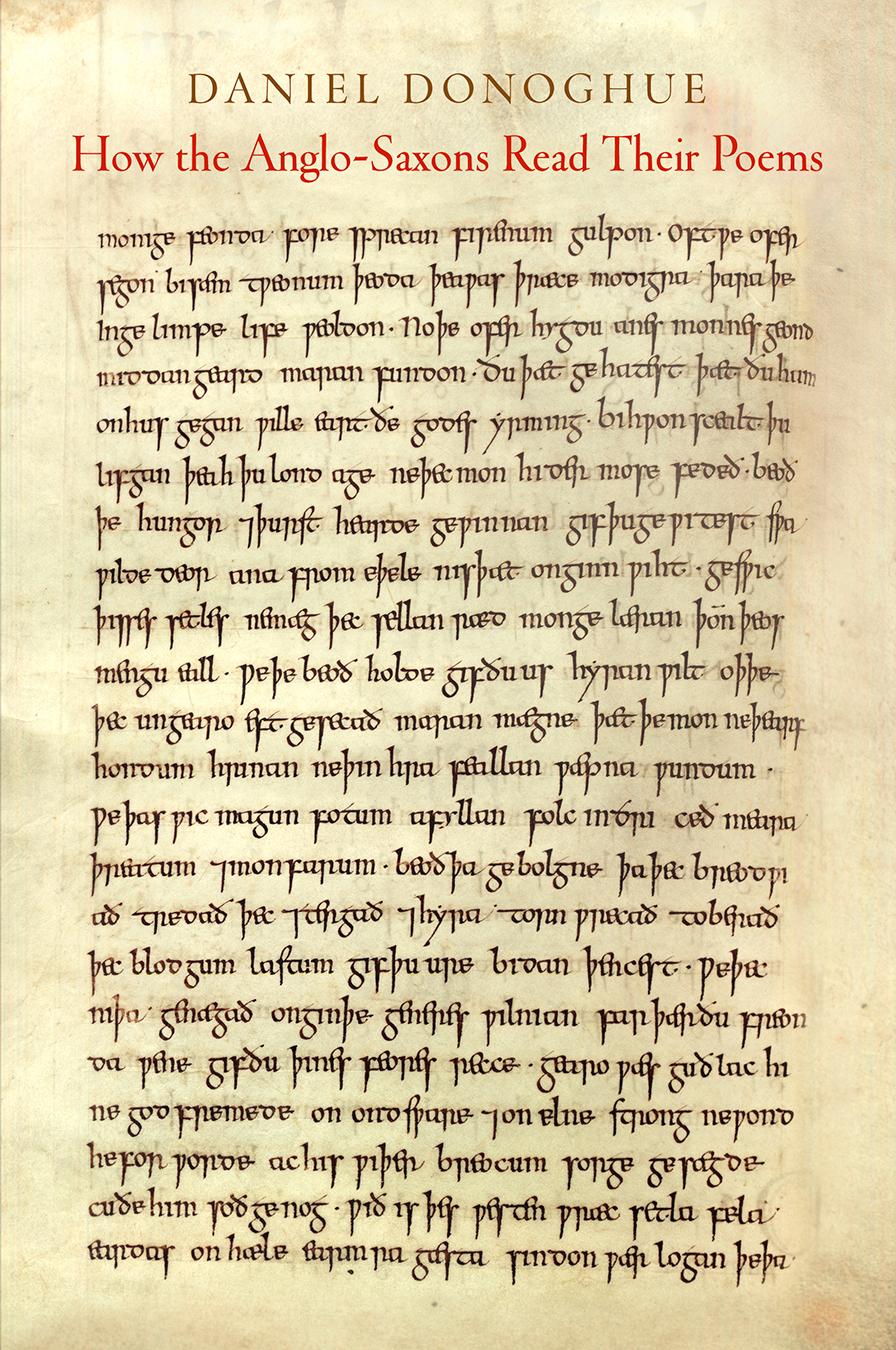
The scribes of early medieval England wrote out their vernacular poems using a format that looks primitive to our eyes because it lacks the familiar visual cues of verse lineation, marks of punctuation, and capital letters. The paradox is that scribes had those tools at their disposal, which they deployed in other kinds of writing, but when it came to their vernacular poems they turned to a sparser presentation. How could they afford to be so indifferent? The answer lies in the expertise that Anglo-Saxon readers brought to the task. From a lifelong immersion in a tradition of oral poetics they acquired a sophisticated yet intuitive understanding of verse conventions, such that when their eyes scanned the lines written out margin-to-margin, they could pinpoint with ease such features as alliteration, metrical units, and clause boundaries, because those features are interwoven in the poetic text itself. Such holistic reading practices find a surprising source of support in present-day eye-movement studies, which track the complex choreography between eye and brain and show, for example, how the minimal punctuation in manuscripts snaps into focus when viewed as part of a comprehensive system.
How the Anglo-Saxons Read Their Poems uncovers a sophisticated collaboration between scribes and the earliest readers of poems like Beowulf, The Wanderer, and The Dream of the Rood. In addressing a basic question that no previous study has adequately answered, it pursues an ambitious synthesis of a number of fields usually kept separate: oral theory, paleography, syntax, and prosody. To these philological topics Daniel Donoghue adds insights from the growing field of cognitive psychology. According to Donoghue, the earliest readers of Old English poems deployed a unique set of skills that enabled them to navigate a daunting task with apparent ease. For them reading was both a matter of technical proficiency and a social practice.
Before Memmo my notes were scattered across PDFs. Now a workspace pulls everything into one place — I see exactly what's still left to study.
Memmo's summaries are gold before exams. I don't have to re-read 800 pages two weeks before — just the important parts.
The AI chat has saved me the night before an exam more than once. I just keep asking until I get it — no waiting on a study group to reply.
The quizzes hit exactly what I need to know. Memmo tracks what I get stuck on — so I only practice what's worth it.
Flashcards with spaced repetition are magic. Memmo knows when I'm about to forget something and brings it back.
The AI podcasts are my favorite. I listen on my way to school and get a recap without sitting at a computer.

Handbok i kvalitativa metoder
281 kr

Hållbar utveckling: en introduktion för ingenjörer och andra problemlösare
334 kr

Brymans Samhällsvetenskapliga metoder
390 kr

Projektledning
491 kr

Den orättvisa hälsan: om socioekonomiska skillnader i hälsa och livslängd
326 kr

Vetenskapsteori för nybörjare
196 kr

Organizational Leadership
429 kr

På väg mot läraryrket
172 kr

Det sociala livet i skolan: Socialpsykologiska perspektiv
253 kr

Betygsättningens didaktik
151 kr

Personality
402 kr

Studying Leadership
404 kr

Managing Innovation
477 kr

Introduktion till samhällsvetenskaplig metod
347 kr

The Psychology of Sex and Gender
698 kr

Evidens och kunskap för socialt arbete
207 kr

Introduction to Leadership
605 kr