
Before Memmo my notes were scattered across PDFs. Now a workspace pulls everything into one place — I see exactly what's still left to study.
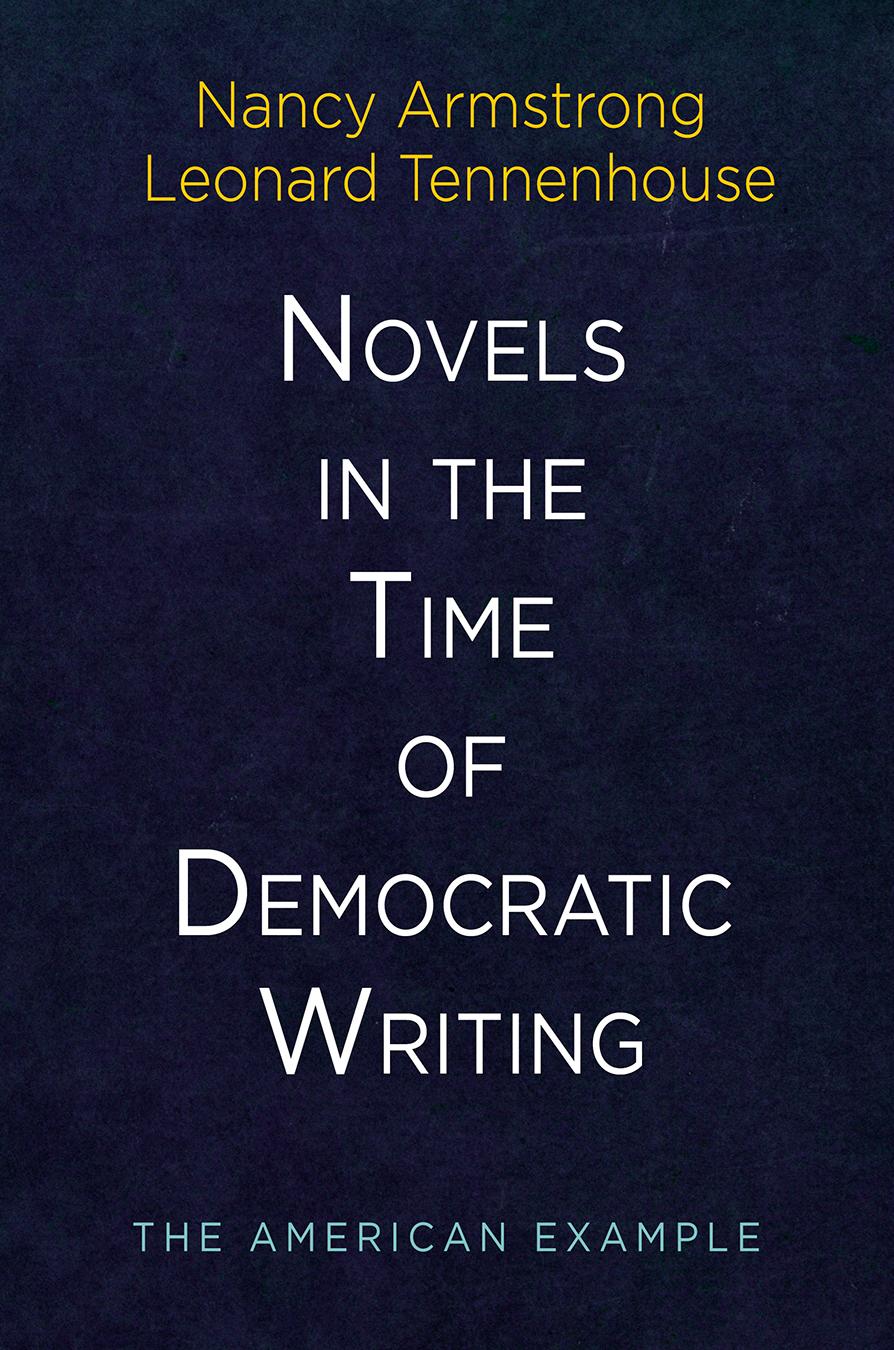
During the thirty years following ratification of the U.S. Constitution, the first American novelists carried on an argument with their British counterparts that pitted direct democracy against representative liberalism. Such writers as Hannah Foster, Isaac Mitchell, Royall Tyler, Leonore Sansay, and Charles Brockden Brown developed a set of formal tropes that countered, move for move, those gestures and conventions by which Samuel Richardson, Jane Austen, and others created their closed worlds of self, private property, and respectable society. The result was a distinctively American novel that generated a system of social relations resembling today's distributed network. Such a network operated counter to the formal protocols that later distinguished the great tradition of the American novel.
In Novels in the Time of Democratic Writing, Nancy Armstrong and Leonard Tennenhouse show how these first U.S. novels developed multiple paths to connect an extremely diverse field of characters, redefining private property as fundamentally antisocial and setting their protagonists to the task of dispersing that property—its goods and people—throughout the field of characters. The populations so reorganized proved suddenly capable of thinking and acting as one. Despite the diverse local character of their subject matter and community of readers, the first U.S. novels delivered this argument in a vernacular style open and available to all. Although it differed markedly from the style we attribute to literary authors, Armstrong and Tennenhouse argue, such democratic writing lives on in the novels of Cooper, Hawthorne, Melville, and James.
Before Memmo my notes were scattered across PDFs. Now a workspace pulls everything into one place — I see exactly what's still left to study.
Memmo's summaries are gold before exams. I don't have to re-read 800 pages two weeks before — just the important parts.
The AI chat has saved me the night before an exam more than once. I just keep asking until I get it — no waiting on a study group to reply.
The quizzes hit exactly what I need to know. Memmo tracks what I get stuck on — so I only practice what's worth it.
Flashcards with spaced repetition are magic. Memmo knows when I'm about to forget something and brings it back.
The AI podcasts are my favorite. I listen on my way to school and get a recap without sitting at a computer.

Handbok i kvalitativa metoder
281 kr

Hållbar utveckling: en introduktion för ingenjörer och andra problemlösare
334 kr

Brymans Samhällsvetenskapliga metoder
390 kr

Projektledning
491 kr

Den orättvisa hälsan: om socioekonomiska skillnader i hälsa och livslängd
326 kr

Vetenskapsteori för nybörjare
196 kr

Organizational Leadership
429 kr

På väg mot läraryrket
172 kr

Det sociala livet i skolan: Socialpsykologiska perspektiv
253 kr

Betygsättningens didaktik
151 kr

Personality
402 kr

Studying Leadership
404 kr

Managing Innovation
477 kr

Introduktion till samhällsvetenskaplig metod
347 kr

The Psychology of Sex and Gender
698 kr

Evidens och kunskap för socialt arbete
207 kr

Introduction to Leadership
605 kr