
Before Memmo my notes were scattered across PDFs. Now a workspace pulls everything into one place — I see exactly what's still left to study.
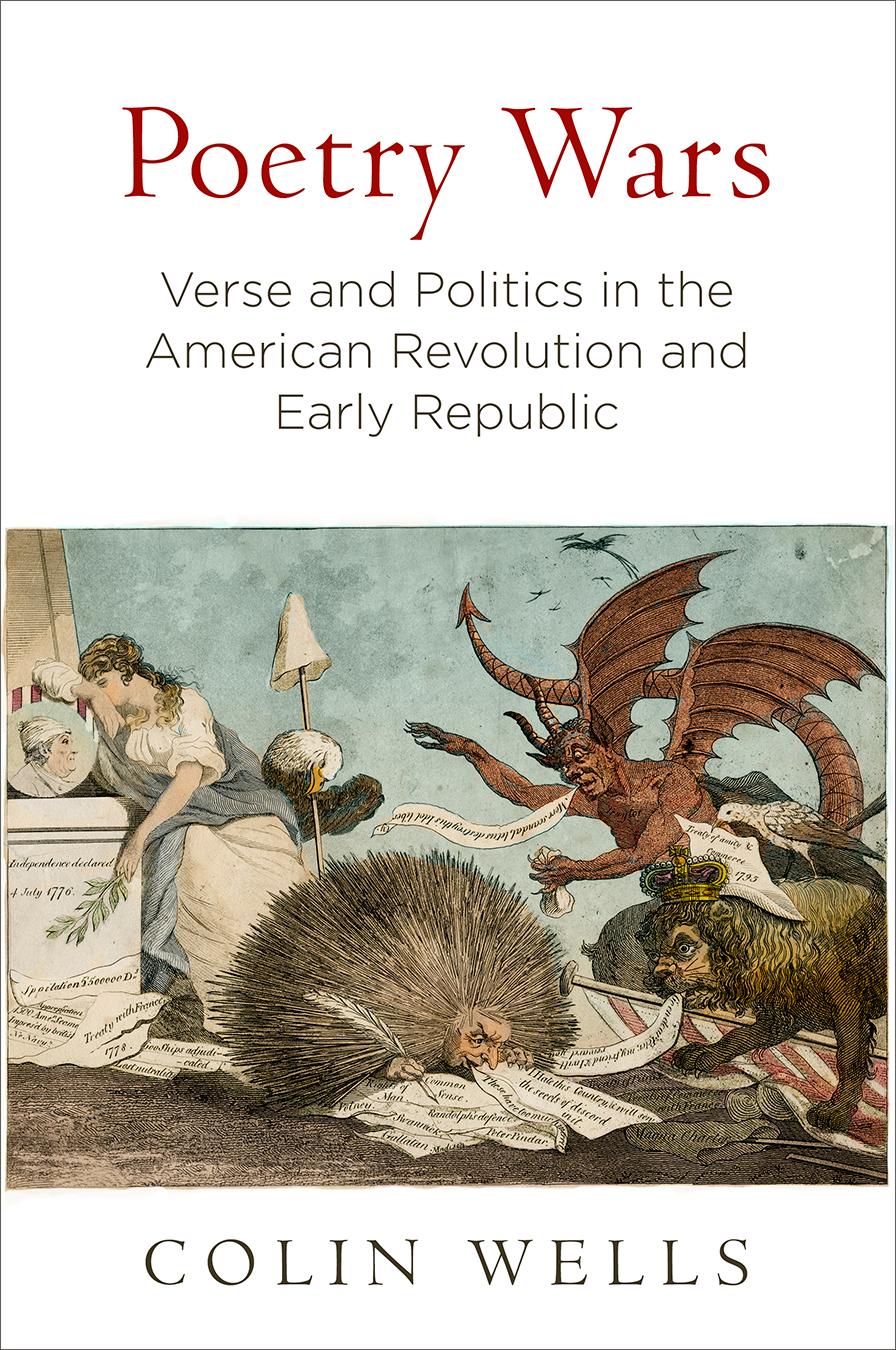
During America's founding period, poets and balladeers engaged in a series of literary "wars" against political leaders, journalists, and each other, all in the name of determining the political course of the new nation. Political poems and songs appeared regularly in newspapers (and as pamphlets and broadsides), commenting on political issues and controversies and satirizing leaders like Thomas Jefferson and Alexander Hamilton. Drawing on hundreds of individual poems—including many that are frequently overlooked—Poetry Wars reconstructs the world of literary-political struggle as it unfolded between the Stamp Act crisis and the War of 1812.
Colin Wells argues that political verse from this period was a unique literary form that derived its cultural importance from its capacity to respond to, and contest the meaning of, other printed texts—from official documents and political speeches to newspaper articles and rival political poems. First arising during the Revolution as a strategy for subverting the authority of royal proclamations and congressional declarations, poetic warfare became a ubiquitous part of early national print culture. Poets representing the emerging Federalist and Republican parties sought to wrest control of political narratives unfolding in the press by engaging in literary battles.
Tracing the parallel histories of the first party system and the rise and eventual decline of political verse, Poetry Wars shows how poetic warfare lent urgency to policy debates and contributed to a dynamic in which partisans came to regard each other as threats to the republic's survival. Breathing new life into this episode of literary-political history, Wells offers detailed interpretations of scores of individual poems, references hundreds of others, and identifies numerous terms and tactics of the period's verse warfare.
Before Memmo my notes were scattered across PDFs. Now a workspace pulls everything into one place — I see exactly what's still left to study.
Memmo's summaries are gold before exams. I don't have to re-read 800 pages two weeks before — just the important parts.
The AI chat has saved me the night before an exam more than once. I just keep asking until I get it — no waiting on a study group to reply.
The quizzes hit exactly what I need to know. Memmo tracks what I get stuck on — so I only practice what's worth it.
Flashcards with spaced repetition are magic. Memmo knows when I'm about to forget something and brings it back.
The AI podcasts are my favorite. I listen on my way to school and get a recap without sitting at a computer.

Handbok i kvalitativa metoder
281 kr

Hållbar utveckling: en introduktion för ingenjörer och andra problemlösare
334 kr

Brymans Samhällsvetenskapliga metoder
390 kr

Projektledning
491 kr

Den orättvisa hälsan: om socioekonomiska skillnader i hälsa och livslängd
326 kr

Vetenskapsteori för nybörjare
196 kr

Organizational Leadership
429 kr

På väg mot läraryrket
172 kr

Det sociala livet i skolan: Socialpsykologiska perspektiv
253 kr

Betygsättningens didaktik
151 kr

Personality
402 kr

Studying Leadership
404 kr

Managing Innovation
477 kr

Introduktion till samhällsvetenskaplig metod
347 kr

The Psychology of Sex and Gender
698 kr

Evidens och kunskap för socialt arbete
207 kr

Introduction to Leadership
605 kr