
Before Memmo my notes were scattered across PDFs. Now a workspace pulls everything into one place — I see exactly what's still left to study.
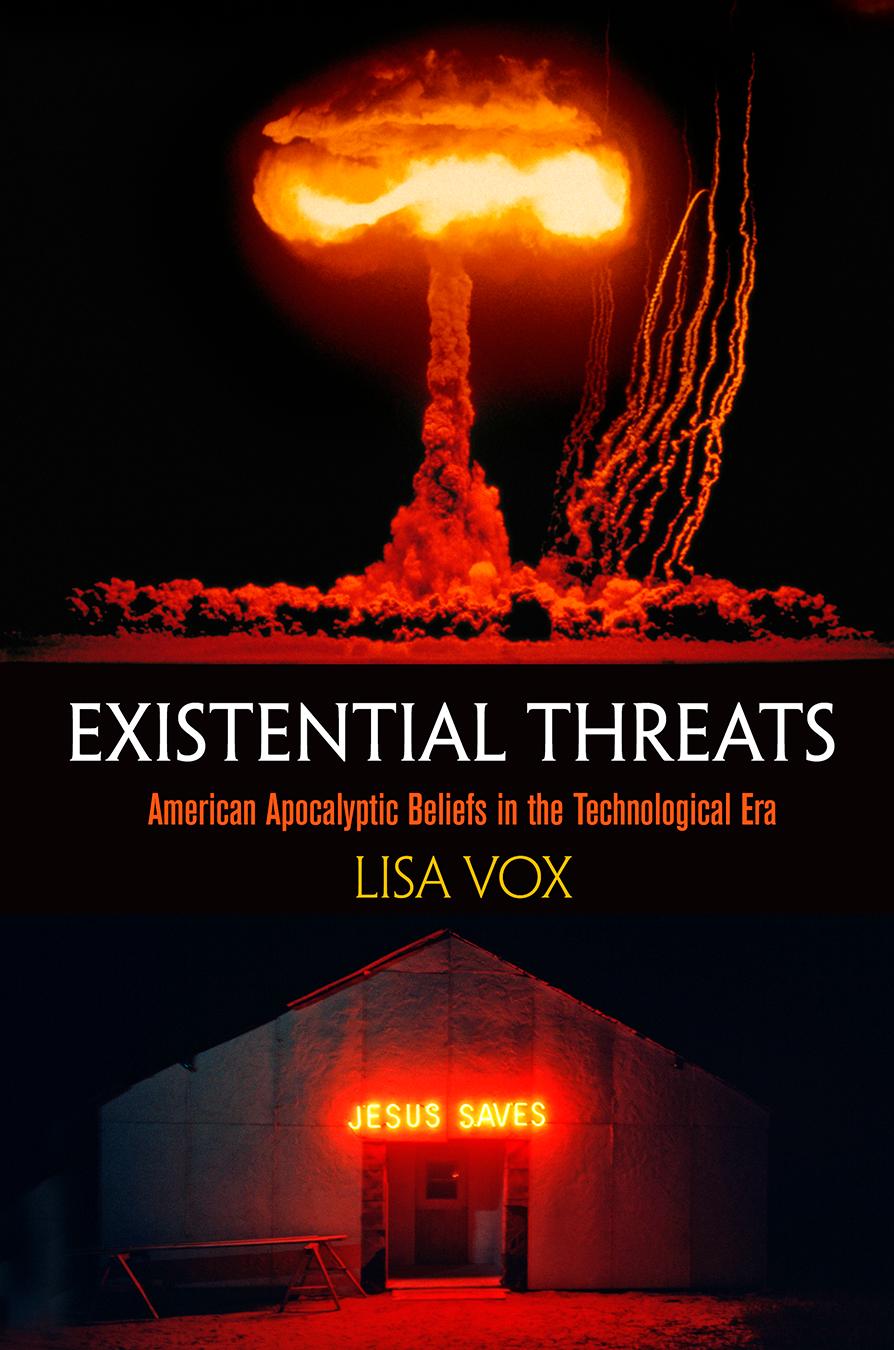
Americans have long been enthralled by visions of the apocalypse. Will the world end through nuclear war, environmental degradation, and declining biodiversity? Or, perhaps, through the second coming of Christ, rapture of the faithful, and arrival of the Antichrist—a set of beliefs known as dispensationalist premillennialism? These seemingly competing apocalyptic fantasies are not as dissimilar as we might think. In fact, Lisa Vox argues, although these secular and religious visions of the end of the world developed independently, they have converged to create the landscape of our current apocalyptic imagination.
In Existential Threats, Vox assembles a wide range of media—science fiction movies, biblical tractates, rapture fiction—to develop a critical history of the apocalyptic imagination from the late 1800s to the present. Apocalypticism was once solely a religious ideology, Vox contends, which has secularized in response to increasing technological and political threats to American safety. Vox reads texts ranging from Christianity Today articles on ecology and the atomic bomb to Dr. Strangelove, and from Mary Shelley's The Last Man to the Left Behind series by Tim LaHaye and Jerry B. Jenkins, demonstrating along the way that conservative evangelicals have not been as resistant to science as popularly believed and that scientists and science writers have unwittingly reproduced evangelical eschatological themes and scenarios in their own works. Existential Threats argues that American apocalypticism reflects and propagates our ongoing debates over the authority of science, the place of religion, uses of technology, and America's evolving role in global politics.
Before Memmo my notes were scattered across PDFs. Now a workspace pulls everything into one place — I see exactly what's still left to study.
Memmo's summaries are gold before exams. I don't have to re-read 800 pages two weeks before — just the important parts.
The AI chat has saved me the night before an exam more than once. I just keep asking until I get it — no waiting on a study group to reply.
The quizzes hit exactly what I need to know. Memmo tracks what I get stuck on — so I only practice what's worth it.
Flashcards with spaced repetition are magic. Memmo knows when I'm about to forget something and brings it back.
The AI podcasts are my favorite. I listen on my way to school and get a recap without sitting at a computer.

Handbok i kvalitativa metoder
281 kr

Hållbar utveckling: en introduktion för ingenjörer och andra problemlösare
334 kr

Brymans Samhällsvetenskapliga metoder
390 kr

Projektledning
491 kr

Den orättvisa hälsan: om socioekonomiska skillnader i hälsa och livslängd
326 kr

Organizational Leadership
429 kr

Vetenskapsteori för nybörjare
196 kr

På väg mot läraryrket
172 kr

Det sociala livet i skolan: Socialpsykologiska perspektiv
253 kr

Betygsättningens didaktik
151 kr

Personality
402 kr

Studying Leadership
404 kr

Managing Innovation
477 kr

Introduktion till samhällsvetenskaplig metod
347 kr

The Psychology of Sex and Gender
698 kr

Evidens och kunskap för socialt arbete
207 kr

Introduction to Leadership
605 kr