
Before Memmo my notes were scattered across PDFs. Now a workspace pulls everything into one place — I see exactly what's still left to study.
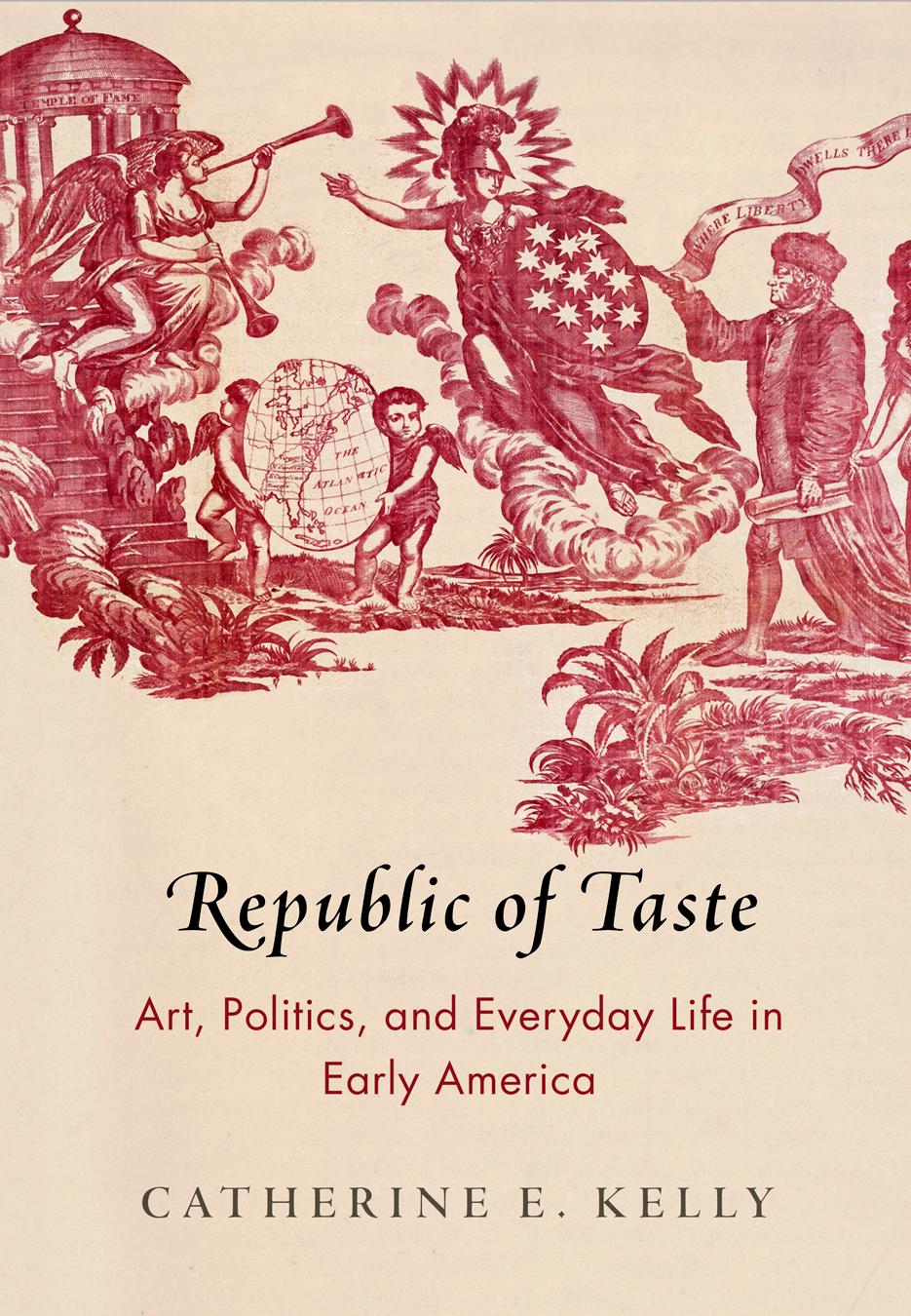
Since the early decades of the eighteenth century, European, and especially British, thinkers were preoccupied with questions of taste. Whether Americans believed that taste was innate—and therefore a marker of breeding and station—or acquired—and thus the product of application and study—all could appreciate that taste was grounded in, demonstrated through, and confirmed by reading, writing, and looking. It was widely believed that shared aesthetic sensibilities connected like-minded individuals and that shared affinities advanced the public good and held great promise for the American republic.
Exploring the intersection of the early republic's material, visual, literary, and political cultures, Catherine E. Kelly demonstrates how American thinkers acknowledged the similarities between aesthetics and politics in order to wrestle with questions about power and authority. Judgments about art, architecture, literature, poetry, and the theater became an arena for considering political issues ranging from government structures and legislative representation to qualifications for citizenship and the meaning of liberty itself. Additionally, if taste prompted political debate, it also encouraged affinity grounded in a shared national identity. In the years following independence, ordinary women and men reassured themselves that taste revealed larger truths about an individual's character and potential for republican citizenship.
Did an early national vocabulary of taste, then, with its privileged visuality, register beyond the debates over the ratification of the Constitution? Did it truly extend beyond political and politicized discourse to inform the imaginative structures and material forms of everyday life? Republic of Taste affirms that it did, although not in ways that anyone could have predicted at the conclusion of the American Revolution.
Before Memmo my notes were scattered across PDFs. Now a workspace pulls everything into one place — I see exactly what's still left to study.
Memmo's summaries are gold before exams. I don't have to re-read 800 pages two weeks before — just the important parts.
The AI chat has saved me the night before an exam more than once. I just keep asking until I get it — no waiting on a study group to reply.
The quizzes hit exactly what I need to know. Memmo tracks what I get stuck on — so I only practice what's worth it.
Flashcards with spaced repetition are magic. Memmo knows when I'm about to forget something and brings it back.
The AI podcasts are my favorite. I listen on my way to school and get a recap without sitting at a computer.

Handbok i kvalitativa metoder
281 kr

Hållbar utveckling: en introduktion för ingenjörer och andra problemlösare
334 kr

Brymans Samhällsvetenskapliga metoder
390 kr

Projektledning
491 kr

Den orättvisa hälsan: om socioekonomiska skillnader i hälsa och livslängd
326 kr

Vetenskapsteori för nybörjare
196 kr

Organizational Leadership
429 kr

På väg mot läraryrket
172 kr

Det sociala livet i skolan: Socialpsykologiska perspektiv
253 kr

Betygsättningens didaktik
151 kr

Personality
402 kr

Studying Leadership
404 kr

Managing Innovation
477 kr

Introduktion till samhällsvetenskaplig metod
347 kr

The Psychology of Sex and Gender
698 kr

Evidens och kunskap för socialt arbete
207 kr

Introduction to Leadership
605 kr