
Before Memmo my notes were scattered across PDFs. Now a workspace pulls everything into one place — I see exactly what's still left to study.
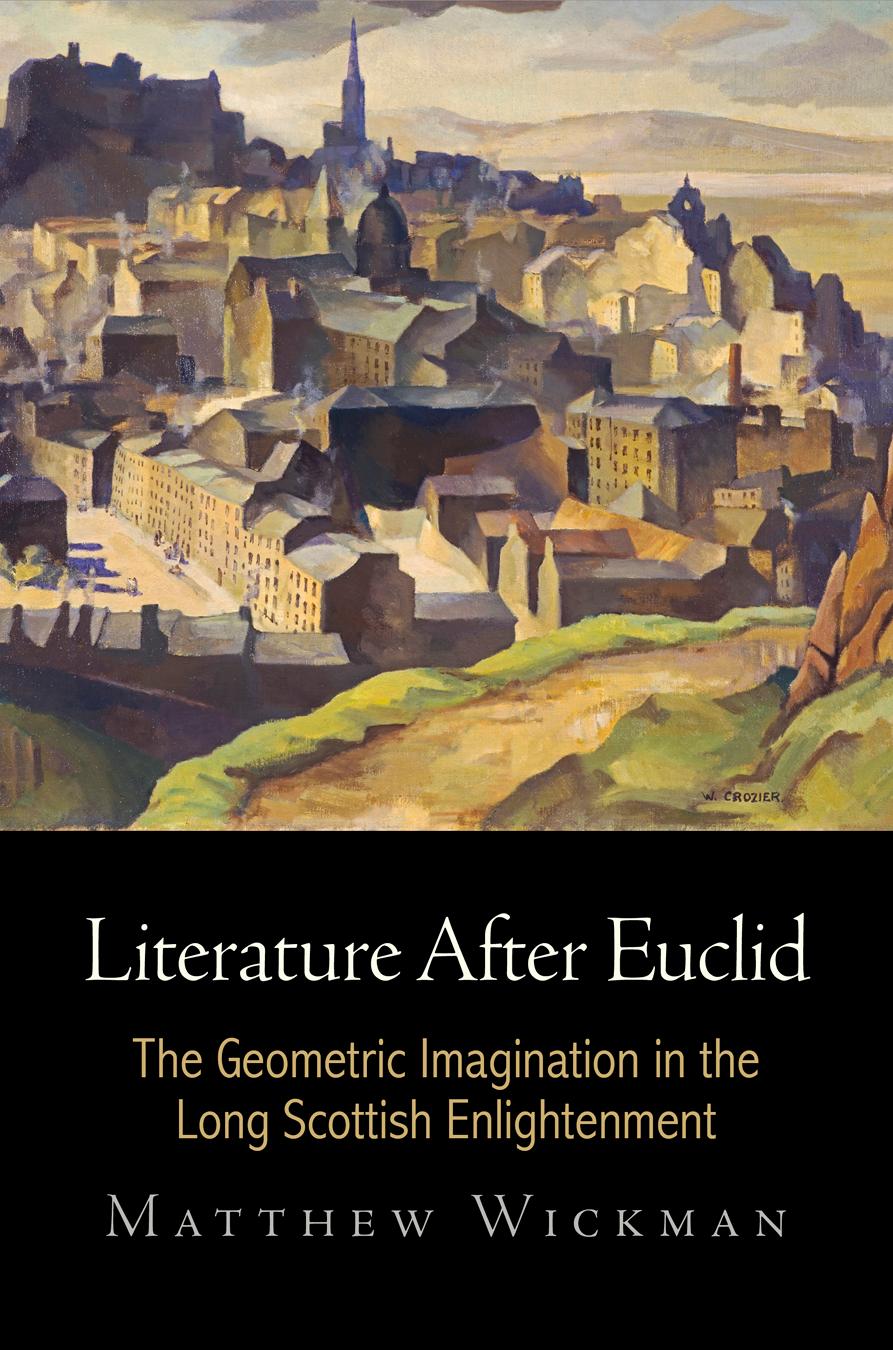
What if historical fiction were understood as a disfiguring of calculus? Or poems enacting the formation and breakdown of community as expositions of irrational numbers? What if, in other words, literary texts possessed a kind of mathematical unconscious?
The persistence of the rhetoric of "two cultures," one scientific, the other humanities-based, obscures the porous border and productive relationship that has long existed between literature and mathematics. In eighteenth-century Scottish universities, geometry in particular was considered one of the humanities; anchored in philosophy, it inculcated what we call critical thinking. But challenges to classical geometry within the realm of mathematics obligated Scottish geometers to become more creative in their defense of the traditional discipline; and when literary writers and philosophers incorporated these mathematical problems into their own work, the results were not only ingenious but in some cases pioneering.
Literature After Euclid tells the story of the creative adaptation of geometry in Scotland during and after the long eighteenth century. It argues that diverse attempts in literature and philosophy to explain or even emulate the geometric achievements of Isaac Newton and others resulted in innovations that modify our understanding of descriptive and bardic poetry, the aesthetics of the picturesque, and the historical novel. Matthew Wickman's analyses of these innovations in the work of Walter Scott, Robert Burns, James Thomson, David Hume, Thomas Reid, and other literati change how we perceive the Scottish Enlightenment and the later, modernist ethos that purportedly relegated the "classical" Enlightenment to the dustbin of history. Indeed, the Scottish Enlightenment's geometric imagination changes how we see literary history itself.
Before Memmo my notes were scattered across PDFs. Now a workspace pulls everything into one place — I see exactly what's still left to study.
Memmo's summaries are gold before exams. I don't have to re-read 800 pages two weeks before — just the important parts.
The AI chat has saved me the night before an exam more than once. I just keep asking until I get it — no waiting on a study group to reply.
The quizzes hit exactly what I need to know. Memmo tracks what I get stuck on — so I only practice what's worth it.
Flashcards with spaced repetition are magic. Memmo knows when I'm about to forget something and brings it back.
The AI podcasts are my favorite. I listen on my way to school and get a recap without sitting at a computer.

Handbok i kvalitativa metoder
281 kr

Hållbar utveckling: en introduktion för ingenjörer och andra problemlösare
334 kr

Brymans Samhällsvetenskapliga metoder
390 kr

Projektledning
491 kr

Den orättvisa hälsan: om socioekonomiska skillnader i hälsa och livslängd
326 kr

Vetenskapsteori för nybörjare
196 kr

Organizational Leadership
429 kr

På väg mot läraryrket
172 kr

Det sociala livet i skolan: Socialpsykologiska perspektiv
253 kr

Betygsättningens didaktik
151 kr

Personality
402 kr

Studying Leadership
404 kr

Managing Innovation
477 kr

Introduktion till samhällsvetenskaplig metod
347 kr

The Psychology of Sex and Gender
698 kr

Evidens och kunskap för socialt arbete
207 kr

Introduction to Leadership
605 kr