
Before Memmo my notes were scattered across PDFs. Now a workspace pulls everything into one place — I see exactly what's still left to study.
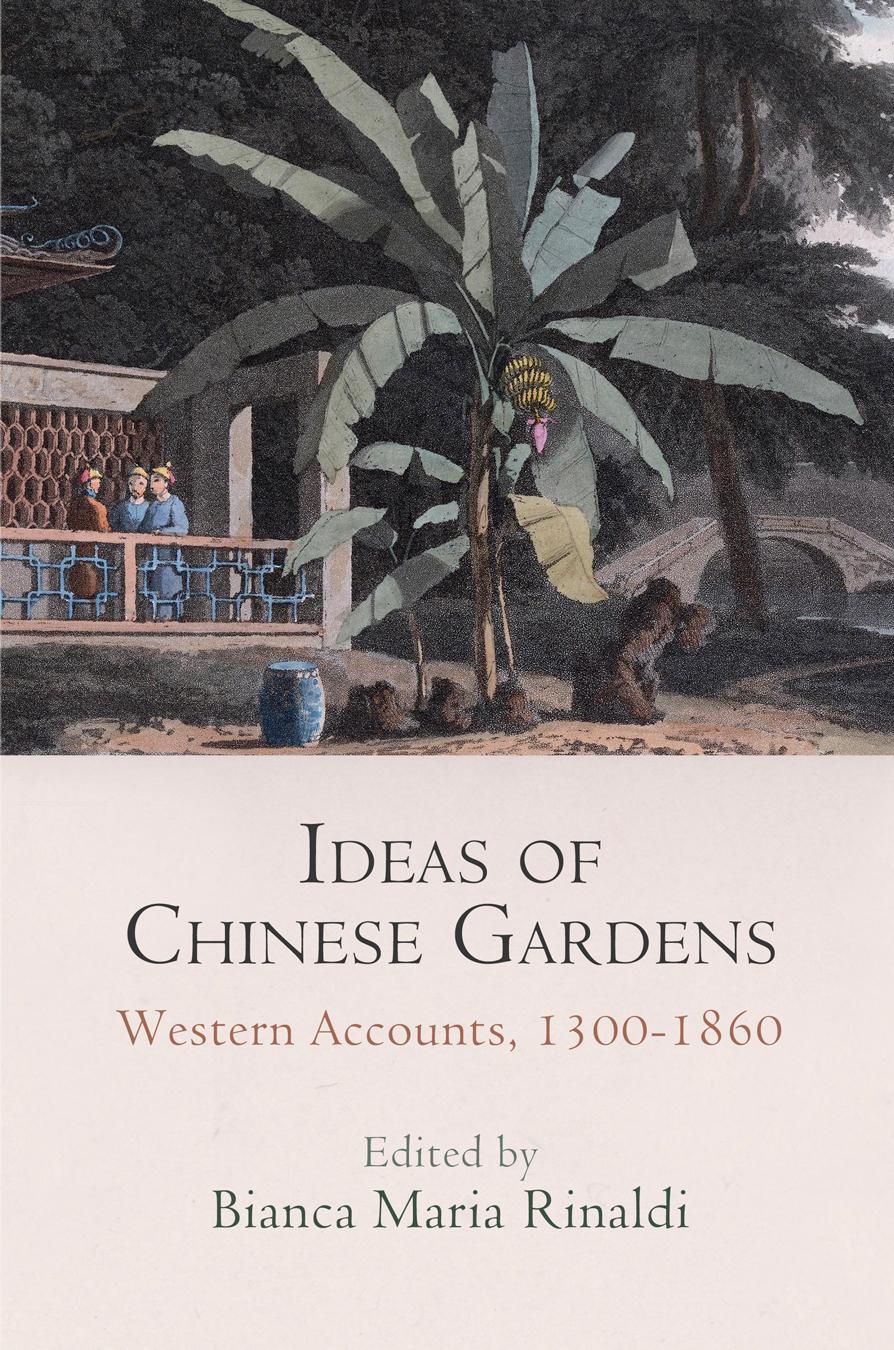
Europeans may be said to have first encountered the Chinese garden in Marco Polo's narrative of his travels through the Mongol Empire and his years at the court of Kublai Khan. His account of a man-made lake abundant with fish, a verdant green hill lush with trees, raised walkways, and a plethora of beasts and birds took root in the European imagination as the description of a kind of Eden. Beginning in the sixteenth century, permanent interaction between Europe and China took form, and Jesuit missionaries and travelers recorded in letters and memoirs their admiration of Chinese gardens for their seeming naturalness. In the eighteenth century, European taste for chinoiserie reached its height, and informed observers of the Far East discovered that sophisticated and codified design principles lay behind the apparent simplicity of the Chinese garden. The widespread appreciation of the eighteenth century gave way to rejection in the nineteenth, a result of tensions over practical concerns such as trade imbalances and symbolized by the destruction of the imperial park of Yuanming yuan by a joint Anglo-French military expedition.
In Ideas of Chinese Gardens, Bianca Maria Rinaldi has gathered an unparalleled collection of westerners' accounts, many freshly translated and all expertly annotated, as well as images that would have accompanied the texts as they circulated in Europe. Representing a great diversity of materials and literary genres, Rinaldi's book includes more than thirty-five sources that span centuries, countries, languages, occupational biases, and political aims. By providing unmediated firsthand accounts of the testimony of these travelers and expatriates, Rinaldi illustrates how the Chinese garden was progressively lifted out of the realm of fantasy into something that could be compared with, and have an impact on, European traditions.
Before Memmo my notes were scattered across PDFs. Now a workspace pulls everything into one place — I see exactly what's still left to study.
Memmo's summaries are gold before exams. I don't have to re-read 800 pages two weeks before — just the important parts.
The AI chat has saved me the night before an exam more than once. I just keep asking until I get it — no waiting on a study group to reply.
The quizzes hit exactly what I need to know. Memmo tracks what I get stuck on — so I only practice what's worth it.
Flashcards with spaced repetition are magic. Memmo knows when I'm about to forget something and brings it back.
The AI podcasts are my favorite. I listen on my way to school and get a recap without sitting at a computer.

Handbok i kvalitativa metoder
281 kr

Hållbar utveckling: en introduktion för ingenjörer och andra problemlösare
334 kr

Brymans Samhällsvetenskapliga metoder
390 kr

Projektledning
491 kr

Den orättvisa hälsan: om socioekonomiska skillnader i hälsa och livslängd
326 kr

Vetenskapsteori för nybörjare
196 kr

Organizational Leadership
429 kr

På väg mot läraryrket
172 kr

Det sociala livet i skolan: Socialpsykologiska perspektiv
253 kr

Betygsättningens didaktik
151 kr

Personality
402 kr

Studying Leadership
404 kr

Managing Innovation
477 kr

Introduktion till samhällsvetenskaplig metod
347 kr

The Psychology of Sex and Gender
698 kr

Evidens och kunskap för socialt arbete
207 kr

Introduction to Leadership
605 kr