
Before Memmo my notes were scattered across PDFs. Now a workspace pulls everything into one place — I see exactly what's still left to study.
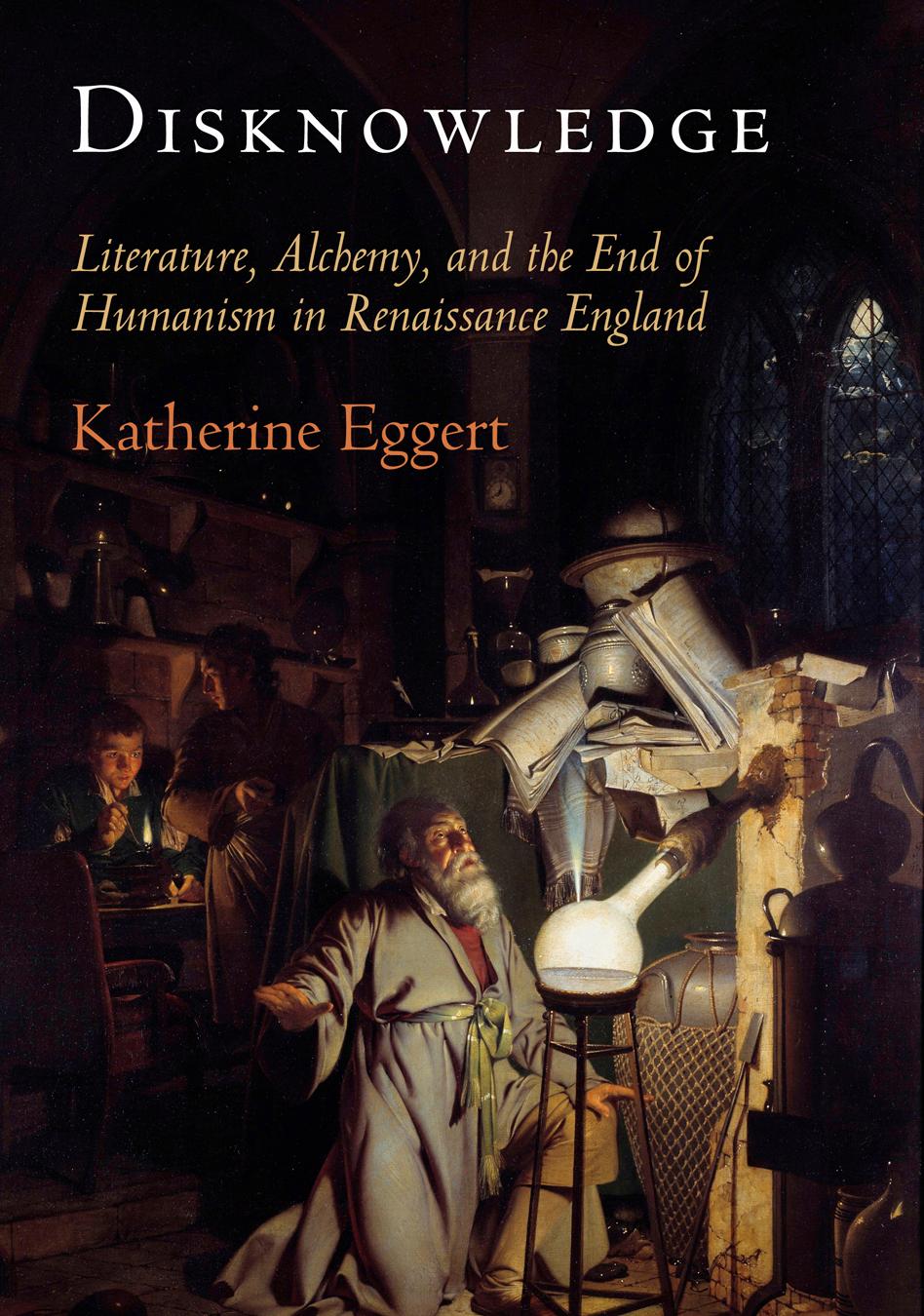
"Disknowledge": knowing something isn't true, but believing it anyway. In Disknowledge: Literature, Alchemy, and the End of Humanism in Renaissance England, Katherine Eggert explores the crumbling state of learning in the sixteenth and seventeenth centuries. Even as the shortcomings of Renaissance humanism became plain to see, many intellectuals of the age had little choice but to treat their familiar knowledge systems as though they still held. Humanism thus came to share the status of alchemy: a way of thinking simultaneously productive and suspect, reasonable and wrongheaded.
Eggert argues that English writers used alchemy to signal how to avoid or camouflage pressing but discomfiting topics in an age of rapid intellectual change. Disknowledge describes how John Donne, George Herbert, Henry Vaughan, John Dee, Christopher Marlowe, William Harvey, Helkiah Crooke, Edmund Spenser, and William Shakespeare used alchemical imagery, rhetoric, and habits of thought to shunt aside three difficult questions: how theories of matter shared their physics with Roman Catholic transubstantiation; how Christian Hermeticism depended on Jewish Kabbalah; and how new anatomical learning acknowledged women's role in human reproduction. Disknowledge further shows how Shakespeare, Ben Jonson, and Margaret Cavendish used the language of alchemy to castigate humanism for its blind spots and to invent a new, posthumanist mode of knowledge: writing fiction.
Covering a wide range of authors and topics, Disknowledge is the first book to analyze how English Renaissance literature employed alchemy to probe the nature and limits of learning. The concept of disknowledge—willfully adhering to something we know is wrong—resonates across literary and cultural studies as an urgent issue of our own era.
Before Memmo my notes were scattered across PDFs. Now a workspace pulls everything into one place — I see exactly what's still left to study.
Memmo's summaries are gold before exams. I don't have to re-read 800 pages two weeks before — just the important parts.
The AI chat has saved me the night before an exam more than once. I just keep asking until I get it — no waiting on a study group to reply.
The quizzes hit exactly what I need to know. Memmo tracks what I get stuck on — so I only practice what's worth it.
Flashcards with spaced repetition are magic. Memmo knows when I'm about to forget something and brings it back.
The AI podcasts are my favorite. I listen on my way to school and get a recap without sitting at a computer.

Handbok i kvalitativa metoder
281 kr

Hållbar utveckling: en introduktion för ingenjörer och andra problemlösare
334 kr

Brymans Samhällsvetenskapliga metoder
390 kr

Projektledning
491 kr

Den orättvisa hälsan: om socioekonomiska skillnader i hälsa och livslängd
326 kr

Organizational Leadership
429 kr

Vetenskapsteori för nybörjare
196 kr

På väg mot läraryrket
172 kr

Det sociala livet i skolan: Socialpsykologiska perspektiv
253 kr

Betygsättningens didaktik
151 kr

Personality
402 kr

Studying Leadership
404 kr

Managing Innovation
477 kr

Introduktion till samhällsvetenskaplig metod
347 kr

The Psychology of Sex and Gender
698 kr

Evidens och kunskap för socialt arbete
207 kr

Introduction to Leadership
605 kr