
Before Memmo my notes were scattered across PDFs. Now a workspace pulls everything into one place — I see exactly what's still left to study.
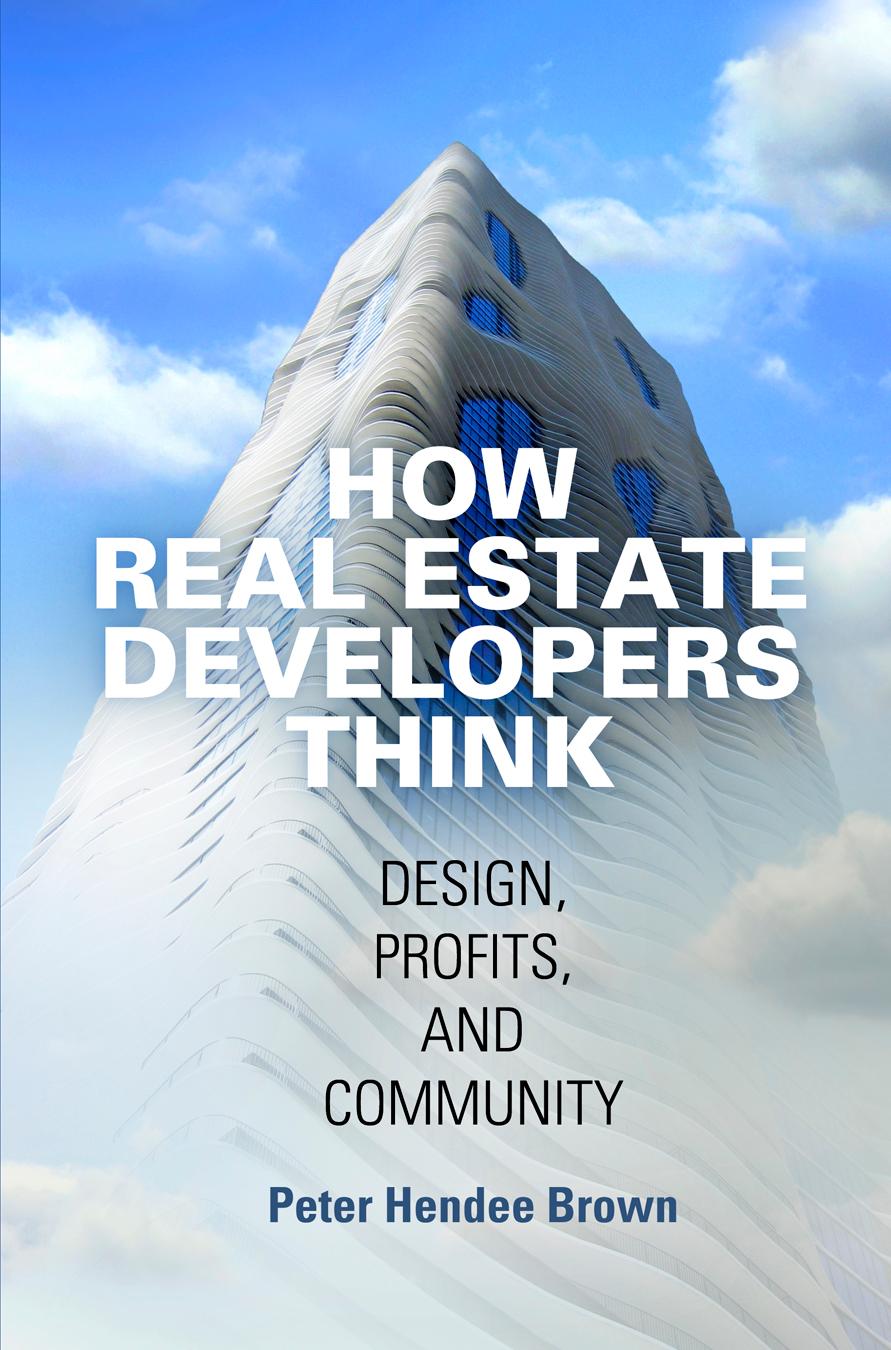
Cities are always changing: streets, infrastructure, public spaces, and buildings are constantly being built, improved, demolished, and replaced. But even when a new project is designed to improve a community, neighborhood residents often find themselves at odds with the real estate developer who proposes it. Savvy developers are willing to work with residents to allay their concerns and gain public support, but at the same time, a real estate development is a business venture financed by private investors who take significant risks. In How Real Estate Developers Think, Peter Hendee Brown explains the interests, motives, and actions of real estate developers, using case studies to show how the basic principles of development remain the same everywhere even as practices vary based on climate, local culture, and geography. An understanding of what developers do and why they do it will help community members, elected officials, and others participate more productively in the development process in their own communities.
Based on interviews with over a hundred people involved in the real estate development business in Chicago, Miami, Portland (Oregon), and the Twin Cities of Minneapolis and St. Paul, How Real Estate Developers Think considers developers from three different perspectives. Brown profiles the careers of individual developers to illustrate the character of the entrepreneur, considers the roles played by innovation, design, marketing, and sales in the production of real estate, and examines the risks and rewards that motivate developers as people. Ultimately, How Real Estate Developers Think portrays developers as creative visionaries who are able to imagine future possibilities for our cities and communities and shows that understanding them will lead to better outcomes for neighbors, communities, and cities.
Before Memmo my notes were scattered across PDFs. Now a workspace pulls everything into one place — I see exactly what's still left to study.
Memmo's summaries are gold before exams. I don't have to re-read 800 pages two weeks before — just the important parts.
The AI chat has saved me the night before an exam more than once. I just keep asking until I get it — no waiting on a study group to reply.
The quizzes hit exactly what I need to know. Memmo tracks what I get stuck on — so I only practice what's worth it.
Flashcards with spaced repetition are magic. Memmo knows when I'm about to forget something and brings it back.
The AI podcasts are my favorite. I listen on my way to school and get a recap without sitting at a computer.

Handbok i kvalitativa metoder
281 kr

Hållbar utveckling: en introduktion för ingenjörer och andra problemlösare
334 kr

Brymans Samhällsvetenskapliga metoder
390 kr

Projektledning
491 kr

Den orättvisa hälsan: om socioekonomiska skillnader i hälsa och livslängd
326 kr

Organizational Leadership
429 kr

Vetenskapsteori för nybörjare
196 kr

På väg mot läraryrket
172 kr

Det sociala livet i skolan: Socialpsykologiska perspektiv
253 kr

Betygsättningens didaktik
151 kr

Personality
402 kr

Studying Leadership
404 kr

Managing Innovation
477 kr

Introduktion till samhällsvetenskaplig metod
347 kr

The Psychology of Sex and Gender
698 kr

Evidens och kunskap för socialt arbete
207 kr

Introduction to Leadership
605 kr