
Before Memmo my notes were scattered across PDFs. Now a workspace pulls everything into one place — I see exactly what's still left to study.
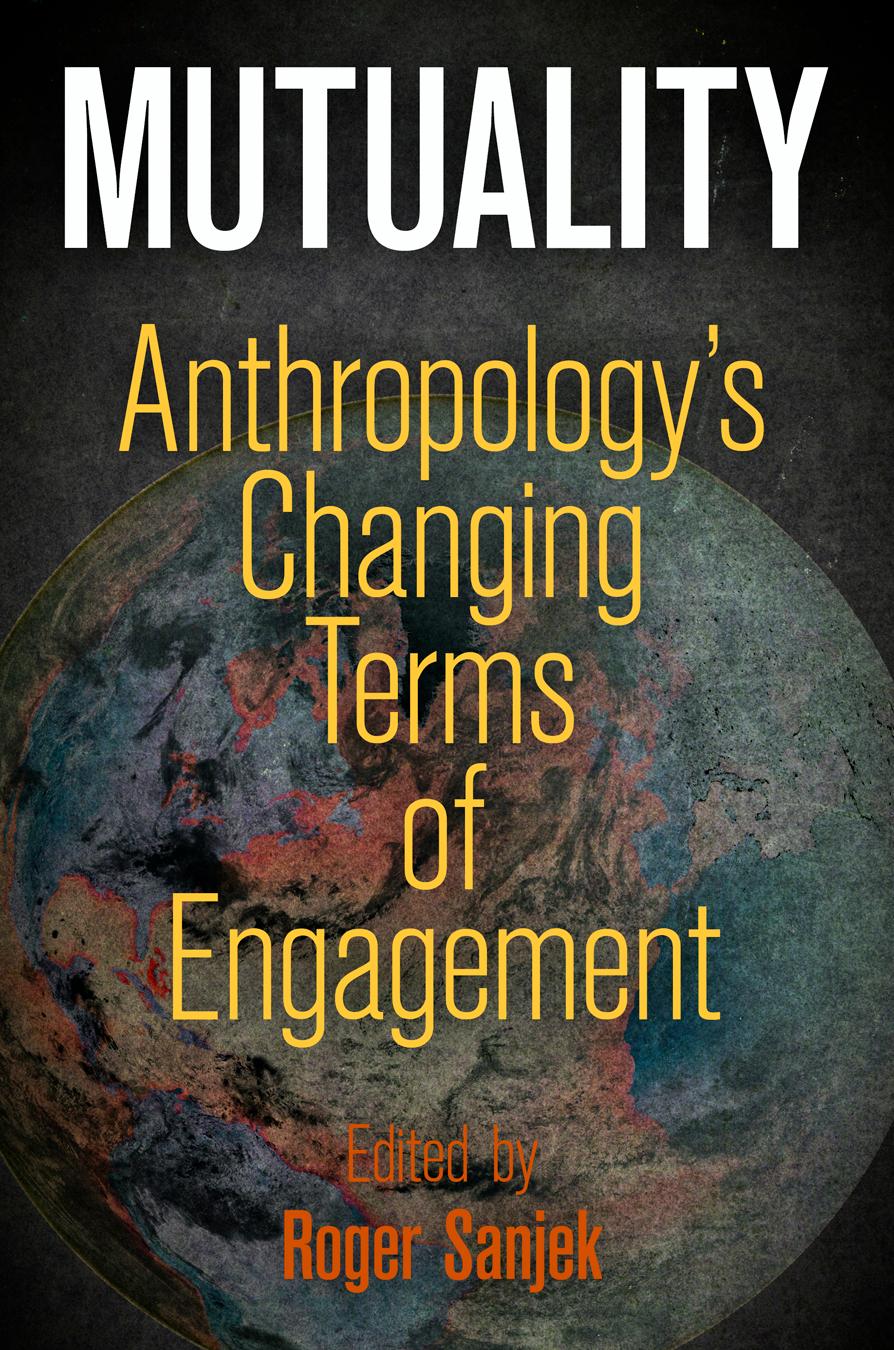
Why do people do social-cultural anthropology? Beyond professional career motivations, what values underpin anthropologists' commitments to lengthy training, fieldwork, writing, and publication? Mutuality explores the values that anthropologists bring from their wider social worlds, including the value placed on relationships with the people they study, work with, write about and for, and communicate with more broadly.
In this volume, seventeen distinguished anthropologists draw on personal and professional histories to describe avenues to mutuality through collaborative fieldwork, community-based projects and consultations, advocacy, and museum exhibits, including the American Anthropological Association's largest public outreach ever—the RACE: Are We So Different? project. Looking critically at obstacles to reciprocally beneficial engagement, the contributors trace the discipline's past and current relations with Native Americans, indigenous peoples exhibited in early twentieth-century world's fairs, and racialized populations. The chapters range widely—across the Punjabi craft caste, Filipino Igorot, and Somali Bantu global diasporas; to the Darfur crisis and conciliation efforts in Sudan and Qatar; to applied work in Panama, Micronesia, China, and Peru. In the United States, contributors discuss their work as academic, practicing, and public anthropologists in such diverse contexts as Alaskan Yup'ik communities, multiethnic New Mexico, San Francisco's Japan Town, Oakland's Intertribal Friendship House, Southern California's produce markets, a children's ward in a Los Angeles hospital, a New England nursing home, and Washington D.C.'s National Mall. Deeply personal as well as professionally astute, Mutuality sheds new light on the issues closest to the present and future of contemporary anthropology.
Contributors: Rogaia Mustafa Abusharaf, Robert R. Alvarez, Garrick Bailey, Catherine Besteman, Parminder Bhachu, Ann Fienup-Riordan, Zibin Guo, Lane Ryo Hirabayashi, Lanita Jacobs, Susan Lobo, Yolanda T. Moses, Sylvia Rodríguez, Roger Sanjek, Renée R. Shield, Alaka Wali, Deana L. Weibel, Brett Williams.
Before Memmo my notes were scattered across PDFs. Now a workspace pulls everything into one place — I see exactly what's still left to study.
Memmo's summaries are gold before exams. I don't have to re-read 800 pages two weeks before — just the important parts.
The AI chat has saved me the night before an exam more than once. I just keep asking until I get it — no waiting on a study group to reply.
The quizzes hit exactly what I need to know. Memmo tracks what I get stuck on — so I only practice what's worth it.
Flashcards with spaced repetition are magic. Memmo knows when I'm about to forget something and brings it back.
The AI podcasts are my favorite. I listen on my way to school and get a recap without sitting at a computer.

Handbok i kvalitativa metoder
281 kr

Hållbar utveckling: en introduktion för ingenjörer och andra problemlösare
334 kr

Brymans Samhällsvetenskapliga metoder
390 kr

Projektledning
491 kr

Den orättvisa hälsan: om socioekonomiska skillnader i hälsa och livslängd
326 kr

Organizational Leadership
429 kr

Vetenskapsteori för nybörjare
196 kr

På väg mot läraryrket
172 kr

Det sociala livet i skolan: Socialpsykologiska perspektiv
253 kr

Betygsättningens didaktik
151 kr

Personality
402 kr

Studying Leadership
404 kr

Managing Innovation
477 kr

Introduktion till samhällsvetenskaplig metod
347 kr

The Psychology of Sex and Gender
698 kr

Evidens och kunskap för socialt arbete
207 kr

Introduction to Leadership
605 kr