
Before Memmo my notes were scattered across PDFs. Now a workspace pulls everything into one place — I see exactly what's still left to study.
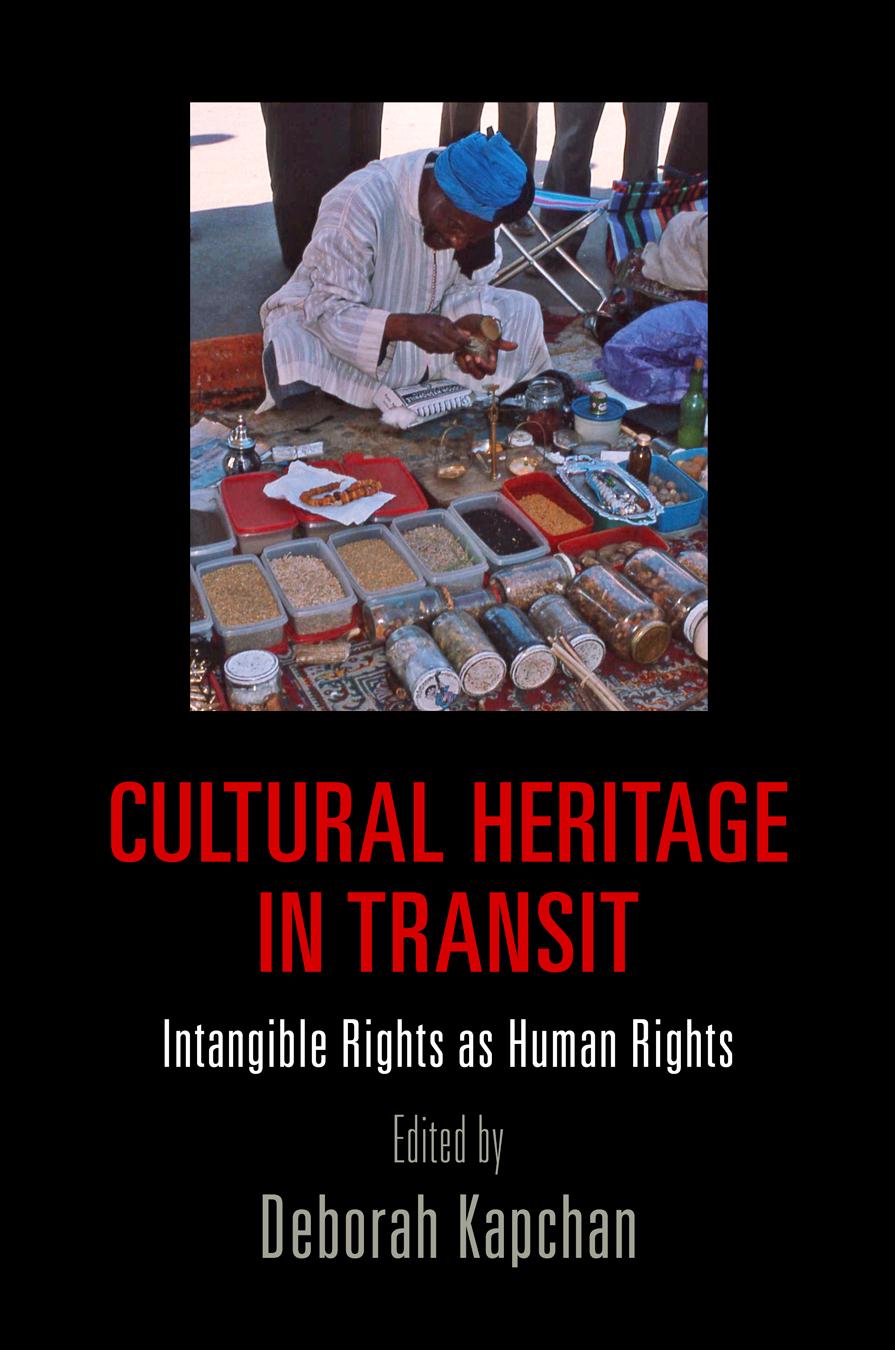
Are human rights universal? The immediate response is "yes, of course." However, that simple affirmation assumes agreement about definitions of the "human" as well as what a human is entitled to under law, bringing us quickly to concepts such as freedom, property, and the inalienability of both. The assumption that we all mean the same things by these terms carries much political import, especially given that different communities (national, ethnic, religious, gendered) enact some of the most basic categories of human experience (self, home, freedom, sovereignty) differently. But whereas legal definitions often seek to eliminate ambiguity in order to define and protect the rights of humanity, ambiguity is in fact inherently human, especially in performances of heritage where the rights to sense, to imagine, and to claim cultural identities that resist circumscription are at play.
Cultural Heritage in Transit examines the intangibilities of human rights in the realm of heritage production, focusing not only on the ephemeral culture of those who perform it but also on the ambiguities present in the idea of cultural property in general—who claims it? who may use it? who should not but does? In this volume, folklorists, ethnologists, and anthropologists analyze the practice and performance of culture in particular contexts—including Roma wedding music, Trinidadian wining, Moroccan verbal art, and Neopagan rituals—in order to draw apart the social, political, and aesthetic materialities of heritage production, including inequities and hierarchies that did not exist before. The authors collectively craft theoretical frameworks to make sense of the ways the rights of nations interact with the rights of individuals and communities when the public value of artistic creations is constituted through international law.
Contributors: Valdimar Tr. Hafstein, Deborah Kapchan, Barbro Klein, Sabina Magliocco, Dorothy Noyes, Philip W. Scher, Carol Silverman.
Before Memmo my notes were scattered across PDFs. Now a workspace pulls everything into one place — I see exactly what's still left to study.
Memmo's summaries are gold before exams. I don't have to re-read 800 pages two weeks before — just the important parts.
The AI chat has saved me the night before an exam more than once. I just keep asking until I get it — no waiting on a study group to reply.
The quizzes hit exactly what I need to know. Memmo tracks what I get stuck on — so I only practice what's worth it.
Flashcards with spaced repetition are magic. Memmo knows when I'm about to forget something and brings it back.
The AI podcasts are my favorite. I listen on my way to school and get a recap without sitting at a computer.

Handbok i kvalitativa metoder
281 kr

Hållbar utveckling: en introduktion för ingenjörer och andra problemlösare
334 kr

Brymans Samhällsvetenskapliga metoder
390 kr

Projektledning
491 kr

Den orättvisa hälsan: om socioekonomiska skillnader i hälsa och livslängd
326 kr

Vetenskapsteori för nybörjare
196 kr

Organizational Leadership
429 kr

På väg mot läraryrket
172 kr

Det sociala livet i skolan: Socialpsykologiska perspektiv
253 kr

Betygsättningens didaktik
151 kr

Personality
402 kr

Studying Leadership
404 kr

Managing Innovation
477 kr

Introduktion till samhällsvetenskaplig metod
347 kr

The Psychology of Sex and Gender
698 kr

Evidens och kunskap för socialt arbete
207 kr

Introduction to Leadership
605 kr