
Before Memmo my notes were scattered across PDFs. Now a workspace pulls everything into one place — I see exactly what's still left to study.
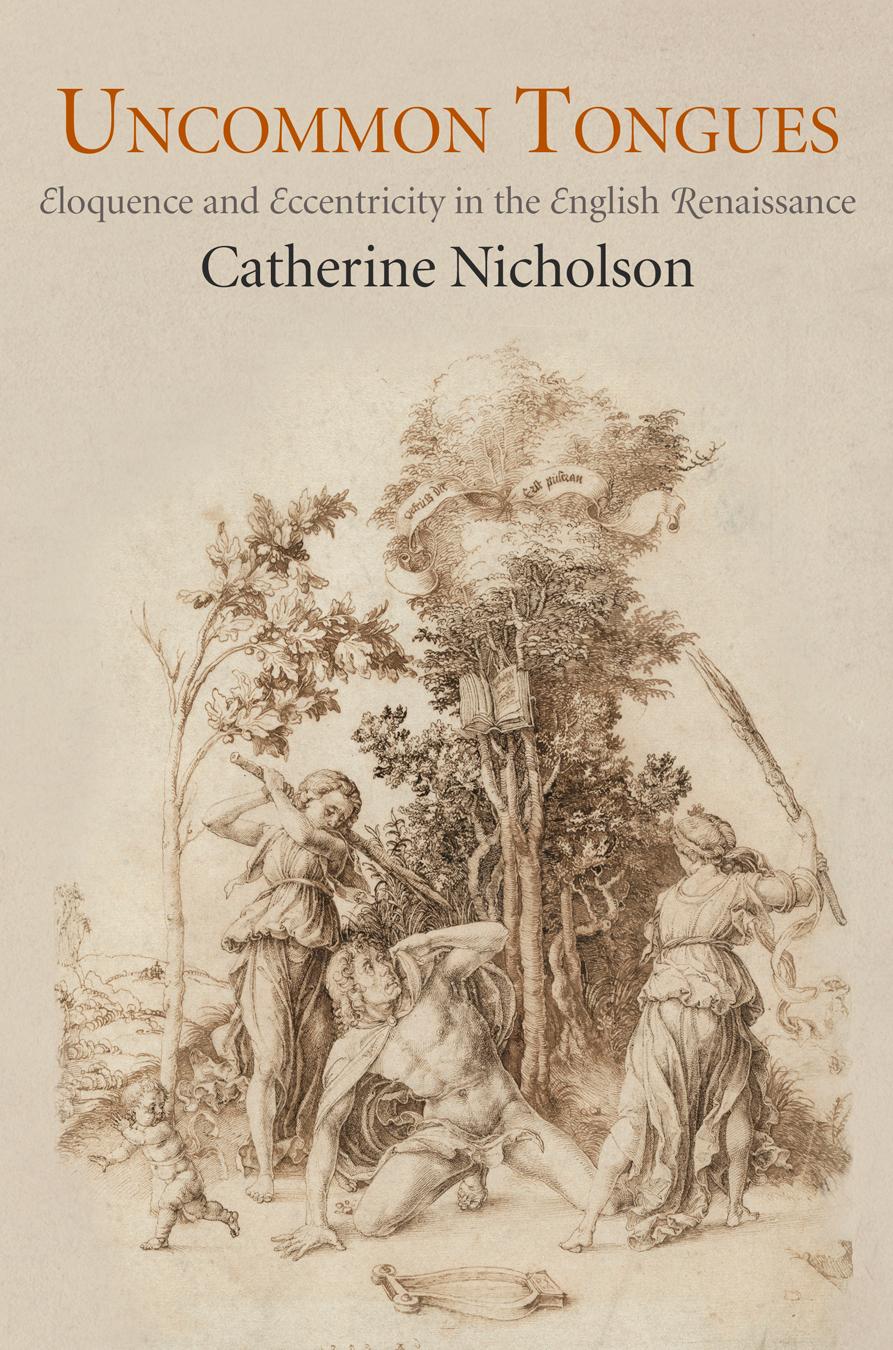
In the late sixteenth century, as England began to assert its integrity as a nation and English its merit as a literate tongue, vernacular writing took a turn for the eccentric. Authors such as John Lyly, Edmund Spenser, and Christopher Marlowe loudly announced their ambitions for the mother tongue—but the extremity of their stylistic innovations yielded texts that seemed hardly English at all. Critics likened Lyly's hyperembellished prose to a bejeweled "Indian," complained that Spenser had "writ no language," and mocked Marlowe's blank verse as a "Turkish" concoction of "big-sounding sentences" and "termes Italianate." In its most sophisticated literary guises, the much-vaunted common tongue suddenly appeared quite foreign.
In Uncommon Tongues, Catherine Nicholson locates strangeness at the paradoxical heart of sixteenth-century vernacular culture. Torn between two rival conceptions of eloquence, savvy writers and teachers labored to reconcile their country's need for a consistent, accessible mother tongue with the expectation that poetic language depart from everyday speech. That struggle, waged by pedagogical theorists and rhetoricians as well as authors we now recognize as some of the most accomplished and significant in English literary history, produced works that made the vernacular's oddities, constraints, and defects synonymous with its virtues. Such willful eccentricity, Nicholson argues, came to be seen as both the essence and antithesis of English eloquence.
Before Memmo my notes were scattered across PDFs. Now a workspace pulls everything into one place — I see exactly what's still left to study.
Memmo's summaries are gold before exams. I don't have to re-read 800 pages two weeks before — just the important parts.
The AI chat has saved me the night before an exam more than once. I just keep asking until I get it — no waiting on a study group to reply.
The quizzes hit exactly what I need to know. Memmo tracks what I get stuck on — so I only practice what's worth it.
Flashcards with spaced repetition are magic. Memmo knows when I'm about to forget something and brings it back.
The AI podcasts are my favorite. I listen on my way to school and get a recap without sitting at a computer.

Handbok i kvalitativa metoder
281 kr

Hållbar utveckling: en introduktion för ingenjörer och andra problemlösare
334 kr

Brymans Samhällsvetenskapliga metoder
390 kr

Projektledning
491 kr

Den orättvisa hälsan: om socioekonomiska skillnader i hälsa och livslängd
326 kr

Organizational Leadership
429 kr

Vetenskapsteori för nybörjare
196 kr

På väg mot läraryrket
172 kr

Det sociala livet i skolan: Socialpsykologiska perspektiv
253 kr

Betygsättningens didaktik
151 kr

Personality
402 kr

Studying Leadership
404 kr

Managing Innovation
477 kr

Introduktion till samhällsvetenskaplig metod
347 kr

The Psychology of Sex and Gender
698 kr

Evidens och kunskap för socialt arbete
207 kr

Introduction to Leadership
605 kr