
Before Memmo my notes were scattered across PDFs. Now a workspace pulls everything into one place — I see exactly what's still left to study.
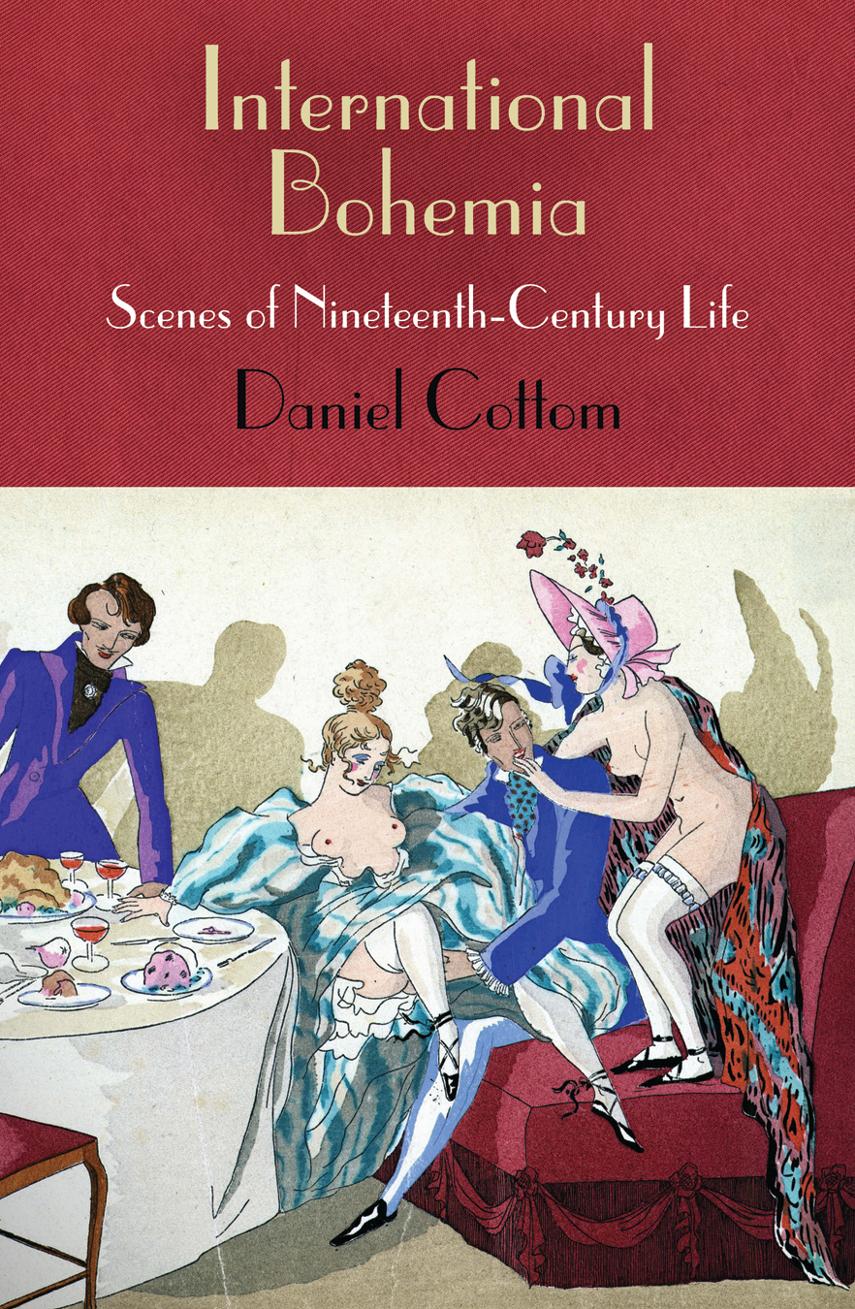
How did this vagabond word, bohemia, migrate across national borderlines over the course of the nineteenth century, and what happened to it as it traveled? In International Bohemia, Daniel Cottom studies how various individuals and groups appropriated this word to serve the identities, passions, cultural forms, politics, and histories they sought to animate. Beginning with the invention of bohemianism's modern sense in Paris during the 1830s and 1840s, Cottom traces the twists and turns of this phenomenon through the rest of the nineteenth century and into the early years of the twentieth century in the United States, England, Italy, Spain, and Germany.
Even when they traveled under the banner of l'art pour l'art, the bohemians of this era generally saw little reason to observe borderlines between their lives and their art. On the contrary, they were eager to mix up the one with the other, despite the fact that their critics often reproached them on this account by claiming that bohemians were all talk—do-nothings frittering away their lives in cafés and taverns. Cottom's study of bohemianism draws from the biographies of notable and influential figures of the time, including Thomas Chatterton, George Sand, George Eliot, Henry Murger, Alexandre Privat d'Anglemont, Walt Whitman, Ada Clare, Iginio Ugo Tarchetti, and Arthur Conan Doyle. Through a wide range of novels, memoirs, essays, plays, poems, letters, and articles, International Bohemia explores the many manifestations of this transnational counterculture, addressing topics such as anti-Semitism, the intersections of race and class, the representation of women, the politics of art and masquerade, the nature of community, and the value of nostalgia.
Before Memmo my notes were scattered across PDFs. Now a workspace pulls everything into one place — I see exactly what's still left to study.
Memmo's summaries are gold before exams. I don't have to re-read 800 pages two weeks before — just the important parts.
The AI chat has saved me the night before an exam more than once. I just keep asking until I get it — no waiting on a study group to reply.
The quizzes hit exactly what I need to know. Memmo tracks what I get stuck on — so I only practice what's worth it.
Flashcards with spaced repetition are magic. Memmo knows when I'm about to forget something and brings it back.
The AI podcasts are my favorite. I listen on my way to school and get a recap without sitting at a computer.

Handbok i kvalitativa metoder
281 kr

Hållbar utveckling: en introduktion för ingenjörer och andra problemlösare
334 kr

Brymans Samhällsvetenskapliga metoder
390 kr

Projektledning
491 kr

Den orättvisa hälsan: om socioekonomiska skillnader i hälsa och livslängd
326 kr

Organizational Leadership
429 kr

Vetenskapsteori för nybörjare
196 kr

På väg mot läraryrket
172 kr

Det sociala livet i skolan: Socialpsykologiska perspektiv
253 kr

Betygsättningens didaktik
151 kr

Personality
402 kr

Studying Leadership
404 kr

Managing Innovation
477 kr

Introduktion till samhällsvetenskaplig metod
347 kr

The Psychology of Sex and Gender
698 kr

Evidens och kunskap för socialt arbete
207 kr

Introduction to Leadership
605 kr