
Before Memmo my notes were scattered across PDFs. Now a workspace pulls everything into one place — I see exactly what's still left to study.
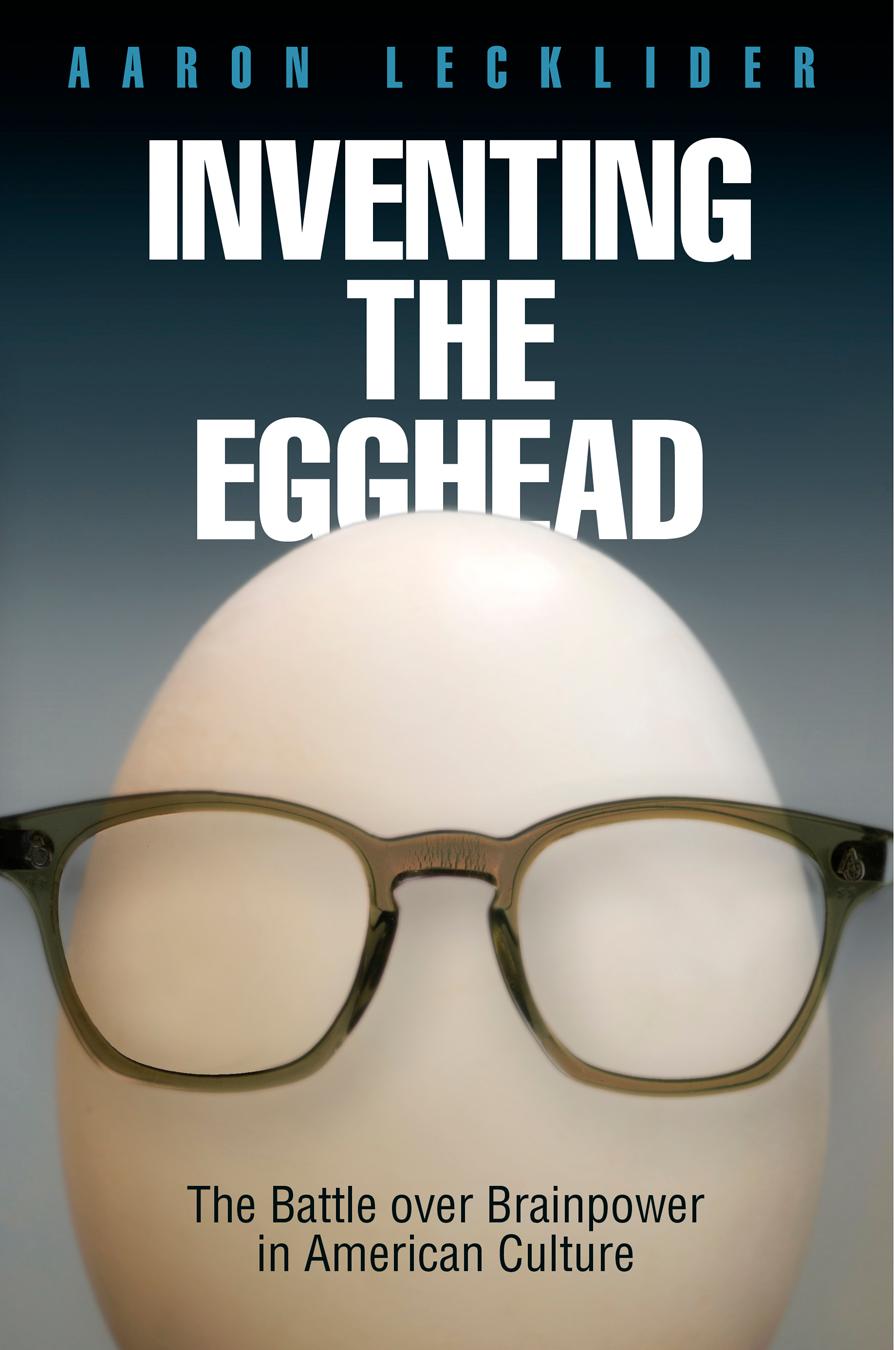
Throughout the twentieth century, pop songs, magazine articles, plays, posters, and novels in the United States represented intelligence alternately as empowering or threatening. In Inventing the Egghead, cultural historian Aaron Lecklider offers a sharp, entertaining narrative of these sources to reveal how Americans who were not part of the traditional intellectual class negotiated the complicated politics of intelligence within an accelerating mass culture.
Central to the book is the concept of brainpower—a term used by Lecklider to capture the ways in which journalists, writers, artists, and others invoked intelligence to embolden the majority of Americans who did not have access to institutions of higher learning. Expressions of brainpower, Lecklider argues, challenged the deeply embedded assumptions in society that intellectual capacity was the province of an educated elite, and that the working class was unreservedly anti-intellectual. Amid changes in work, leisure, and domestic life, brainpower became a means for social transformation in the modern United States. The concept thus provides an exciting vantage point from which to make fresh assessments of ongoing debates over intelligence and access to quality education.
Expressions of brainpower in the twentieth century engendered an uncomfortable paradox: they diminished the value of intellectuals (the hapless egghead, for example) while establishing claims to intellectual authority among ordinary women and men, including labor activists, women workers, and African Americans. Reading across historical, literary, and visual media, Lecklider mines popular culture as an arena where the brainpower of ordinary people was commonly invoked and frequently contested.
Before Memmo my notes were scattered across PDFs. Now a workspace pulls everything into one place — I see exactly what's still left to study.
Memmo's summaries are gold before exams. I don't have to re-read 800 pages two weeks before — just the important parts.
The AI chat has saved me the night before an exam more than once. I just keep asking until I get it — no waiting on a study group to reply.
The quizzes hit exactly what I need to know. Memmo tracks what I get stuck on — so I only practice what's worth it.
Flashcards with spaced repetition are magic. Memmo knows when I'm about to forget something and brings it back.
The AI podcasts are my favorite. I listen on my way to school and get a recap without sitting at a computer.

Handbok i kvalitativa metoder
281 kr

Hållbar utveckling: en introduktion för ingenjörer och andra problemlösare
334 kr

Brymans Samhällsvetenskapliga metoder
390 kr

Projektledning
491 kr

Den orättvisa hälsan: om socioekonomiska skillnader i hälsa och livslängd
326 kr

Organizational Leadership
429 kr

Vetenskapsteori för nybörjare
196 kr

På väg mot läraryrket
172 kr

Det sociala livet i skolan: Socialpsykologiska perspektiv
253 kr

Betygsättningens didaktik
151 kr

Personality
402 kr

Studying Leadership
404 kr

Managing Innovation
477 kr

Introduktion till samhällsvetenskaplig metod
347 kr

The Psychology of Sex and Gender
698 kr

Evidens och kunskap för socialt arbete
207 kr

Introduction to Leadership
605 kr