
Before Memmo my notes were scattered across PDFs. Now a workspace pulls everything into one place — I see exactly what's still left to study.
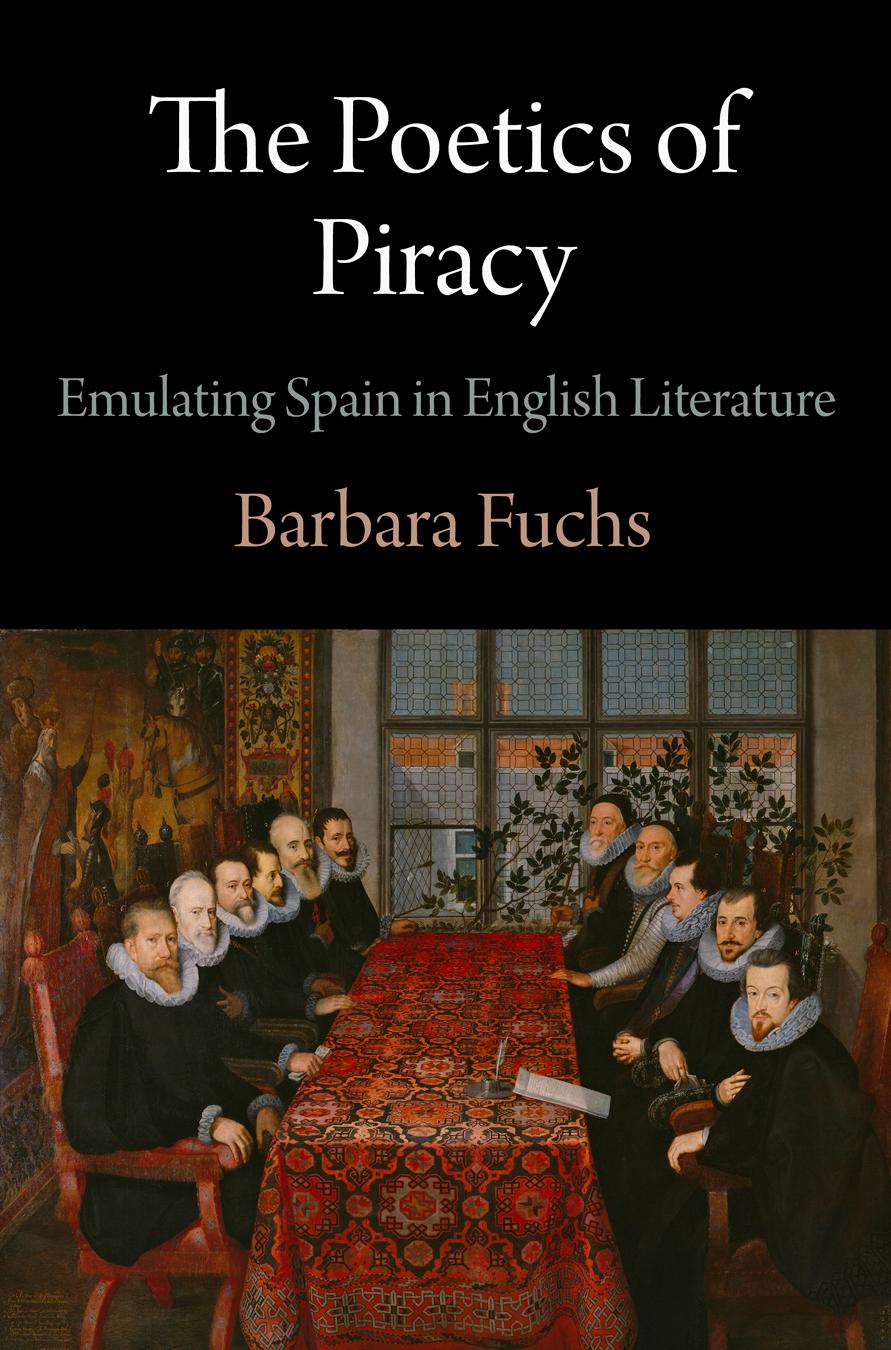
With its dominance as a European power and the explosion of its prose and dramatic writing, Spain provided an irresistible literary source for English writers of the early modern period. But the deep and escalating political rivalry between the two nations led English writers to negotiate, disavow, or attempt to resolve their fascination with Spain and their debt to Spanish sources. Amid thorny issues of translation and appropriation, imperial competition, the rise of commercial authorship, and anxieties about authenticity, Barbara Fuchs traces how Spanish material was transmitted into English writing, entangling English literature in questions of national and religious identity, and how piracy came to be a central textual metaphor, with appropriations from Spain triumphantly reimagined as heroic looting.
From the time of the attempted invasion by the Spanish Armada of the 1580s, through the rise of anti-Spanish rhetoric of the 1620s, The Poetics of Piracy charts this connection through works by Ben Jonson, William Shakespeare, Francis Beaumont, John Fletcher, and Thomas Middleton. Fuchs examines how their writing, particularly for the stage, recasts a reliance on Spanish material by constructing narratives of militaristic, forcible use. She considers how Jacobean dramatists complicated the texts of their Spanish contemporaries by putting them to anti-Spanish purposes, and she traces the place of Cervantes's Don Quixote in Beaumont's The Knight of the Burning Pestle and Shakespeare's late, lost play Cardenio. English literature was deeply transnational, even in the period most closely associated with the birth of a national literature.
Recovering the profound influence of Spain on Renaissance English letters, The Poetics of Piracy paints a sophisticated picture of how nations can serve, at once, as rivals and resources.
Before Memmo my notes were scattered across PDFs. Now a workspace pulls everything into one place — I see exactly what's still left to study.
Memmo's summaries are gold before exams. I don't have to re-read 800 pages two weeks before — just the important parts.
The AI chat has saved me the night before an exam more than once. I just keep asking until I get it — no waiting on a study group to reply.
The quizzes hit exactly what I need to know. Memmo tracks what I get stuck on — so I only practice what's worth it.
Flashcards with spaced repetition are magic. Memmo knows when I'm about to forget something and brings it back.
The AI podcasts are my favorite. I listen on my way to school and get a recap without sitting at a computer.

Handbok i kvalitativa metoder
281 kr

Hållbar utveckling: en introduktion för ingenjörer och andra problemlösare
334 kr

Brymans Samhällsvetenskapliga metoder
390 kr

Projektledning
491 kr

Den orättvisa hälsan: om socioekonomiska skillnader i hälsa och livslängd
326 kr

Vetenskapsteori för nybörjare
196 kr

Organizational Leadership
429 kr

På väg mot läraryrket
172 kr

Det sociala livet i skolan: Socialpsykologiska perspektiv
253 kr

Betygsättningens didaktik
151 kr

Personality
402 kr

Studying Leadership
404 kr

Managing Innovation
477 kr

Introduktion till samhällsvetenskaplig metod
347 kr

The Psychology of Sex and Gender
698 kr

Evidens och kunskap för socialt arbete
207 kr

Introduction to Leadership
605 kr