
Before Memmo my notes were scattered across PDFs. Now a workspace pulls everything into one place — I see exactly what's still left to study.
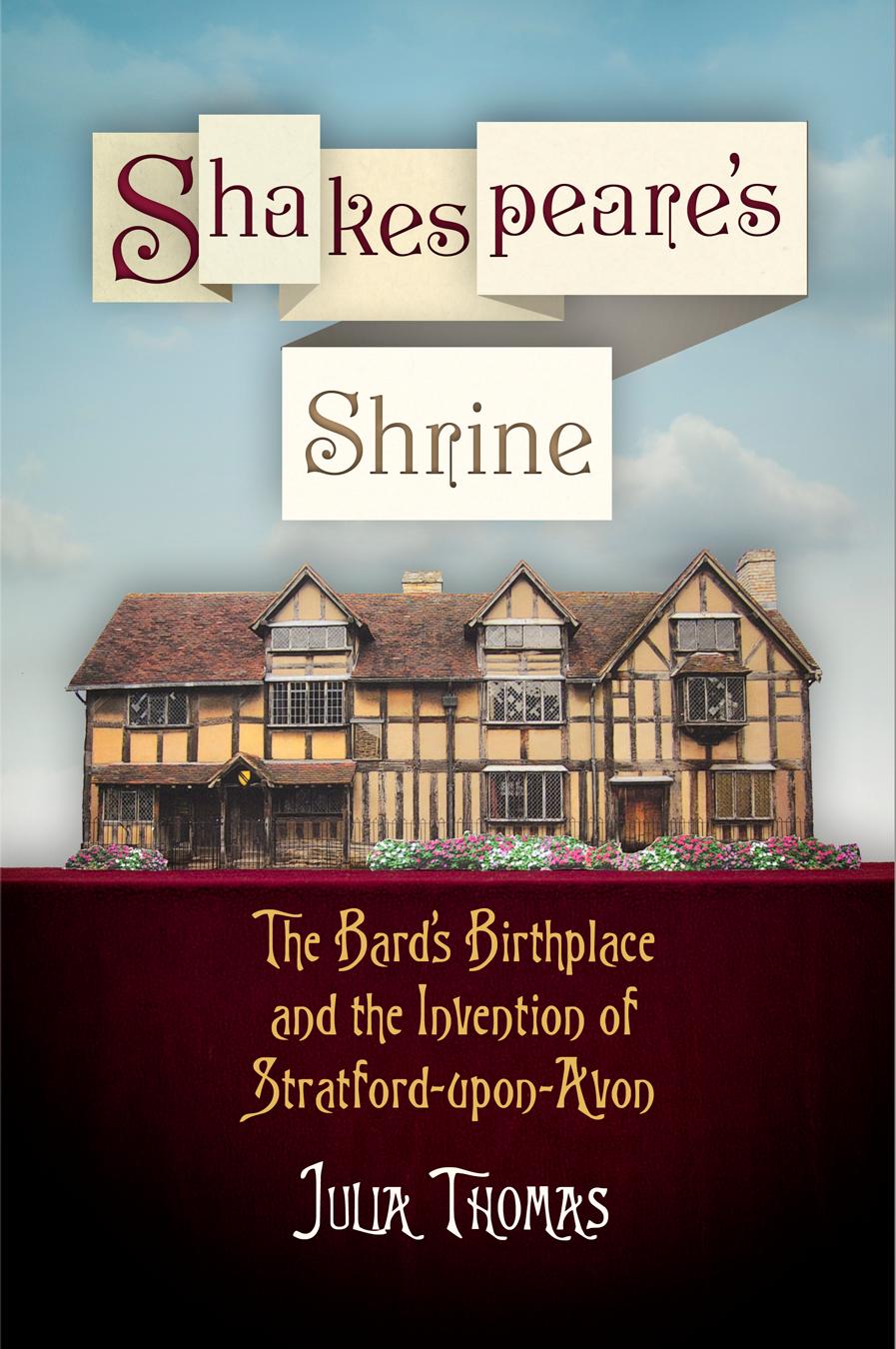
Anyone who has paid the entry fee to visit Shakespeare's Birthplace on Henley Street in Stratford-upon-Avon—and there are some 700,000 a year who do so—might be forgiven for taking the authenticity of the building for granted. The house, as the official guidebooks state, was purchased by Shakespeare's father, John Shakespeare, in two stages in 1556 and 1575, and William was born and brought up there. The street itself might have changed through the centuries—it is now largely populated by gift and tea shops—but it is easy to imagine little Will playing in the garden of this ancient structure, sitting in the inglenook in the kitchen, or reaching up to turn the Gothic handles on the weathered doors.
In Shakespeare's Shrine Julia Thomas reveals just how fully the Birthplace that we visit today is a creation of the nineteenth century. Two hundred years after Shakespeare's death, the run-down house on Henley Street was home to a butcher shop and a pub. Saved from the threat of an ignominious sale to P. T. Barnum, it was purchased for the English nation in 1847 and given the picturesque half-timbered façade first seen in a fanciful 1769 engraving of the building. A perfect confluence of nationalism, nostalgia, and the easy access afforded by rail travel turned the house in which the Bard first drew breath into a major tourist attraction, one artifact in a sea of Shakespeare handkerchiefs, eggcups, and door-knockers.
It was clear to Victorians on pilgrimage to Stratford just who Shakespeare was, how he lived, and to whom he belonged, Thomas writes, and the answers were inseparable from Victorian notions of class, domesticity, and national identity. In Shakespeare's Shrine she has written a richly documented and witty account of how both the Bard and the Warwickshire market town of his birth were turned into enduring symbols of British heritage—and of just how closely contemporary visitors to Stratford are following in the footsteps of their Victorian predecessors.
Before Memmo my notes were scattered across PDFs. Now a workspace pulls everything into one place — I see exactly what's still left to study.
Memmo's summaries are gold before exams. I don't have to re-read 800 pages two weeks before — just the important parts.
The AI chat has saved me the night before an exam more than once. I just keep asking until I get it — no waiting on a study group to reply.
The quizzes hit exactly what I need to know. Memmo tracks what I get stuck on — so I only practice what's worth it.
Flashcards with spaced repetition are magic. Memmo knows when I'm about to forget something and brings it back.
The AI podcasts are my favorite. I listen on my way to school and get a recap without sitting at a computer.

Handbok i kvalitativa metoder
281 kr

Hållbar utveckling: en introduktion för ingenjörer och andra problemlösare
334 kr

Brymans Samhällsvetenskapliga metoder
390 kr

Projektledning
491 kr

Den orättvisa hälsan: om socioekonomiska skillnader i hälsa och livslängd
326 kr

Vetenskapsteori för nybörjare
196 kr

Organizational Leadership
429 kr

På väg mot läraryrket
172 kr

Det sociala livet i skolan: Socialpsykologiska perspektiv
253 kr

Betygsättningens didaktik
151 kr

Personality
402 kr

Studying Leadership
404 kr

Managing Innovation
477 kr

Introduktion till samhällsvetenskaplig metod
347 kr

The Psychology of Sex and Gender
698 kr

Evidens och kunskap för socialt arbete
207 kr

Introduction to Leadership
605 kr